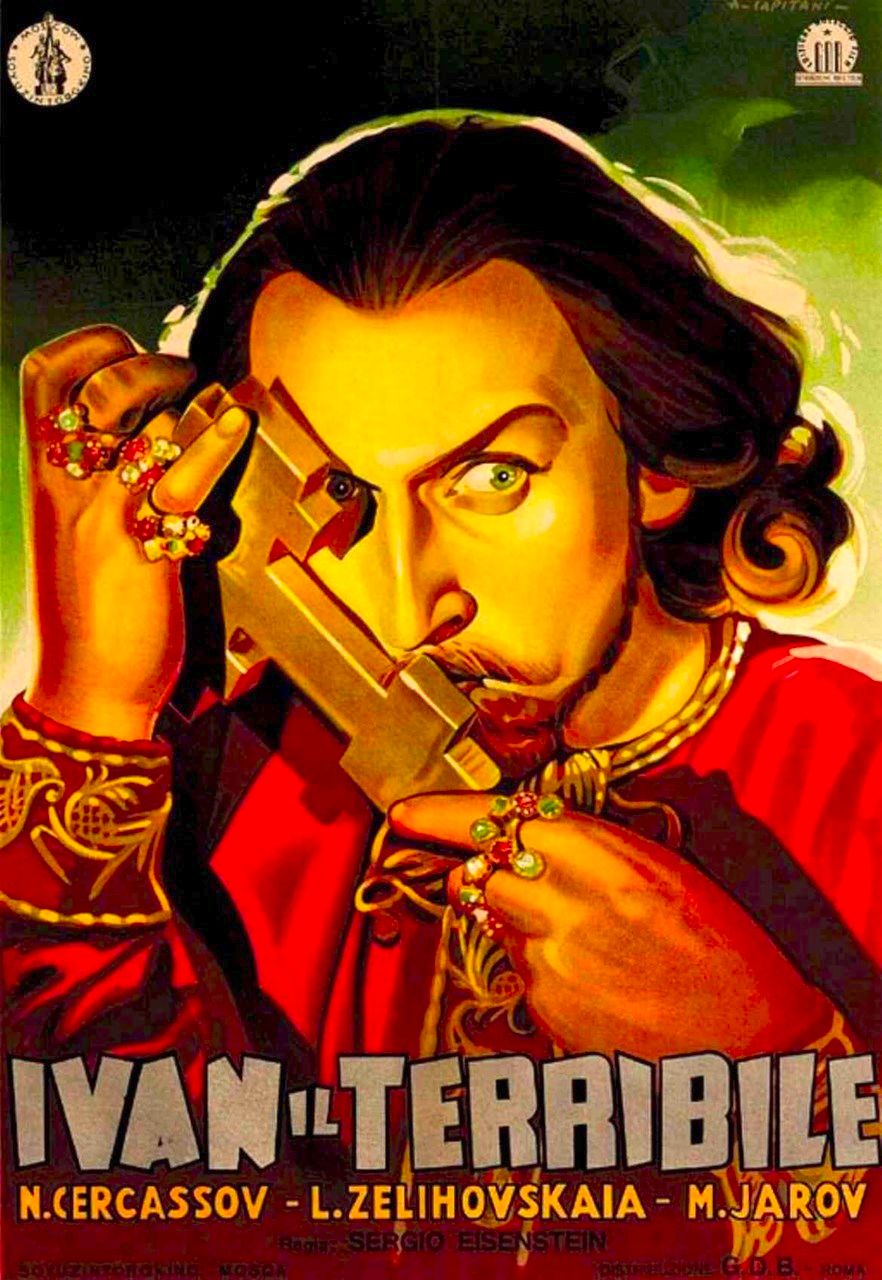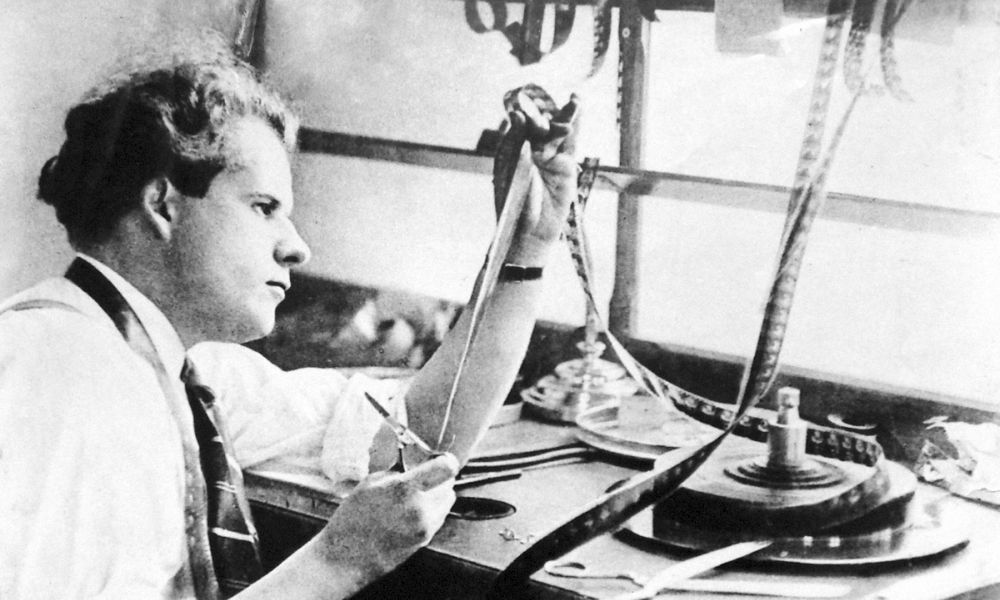
"The intellectual and expressive possibilities revealed by Strike, Battleship Potemkin, and October and the vast culture and intelligence he brought to filmmaking, film teaching and the problems of aesthetic theory in the cinema establish him firmly as one of the incontestable great masters of the art." - David Robinson (The International Encyclopedia of Film, 1972)
Sergei Eisenstein
Director / Screenwriter / Editor / Producer
(1898-1948) Born January 23, Riga, Russian Empire (now Latvia)
Top 250 Directors
(1898-1948) Born January 23, Riga, Russian Empire (now Latvia)
Top 250 Directors
Key Production Country: USSR
Key Genres: Propaganda Film, Historical Epic, Historical Film, Biography, Political Drama, Drama, Epic, Short Film
Key Collaborators: Eduard Tisse (Cinematographer), Nikolai Cherkasov (Leading Actor), Sergei Prokofiev (Composer), Andrei Abrikosov (Character Actor), Grigori Aleksandrov (Director/Screenwriter), Serafima Birman (Leading Actress), Alexander Antonov (Leading Actor), Mikhail Nazvanov (Leading Actor), Andrei Moskvin (Cinematographer), Mikhail Zharov (Leading Character Actor), Pavel Kadochnikov (Leading Character Actor), Amvrosi Buchma (Leading Character Actor)
Key Genres: Propaganda Film, Historical Epic, Historical Film, Biography, Political Drama, Drama, Epic, Short Film
Key Collaborators: Eduard Tisse (Cinematographer), Nikolai Cherkasov (Leading Actor), Sergei Prokofiev (Composer), Andrei Abrikosov (Character Actor), Grigori Aleksandrov (Director/Screenwriter), Serafima Birman (Leading Actress), Alexander Antonov (Leading Actor), Mikhail Nazvanov (Leading Actor), Andrei Moskvin (Cinematographer), Mikhail Zharov (Leading Character Actor), Pavel Kadochnikov (Leading Character Actor), Amvrosi Buchma (Leading Character Actor)
"I am radically opposed to the way Eisenstein used the frame to codify intellectual formulae. My own method of conveying experience to the audience is quite different. Of course it has to be said that Eisenstein wasn't trying to convey his own experience to anyone, he wanted to put across ideas, purely and simply; but for me that sort of cinema is utterly inimical. Moreover Eisenstein's montage dictum, as I see it, contradicts the very basis of the unique process whereby a film affects an audience. It deprives the person watching of that prerogative of film, which has to do with what distinguishes its impact on his consciousness from that of literature or philosophy: namely the opportunity to live through what is happening on the screen as if it were his own life, to take over, as deeply personal and his own, the experience imprinted in time upon the screen, relating his own life to what is being shown." - Andrei Tarkovsky (Sculpting in Time, 1989)
"An intellectual who pursued a bewildering variety of interests, artistic and cultural, Sergei M. Eisenstein has left an indelible mark on the history and practice of film." - R. Barton Palmer (501 Movie Directors, 2007)
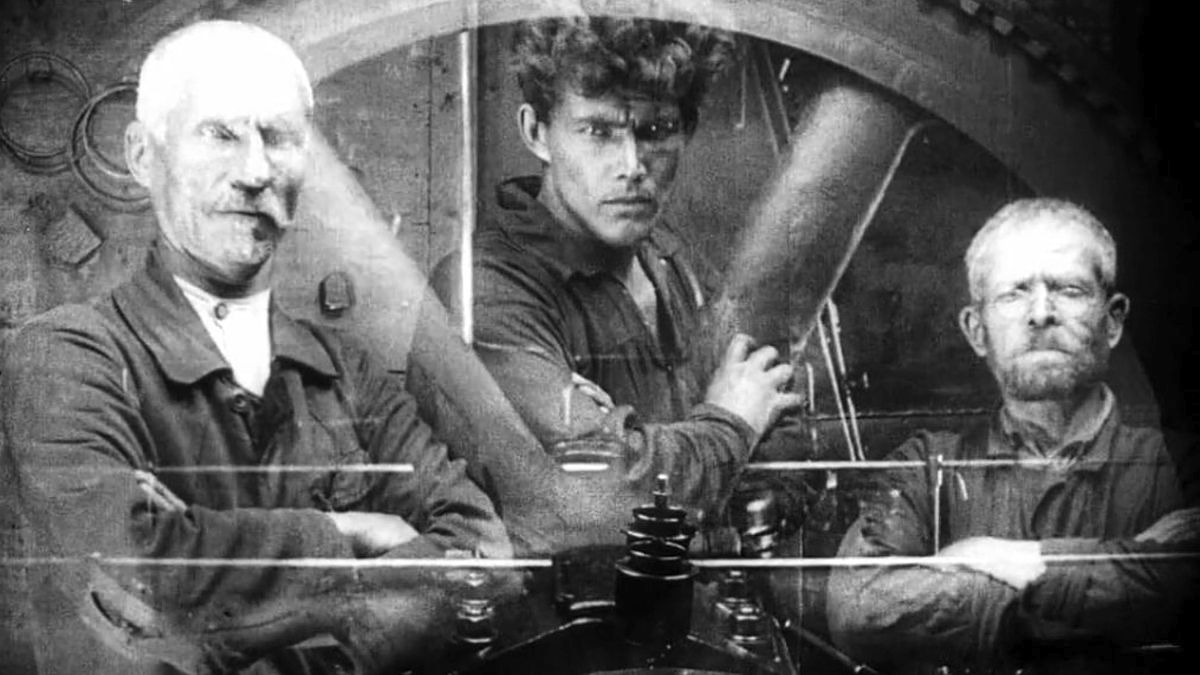
Strike (1925)
"Compared with the abiding influence on cinema of Renoir, Murnau or Fritz Lang, it is no longer possible to view Eisenstein as the man who laid down the theoretical basis of the medium - the British Film Institute once had that as part of a trilogy, with Griffith supplying the alphabet and Chaplin the humanity. It is true that early Eisenstein is a stirring propagandist: in those first four films, the identification with Soviet ideals and myths is based on concrete realization. But the argument of those films is often foolish and ultimately, inhumane." - David Thomson (The New Biographical Dictionary of Film, 2002)
"Eisenstein's achievements are impressive and ambitious, but finally limited: as he discovered in his later years, montage, though interesting in theory, was too cerebral and repetitive a method in practice, while, for all the Revolution's initial devotion to the people, his films too often emerge as cold, soulless propaganda." - Geoff Andrew (The Film Handbook, 1989)
"That the Russian Sergei Mikhailovitch Eisenstein was a genius at the art of montage is indisputable. Whether he was also a genius of the cinema, in the manner of his compatriot Dovzhenko, is more open to doubt... If his films sometimes lack the human touch, he remains a master of the organization of images within the frame in such a way as to make the maximum impact on his audience." - David Quinlan (Quinlan's Film Directors, 1999)
"The master of montage, Eisenstein created a series of classic Soviet films which speak of the faith, optimism, and willpower of the Russian people." - William R. Meyer (The Film Buff's Catalog, 1978)
"Now why should the cinema follow the forms of theater and painting rather than the methodology of language, which allows wholly new concepts of ideas to arise from the combination of two concrete denotations of two concrete objects?" - Sergei Eisenstein
Selected Filmography
Loading filmography...
Sergei Eisenstein / Fan Club
Jonathan Rosenbaum, Joan Mellen, Manoel de Oliveira, Bernard Cohn, Pere Gimferrer, Paul Verhoeven, Ian Christie, Esteve Riambau, Augusto M. Seabra, Peter von Bagh, Oleg Kovalov, José Manuel Costa.
Jonathan Rosenbaum, Joan Mellen, Manoel de Oliveira, Bernard Cohn, Pere Gimferrer, Paul Verhoeven, Ian Christie, Esteve Riambau, Augusto M. Seabra, Peter von Bagh, Oleg Kovalov, José Manuel Costa.
"Fan Club"
These film critics/filmmakers have, on multiple occasions, selected this director’s work within film ballots/lists that they have submitted.
These film critics/filmmakers have, on multiple occasions, selected this director’s work within film ballots/lists that they have submitted.