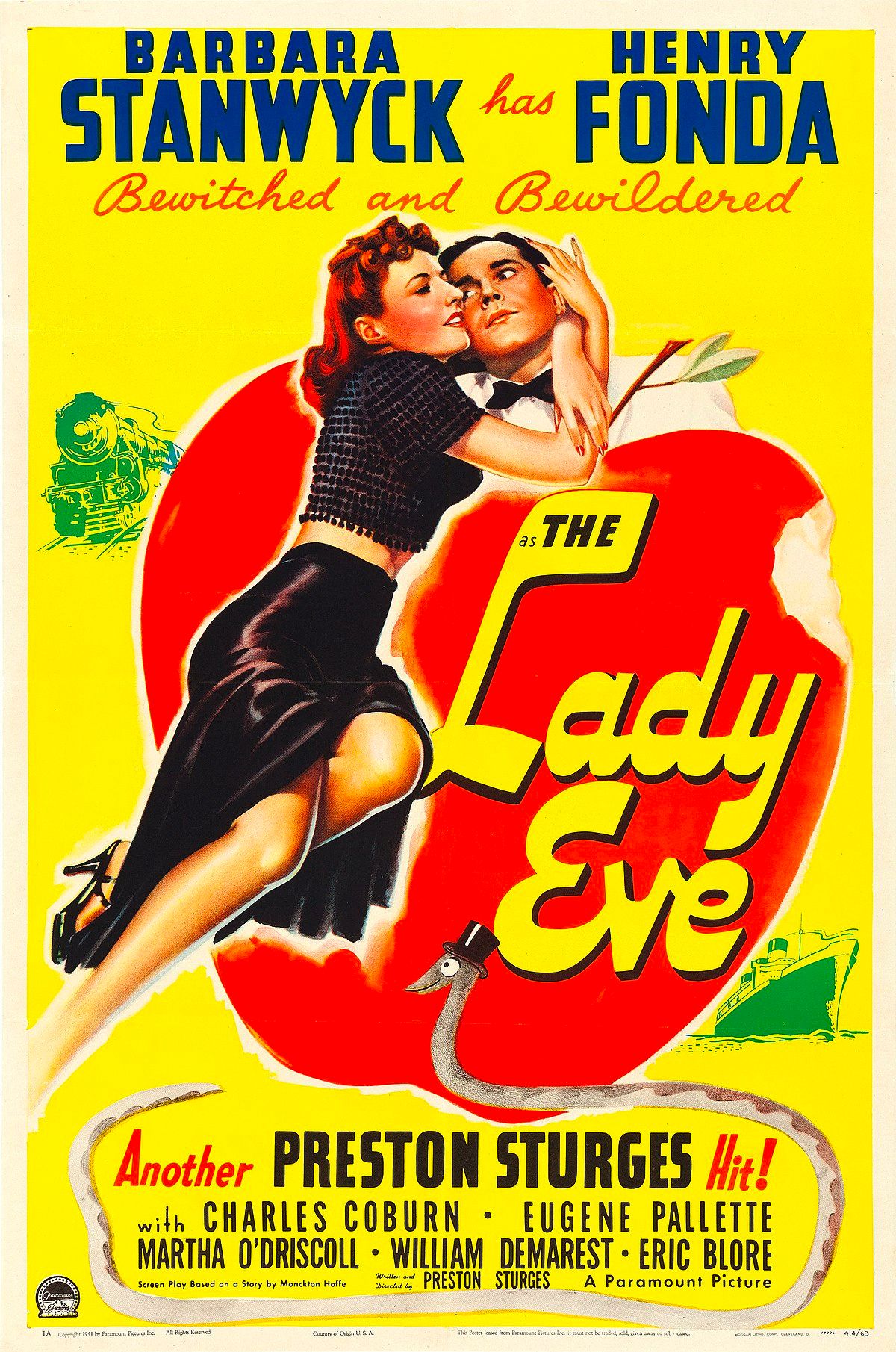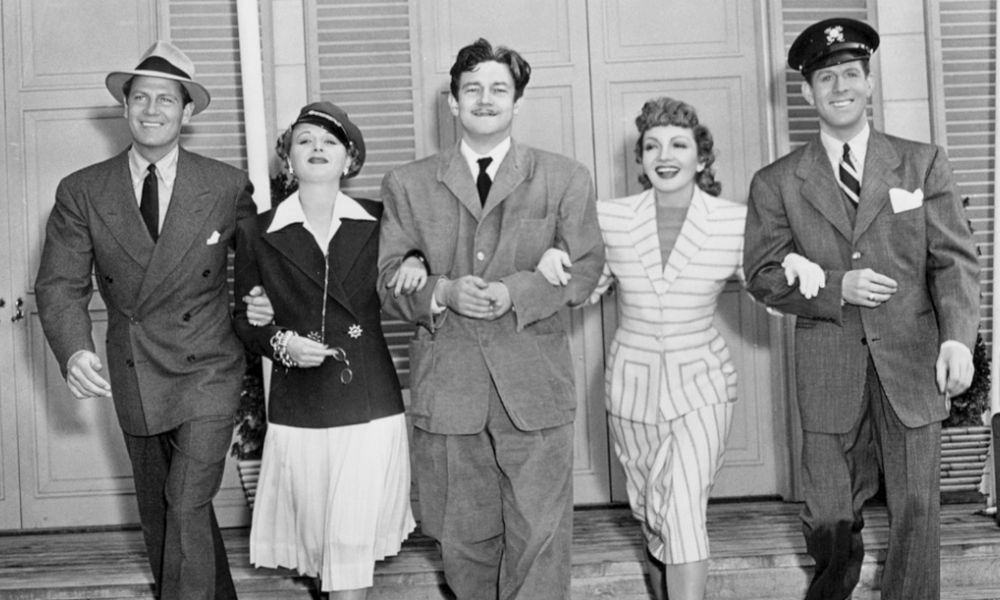
"Acknowledged as the foremost satirist of his time, Preston Sturges enjoyed his greatest vogue between 1940 and 1944, when his pungent wit and frenetic slapstick exploded on such targets as Tammany Hall politics, advertising, American fertility rites, hero and mother worship." - Andrew Sarris (The American Cinema, 1968)
Preston Sturges
Director / Screenwriter / Producer
(1898-1950) Born August 29, Chicago, Illinois, USA
Top 250 Directors
(1898-1950) Born August 29, Chicago, Illinois, USA
Top 250 Directors
Key Production Country: USA
Key Genres: Comedy, Screwball Comedy, Comedy of Errors, Satire, Sophisticated Comedy
Key Collaborators: William Demarest (Leading Character Actor), Hans Dreier (Production Designer), Stuart Gilmore (Editor), Victor Milner (Cinematographer), Franklin Pangborn (Character Actor), Paul Jones (Producer), Ernst Fegte (Production Designer), Porter Hall (Character Actor), Joel McCrea (Leading Actor), Rudy Vallee (Leading Actor), John F. Seitz (Cinematographer), Leo Shuken (Composer)
Key Genres: Comedy, Screwball Comedy, Comedy of Errors, Satire, Sophisticated Comedy
Key Collaborators: William Demarest (Leading Character Actor), Hans Dreier (Production Designer), Stuart Gilmore (Editor), Victor Milner (Cinematographer), Franklin Pangborn (Character Actor), Paul Jones (Producer), Ernst Fegte (Production Designer), Porter Hall (Character Actor), Joel McCrea (Leading Actor), Rudy Vallee (Leading Actor), John F. Seitz (Cinematographer), Leo Shuken (Composer)
"No one quite had such a way with dialogue as Preston Sturges. As a screenwriter, he constructed plots that were far-fetched and sometimes incoherent; as a director, his visuals were competent but uninspired. But as a dialogue writer, Sturges was unparalleled… Sturges’s dialogue is never ‘‘realistic’’; no real person ever talked like his characters. He created a made-up, nonsense language for his vaguely European gigolo, Toto, in The Palm Beach Story (1942), but the rest of his people—from rich socialites, to Texas millionaires, to constables, to card sharks, to film producers—speak with equal disregard of verisimilitude. Sturges moved back and forth between long, eloquent phrasemaking to abrupt, staccato interchanges, and he mixed in noises such as hiccups or barking dogs. He imagined characters from every social sphere and cast actors with a wide range of voices, from mellifluous to gravelly." - Sarah Kozloff (Schirmer Encyclopedia of Film, 2007)
"Sturges is one of the great makers of Hollywood comedy: from The Great McGinty (1940) through to Hail the Conquering Hero (1944), everything that he touched turned to gold. His films strike the most delicate balance between cynicism and sentimentality, creating a world of real and beautifully ridiculous people. And, to put it simply, The Lady Eve (1941) and The Palm Beach Story (1942) are two of the funniest films ever made." - The Movie Book, 1999

Sullivan's Travels (1941)
"American director who made wild, weird and wonderfully lunatic comedies for the war years that are still fondly remembered today. The swift collapse of his talent after those years had gone is one of the screen's great sadnesses. Still, the inspired idiocy of his seven comedies between 1940 to 1944 is something to treasure, and perhaps it is greedy to expect more." - David Quinlan (Quinlan's Film Directors, 1999)
"Sturges's sophisticated handling of sexual relations (which the heiress in The Palm Beach Story refers to as "Topic A") make his films seem remarkably contemporary. And there can be no doubting Sturges's screenwriting abilities. But only recently have critics come to appreciate Sturges's consummate skills as a filmmaker." - Eric Smoodin (The St. James Film Directors Encyclopedia, 1998)
"Hilarious, often extremely cynical satires on American manners and mores were Sturges' specialty. His plots were always complex and even his minor characters stayed in the memory." - William R. Meyer (The Film Buff's Catalog, 1978)
"I did all my directing when I wrote the screenplay. It was probably harder for a regular director. He probably had to read the script the night before shooting started." - Preston Sturges
Selected Filmography
{{row.titlelong}}
GF Greatest Films ranking (★ Top 1000 ● Top 2500)
T TSPDT N 1,000 Noir Films
R Jonathan Rosenbaum S Martin Scorsese
T TSPDT N 1,000 Noir Films
R Jonathan Rosenbaum S Martin Scorsese
Preston Sturges / Fan Club
Paul Schrader, Wendy Ide, Peter Bogdanovich, Karel Reisz, Jonathan Rosenbaum, Stephanie Zacharek, Laura Kern, Whit Stillman, Leslie Felperin, Tom Charity, Lorenzo Codelli, Fernando Trueba.
Paul Schrader, Wendy Ide, Peter Bogdanovich, Karel Reisz, Jonathan Rosenbaum, Stephanie Zacharek, Laura Kern, Whit Stillman, Leslie Felperin, Tom Charity, Lorenzo Codelli, Fernando Trueba.
"Fan Club"
These film critics/filmmakers have, on multiple occasions, selected this director’s work within film ballots/lists that they have submitted.
These film critics/filmmakers have, on multiple occasions, selected this director’s work within film ballots/lists that they have submitted.