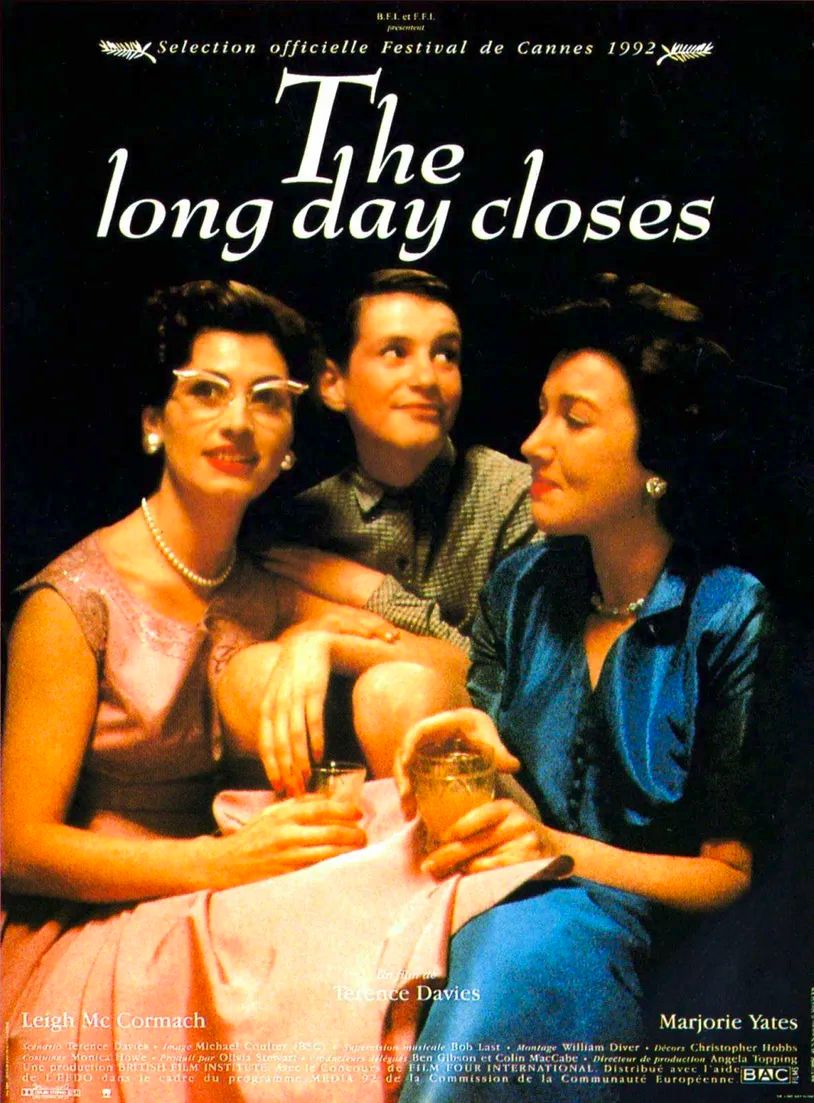
“Terence Davies is one of the most distinctive talents to have emerged from British cinema in the last thirty years. His approach to film-making is the cinematic equivalent of literature’s magic realism, in which a vivid recreation of the everyday world is fused with dreams and memories to produce a form of hyper-realism, reflecting both the external world and inner world of the film-maker.” - Robert Shail (British Film Directors: A Critical Guide, 2007)
Terence Davies
Key Production Countries: UK, USA
Key Genres: Drama, Period Film, Family Drama, Biography, Romantic Drama, Psychological Drama
Key Collaborators: Sol Papadopoulos (Producer), Roy Boulter (Producer), Olivia Stewart (Producer), William Diver (Editor/Cinematographer), Terry O'Sullivan (Leading Actor), Sheila Raynor (Leading Actress), Simon Russell Beale (Leading Actor), Michael Coulter (Cinematographer), Florian Hoffmeister (Cinematographer), David Charap (Editor), Jodhi May (Leading Character Actress), Christopher Hobbs (Production Designer)
Key Genres: Drama, Period Film, Family Drama, Biography, Romantic Drama, Psychological Drama
Key Collaborators: Sol Papadopoulos (Producer), Roy Boulter (Producer), Olivia Stewart (Producer), William Diver (Editor/Cinematographer), Terry O'Sullivan (Leading Actor), Sheila Raynor (Leading Actress), Simon Russell Beale (Leading Actor), Michael Coulter (Cinematographer), Florian Hoffmeister (Cinematographer), David Charap (Editor), Jodhi May (Leading Character Actress), Christopher Hobbs (Production Designer)
"Arguably the most important British filmmaker of his generation, Terence Davies is a poet of the cinema, at once austere and passionate... Davies developed a process dependent on meticulously designed shots, tableau-like evocations of memory linked by emotional (and musical) association more than narrative chronology... Although the 1950s childhood evoked in both Distant Voices, Still Lives and The Long Day Closes is in many ways painful and even harrowing, the films transcend social realism and self-pity in their distilled stylization, their loving recreation of time and space, and moments of intense communal joy (often involving song, cinema, or even slapstick comedy). Their combination of art-film style and reverence for working-class popular culture is unique in British cinema." - Tom Charity (The Rough Guide to Film, 2007)
"British director best known for painful - and painstaking - portraits of childhood. Davies' own harrowing experiences at the hands of an abusive father colour and infuse all his portraits of a working-class Britain. Nonetheless, these are flavoursome, if slow - sometimes to the point of inertia - nostalgia pieces; their atmosphere is 100 per cent redolent of Davies' upbringing in a disease-ridden Liverpool slum area, the youngest of ten children." - David Quinlan (Quinlan's Film Directors, 1999)
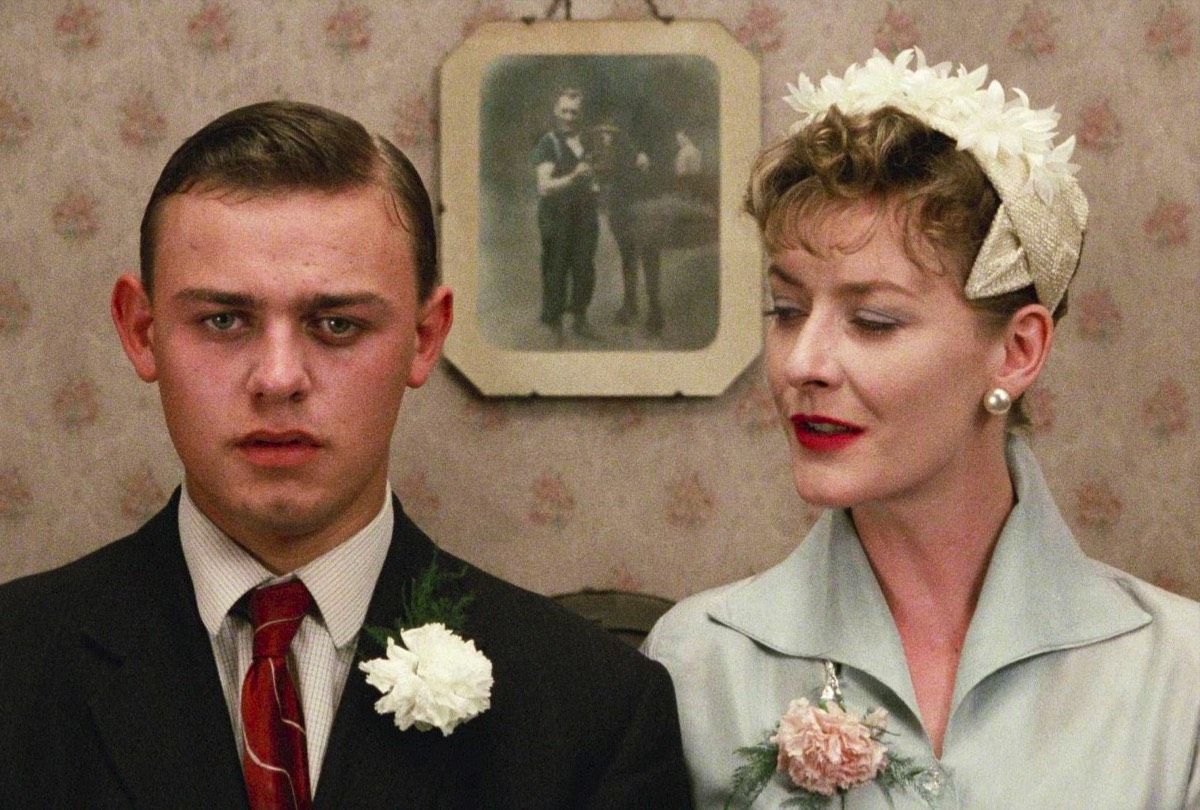
Distant Voices, Still Lives (1988)
"He shows a passionate concern with film craft, lamenting what he sees as the British instinct to use film as a medium for recorded theatre; primarily verbal, sentimental, and in the tight bodice of traditional narrative. His films are remarkably effective in disturbing, collective memories - and myths - of British cultural life with such cinematic ingenuity." - Saul Frampton (The St. James Film Directors Encyclopedia, 1998)
"Made on low budgets provided by institutional resources, the films of Terence Davies reveal a highly original, audacious film-maker. Few contemporary figures match his ability or his interest in charting the dark recesses and haunts of the soul; fewer still do with such sincerity and compassion. Indeed, he is that rarity: a British, but never parochial, director who views cinema seriously and passionately, thus fulfilling the loftiest demands of art." - Geoff Andrew (The Film Handbook, 1989)
“He initially worked as an actor and novelist before joining the National Film School, where he made an extraordinary trio of short films that lyrically reflected the agony and the ecstasy of his life as a gay man and a Catholic. His best films have included fragments of autobiography, and he has also proved a sensitive director of literary adaptations.” - Chambers Film Factfinder, 2006
"Davies is an utterly personal lyric filmmaker who moves as swiftly as music from the lacerating to the ecstatic… It must be a large question where Davies goes beyond autobiography. But The Long Day Closes is a triumph of common experience. The Neon Bible seemed to me an enterprising failure, based on a novel by John Kennedy Toole, but The House of Mirth was a great film (dreadfully missed by public and critics alike) in which a thorough sense of literary values was driven home by Davies’s rare capacity for naked feelings.“ - David Thomson (The New Biographical Dictionary of Film, 2010)
“Davies’ celebration of the working-class community and the enduring ‘mam’ has been criticised for its sentimentalising nostalgia, but has been defended as a highly formalised and self-reflexive exploration of male memory.” - John Caughie (Encyclopedia of European Cinema, 1995)
"I make films to come to terms with my family history... If there had been no suffering, there would have been no films." - Terence Davies
Selected Filmography
{{row.titlelong}}
GF Greatest Films ranking (★ Top 1000 ● Top 2500)
21C 21st Century ranking (☆ Top 1000)
T TSPDT R Jonathan Rosenbaum
21C 21st Century ranking (☆ Top 1000)
T TSPDT R Jonathan Rosenbaum
Terence Davies / Favourite Films
All About Eve (1950) Joseph L. Mankiewicz, The Happiest Days of Your Life (1950) Frank Launder, Kind Hearts and Coronets (1949) Robert Hamer, A Letter to Three Wives (1949) Joseph L. Mankiewicz, The Pajama Game (1957) George Abbott & Stanley Donen, Possessed (1947) Curtis Bernhardt, The Pumpkin Eater (1964) Jack Clayton, Shane (1953) George Stevens, Singin' in the Rain (1952) Stanley Donen & Gene Kelly, Young at Heart (1954) Gordon Douglas.
Source: Sight & Sound (2022)
All About Eve (1950) Joseph L. Mankiewicz, The Happiest Days of Your Life (1950) Frank Launder, Kind Hearts and Coronets (1949) Robert Hamer, A Letter to Three Wives (1949) Joseph L. Mankiewicz, The Pajama Game (1957) George Abbott & Stanley Donen, Possessed (1947) Curtis Bernhardt, The Pumpkin Eater (1964) Jack Clayton, Shane (1953) George Stevens, Singin' in the Rain (1952) Stanley Donen & Gene Kelly, Young at Heart (1954) Gordon Douglas.
Source: Sight & Sound (2022)
Terence Davies / Fan Club
Michał Oleszczyk, Jonathan Rosenbaum, Dave Calhoun, Mark Cousins, David Stratton, Michael Koresky, David Jenkins, Calum Marsh, Richard Brody, Andrew Pulver, Armond White, Roger Koza.
Michał Oleszczyk, Jonathan Rosenbaum, Dave Calhoun, Mark Cousins, David Stratton, Michael Koresky, David Jenkins, Calum Marsh, Richard Brody, Andrew Pulver, Armond White, Roger Koza.
"Fan Club"
These film critics/filmmakers have, on multiple occasions, selected this director’s work within film ballots/lists that they have submitted.
These film critics/filmmakers have, on multiple occasions, selected this director’s work within film ballots/lists that they have submitted.