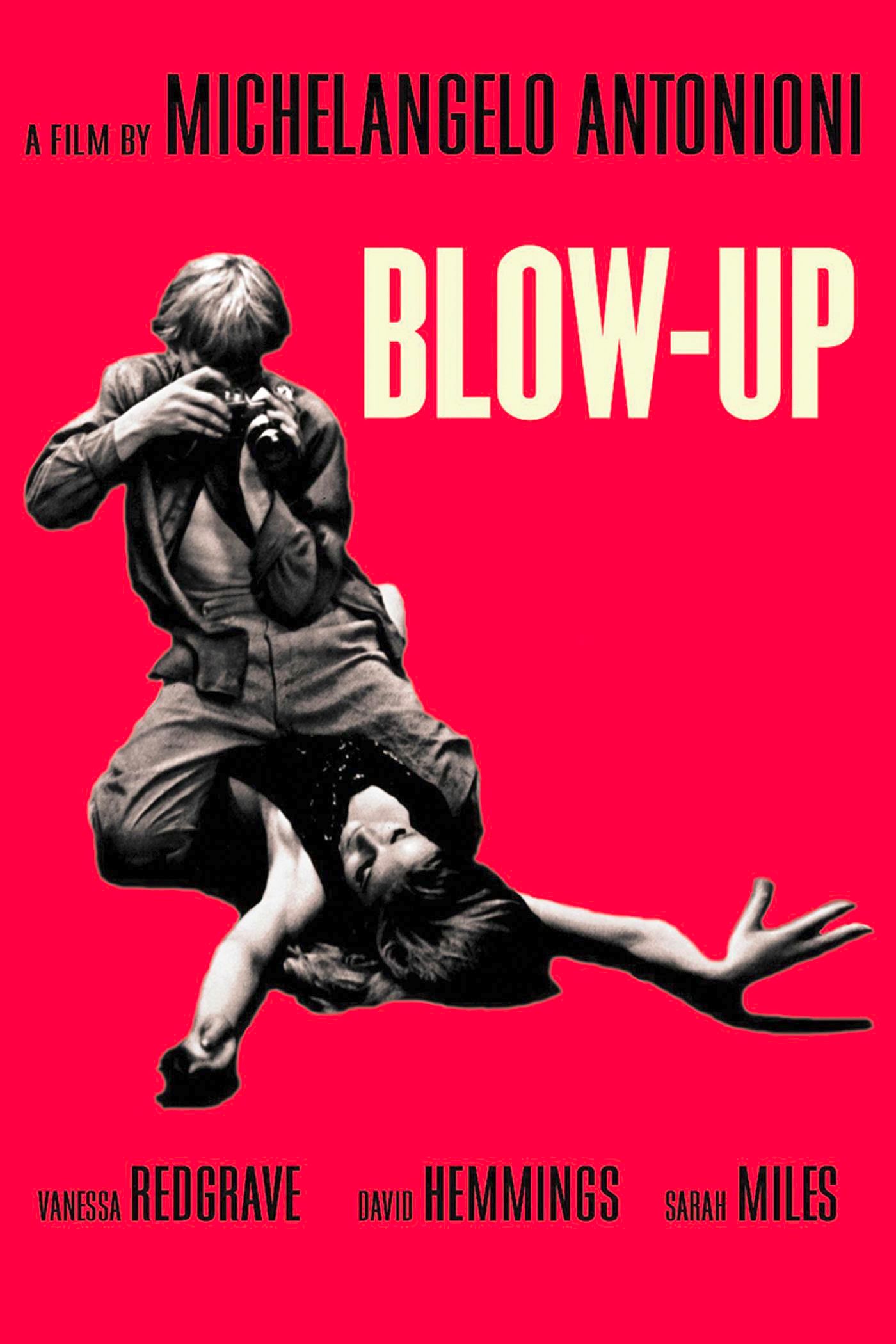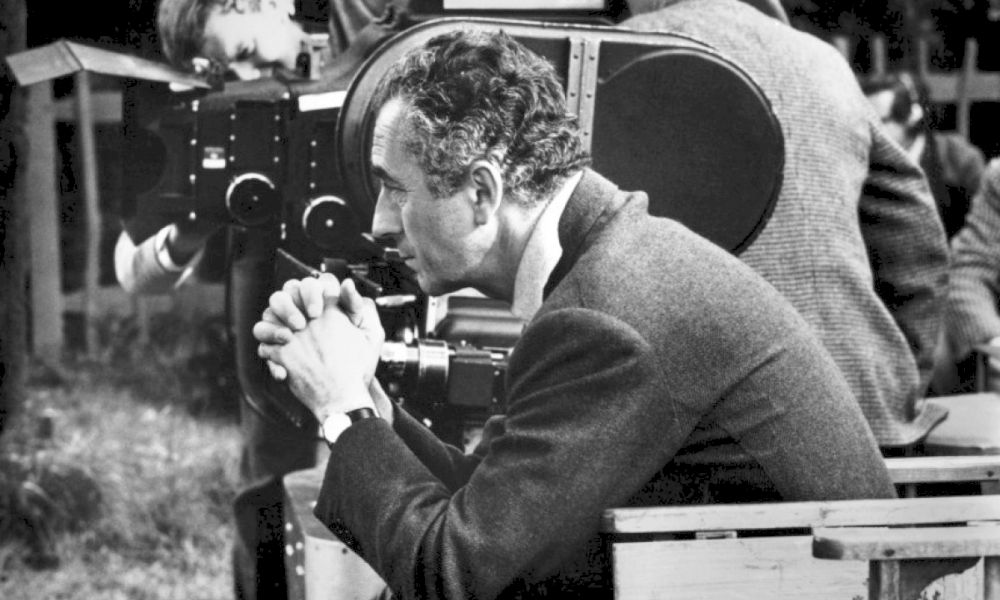
"Antonioni deploys a unique aesthetic and camera style to express the emotional barrenness of modern man in all his mature films. His characters communicate inadequately with each other, his narratives are almost plotless and the physical world is used to express alienation and psychological agony." - The Movie Book, 1999
Michelangelo Antonioni
Director / Screenwriter / Editor
(1912-2007) Born September 29, Ferrara, Emilia-Romagna, Italy
Top 250 Directors
(1912-2007) Born September 29, Ferrara, Emilia-Romagna, Italy
Top 250 Directors
Key Production Countries: Italy, France
Key Genres: Drama, Psychological Drama, Documentary, Ensemble Film, Romantic Drama, Short Film, Marriage Drama, Crime Drama, Road Movie
Key Collaborators: Tonino Guerra (Screenwriter), Eraldo Da Roma (Editor), Giovanni Fusco (Composer), Monica Vitti (Leading Actress), Gianni Di Venanzo (Cinematographer), Carlo Di Palma (Cinematographer), Pierro Poletto (Production Designer), Suso Cecchi d'Amico (Screenwriter), Elio Bartolini (Screenwriter), Carlo Ponti (Producer), Luciano Tovoli (Cinematographer), Enzo Serafin (Cinematographer)
Key Genres: Drama, Psychological Drama, Documentary, Ensemble Film, Romantic Drama, Short Film, Marriage Drama, Crime Drama, Road Movie
Key Collaborators: Tonino Guerra (Screenwriter), Eraldo Da Roma (Editor), Giovanni Fusco (Composer), Monica Vitti (Leading Actress), Gianni Di Venanzo (Cinematographer), Carlo Di Palma (Cinematographer), Pierro Poletto (Production Designer), Suso Cecchi d'Amico (Screenwriter), Elio Bartolini (Screenwriter), Carlo Ponti (Producer), Luciano Tovoli (Cinematographer), Enzo Serafin (Cinematographer)
"Antonioni’s significance as a director is likely to rest on his early films of the 1960s, although a rounded picture of his achievements requires attention to his documentary work and and his color experimentation in The Red Desert and The Mystery of Oberwald (1981)… Roland Barthes attested to Antonioni’s high standing in the world of cinema when he suggested that the filmmaker’s work stands as a challenge to all contemporary artists." - Tom Ryall (Schirmer Encyclopedia of Film, 2006)
"The films of Michelangelo Antonioni are aesthetically complex – critically stimulating though elusive in meaning. They are ambiguous works that pose difficult questions and resist simple conclusions. Classical narrative causalities are dissolved in favour of expressive abstraction. Displaced dramatic action leads to the creation of a stasis occupied by vague feelings, moods and ideas. Confronted with hesitancy, the spectator is compelled to respond imaginatively and independent of the film. The frustration of this experience reflects that felt in the lives of Antonioni’s characters: unable to solve their own personal mysteries they often disappear, leave, submit or die." - James Brown (Senses of Cinema, 2002)
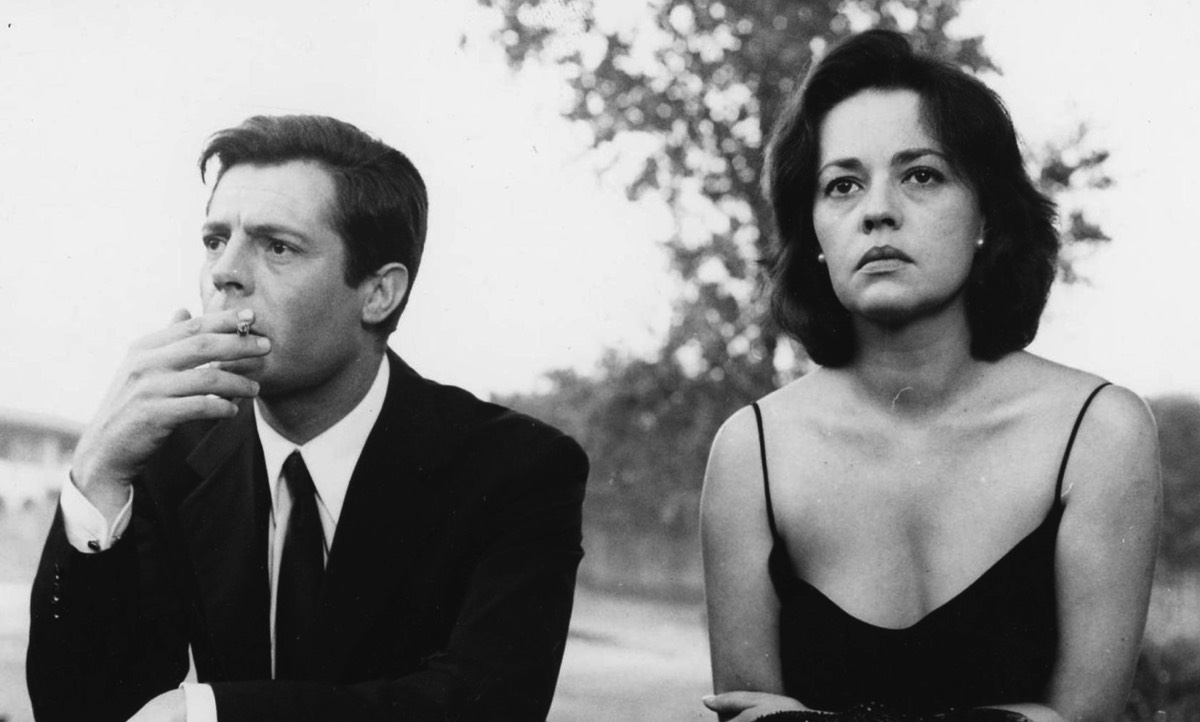
La Notte (1961)
"Antonioni's films are almost plotless, their narrative vagueness almost bordering on mystery. Interest centers on the female, with the male functioning as a catalyst... His reputation rests mainly on his films of the early 60s, truly original works by one of the most remarkable creative artists of the postwar cinema." - The MacMillan International Film Encyclopedia, 1994
"It would be hard to overstate Michelangelo Antonioni’s influence on postwar cinema, architecture and design, fashion, and literature, even on modern conceptions of the intellectual and the erotic. Antonioni, whose fascination with mediated reality only deepened over time, was a restless experimenter with composition, camera movement, cutting, and storytelling." - The Museum of Modern Art, 2018
"It was his association with the actress Monica Vitti in four films - L'Avventura, La notte, L'eclisse and The Red Desert - that brought his work to the attention of a wider international audience, with bleak, fragmentary pictures of characters drifting away from each other, and even from reality. His unique control of camerawork, often moving in long, slow, sometimes circular pans, stamped his work with a highly individual quality of emotional tension." - David Quinlan (Quinlan's Film Directors, 1999)
"At times, his cool, detached observations tend towards abstraction, reducing humans to objects; but in his best work, as in The Passenger, whose stunning, slowly advancing final seven-minute shot shows life in a Spanish village continuing while the reporter is killed off-screen, his bold masterly style transcends pictorial mannerisms to achieve a metaphysical resonance and rigour." - Geoff Andrew (The Director's Vision, 1999)
"One of the undoubted masters of the Italian cinema, Antonioni's uncanny visual sense was evident from his very first directing job, the black-and-white documentary The People of the Po Valley (1947). Everything counts in an Antonioni film, from the colour of a fur coat to the positioning of two alienated people on a bridge." - Mario Reading (The Movie Companion, 2006)
"When a scene is being shot, it is very difficult to know what one wants it to say, and even if one does know, there is always a difference between what one has in mind and the result on film." - Michelangelo Antonioni
"You know what I would like to do: make a film with actors standing in empty space so that the spectator would have to imagine the background of the characters." - Michelangelo Antonioni
Selected Filmography
{{row.titlelong}}
GF Greatest Films ranking (★ Top 1000 ● Top 2500)
21C 21st Century ranking (☆ Top 1000)
T TSPDT N 1,000 Noir Films
R Jonathan Rosenbaum S Martin Scorsese
21C 21st Century ranking (☆ Top 1000)
T TSPDT N 1,000 Noir Films
R Jonathan Rosenbaum S Martin Scorsese
Michelangelo Antonioni / Fan Club
Stig Björkman, Martin Scorsese, Andrey Zvyagintsev, Alexander Payne, Andrei Plakhov, Armond White, John Powers, Walter Salles, Nadav Lapid, Philip Strick, Joachim Trier, Alexander Walker.
Stig Björkman, Martin Scorsese, Andrey Zvyagintsev, Alexander Payne, Andrei Plakhov, Armond White, John Powers, Walter Salles, Nadav Lapid, Philip Strick, Joachim Trier, Alexander Walker.
"Fan Club"
These film critics/filmmakers have, on multiple occasions, selected this director’s work within film ballots/lists that they have submitted.
These film critics/filmmakers have, on multiple occasions, selected this director’s work within film ballots/lists that they have submitted.