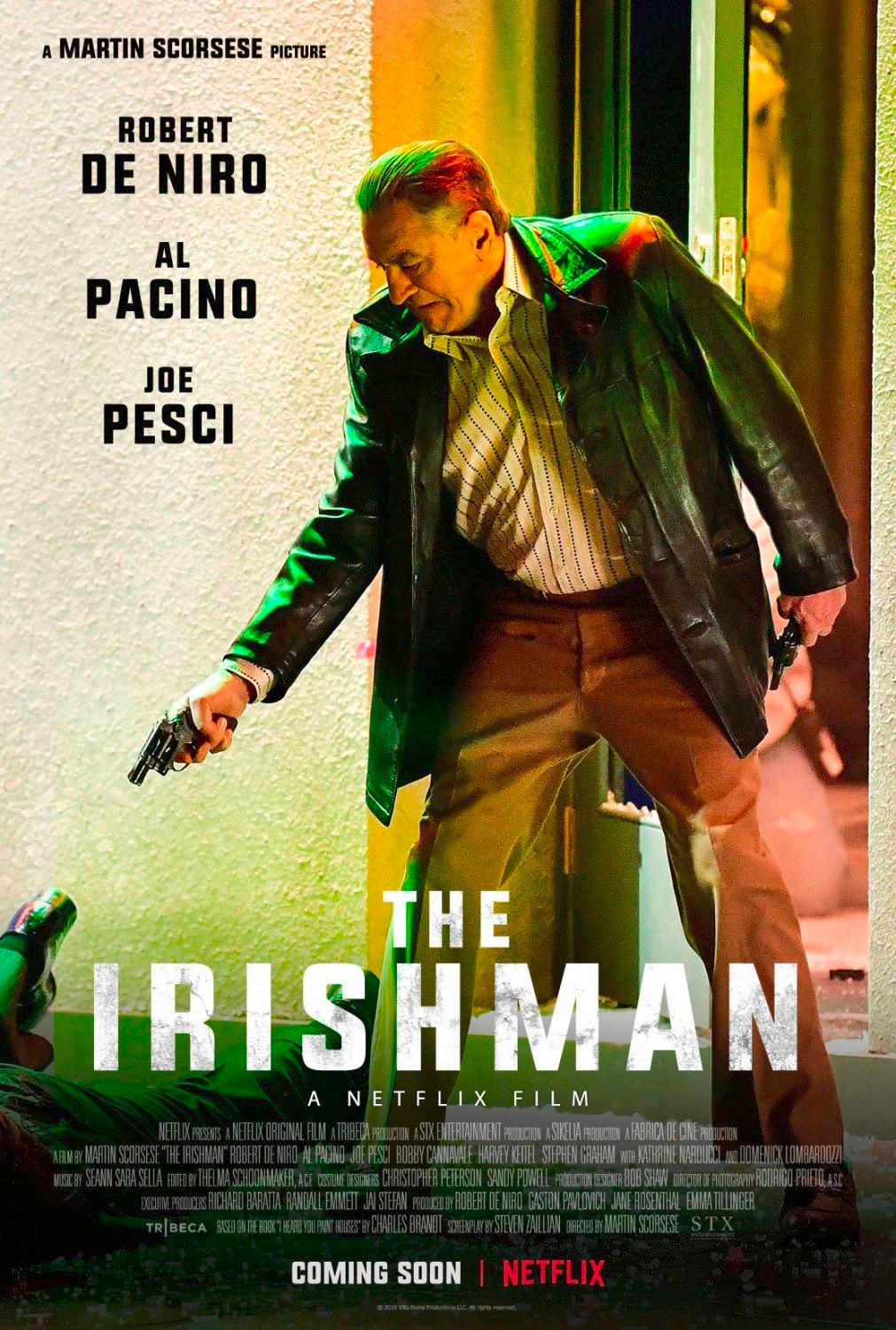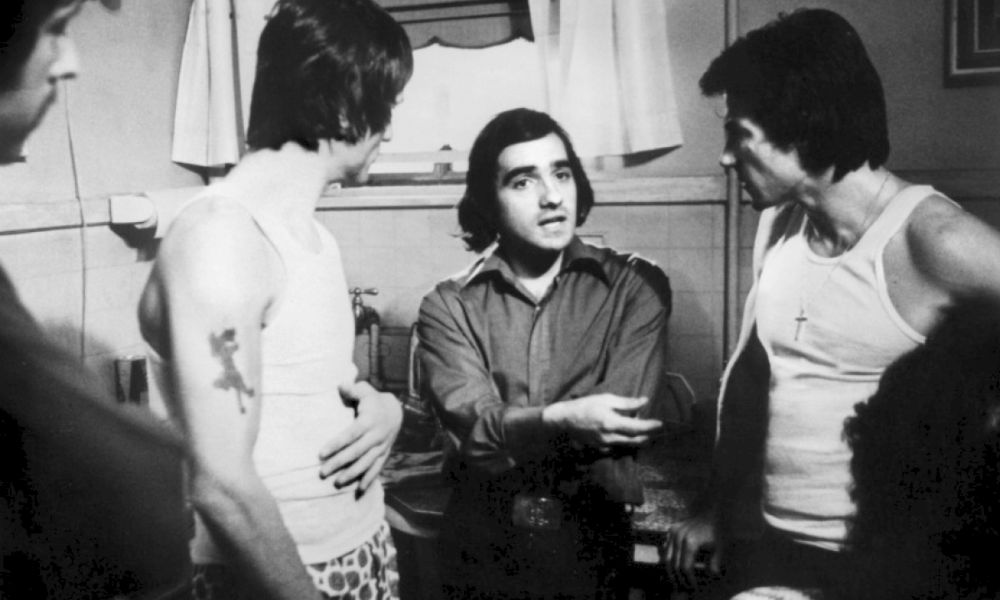
"Of all the 'movie brats' associated with the New Hollywood of the 1970s, Martin Scorsese was arguably the most challenging. While Francis Ford Coppola enhanced the mainstream, and Steven Spielberg and George Lucas rebranded it, Scorsese courageously strode off into his own territory." - Philip Kemp (Cinema: The Whole Story, 2011)
Martin Scorsese
Director / Producer / Screenwriter / Editor / Actor
(1942- ) Born November 17, Queens, New York City, New York, USA
Top 250 Directors / 21st Century's Top 100 Directors
(1942- ) Born November 17, Queens, New York City, New York, USA
Top 250 Directors / 21st Century's Top 100 Directors
Key Production Country: USA
Key Genres: Drama, Biography, Documentary, Crime, Crime Drama, Period Film, Gangster Film, Music, Urban Drama, Thriller, Psychological Drama, Film History
Key Collaborators: Thelma Schoonmaker (Editor), Robert De Niro (Leading Actor), Barbara De Fina (Producer), Dante Ferretti (Production Designer), Robert Richardson (Cinematographer), Leonardo DiCaprio (Leading Actor), Michael Ballhaus (Cinematographer), Harvey Keitel (Leading Actor), Mardik Martin (Screenwriter), Irwin Winkler (Producer), David Tedeschi (Editor), Howard Shore (Composer)
Key Genres: Drama, Biography, Documentary, Crime, Crime Drama, Period Film, Gangster Film, Music, Urban Drama, Thriller, Psychological Drama, Film History
Key Collaborators: Thelma Schoonmaker (Editor), Robert De Niro (Leading Actor), Barbara De Fina (Producer), Dante Ferretti (Production Designer), Robert Richardson (Cinematographer), Leonardo DiCaprio (Leading Actor), Michael Ballhaus (Cinematographer), Harvey Keitel (Leading Actor), Mardik Martin (Screenwriter), Irwin Winkler (Producer), David Tedeschi (Editor), Howard Shore (Composer)
"For three decades Martin Scorsese has been at the forefront of American cinema, its most avid champion and respected standard-bearer, and often its most electrifying practitioner… The most cine-literate of directors, he has also been among the most formally restless and exploratory, evolving an obsessive-compulsive mise en scène based on dynamic, agile camerawork and radical, staccato editing rhythms attuned to his innovative, informed and highly influential use of rock, pop and classical music." - Tom Charity (The Rough Guide to Film, 2007)
"Scorsese’s work evidences a remarkable thematic consistency. His collaborations with the screenwriter Paul Schrader on Mean Streets, Taxi Driver (1976), Raging Bull (1980), and Bringing Out the Dead (1999) only hint at this consistency. Whether he is directing a period adaptation of Edith Wharton’s 1920 novel The Age of Innocence (1993), creating a Tibetan epic based on the early years of the Dalai Lama in Kundun (1997), or returning, as he so often has, to the formulas of the crime film in GoodFellas (1990), Cape Fear (1991), or Casino (1995), Scorsese is fascinated by the story of the hero in revolt against a stifling culture whose norms he or she has internalized to a dangerous extent." - Thomas Leitch (Schirmer Encyclopedia of Film, 2006)
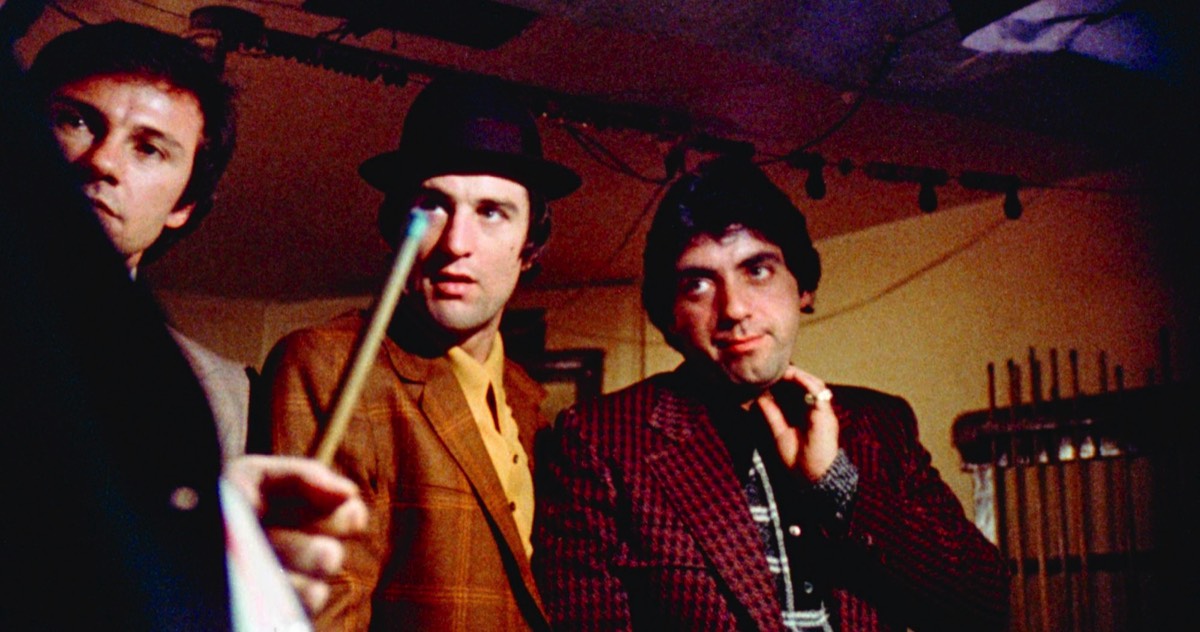
Mean Streets (1973)
"Scorsese is an enthusiast. It comes through in the way he talks (hardly stopping to draw breath) and in the way he makes his movies - passionately, with one wary eye on the past... In purely filmic terms, Scorsese's real talent lies in his capacity to mould dialogue, movement and sound into one fluid, cinematic whole, and he achieves this effect most consistently with GoodFellas (1990)." - Mario Reading (The Movie Companion, 2006)
"He directs extraordinary movies on hundred-million-dollar budgets yet makes them deeply personal and packs them with artistic flourishes—spectacular camera moves, intimate observations, dramatic shocks, and moments of performance—that are as daring as they are distinctive." - Richard Brody (The New Yorker, 2023)
"The most renowned filmmaker of his era, Martin Scorsese virtually defined the state of modern American cinema during the 1970s and '80s. A consummate storyteller and visual stylist who lived and breathed movies, he won fame translating his passion and energy into a brand of filmmaking that crackled with kinetic excitement. Working well outside of the mainstream, Scorsese nevertheless emerged in the 1970s as a towering figure throughout the industry, achieving the kind of fame and universal recognition typically reserved for more commercially successful talents." - Jason Ankeny (Allmovie)
"In the best sense, Scorsese’s movies have always been about him — passionately, deeply personal works that catalogue his hang-ups and obsessions, riffing on religion, spiritual torment, guilt, and the difficult road to transcendence, often through gangster pictures and crime dramas. And although he remains one of the most movie-obsessed of all directors, his films rarely feel like the work of a man cut off from the world — quite to the contrary, they’re fully engaged with their specific milieus, whether Tibet or Little Italy. His movies feel alive, inviting — even when his characters are mobsters or monsters. They’re the work of a true believer." - Tim Grierson & Will Leitch (Vulture, 2019)
"Based in New York, he pursues his own path (with Hollywood money), continuously turning out films that are utterly personal and often deeply autobiographical... Bold, inventive, versatile, and uncompromising, Scorsese is one of the most intelligent and provocative filmmakers working in cinema today." - (The MacMillan International Film Encyclopedia, 1994)
"I met Scorsese many years ago. It was immediately like finding my long-lost cousin, an Italian-American like myself but one really of the same style: the same smells in the kitchen, the same wonderful parents and the same sense of being both American and Italian. I loved the first film I saw of his, Who’s That Knocking at My Door?. But I also loved every one of his films in succession, as I saw them as he made them. Marty is the greatest film teacher in the world. He certainly joins the ring of the greatest living film-makers working today – perhaps along with two or three others." - Francis Ford Coppola (The Guardian, 2022)
"Scorsese, arguably the most cinematically eloquent American director of modern times, is best characterised as an expressionist and cinephile...His exhilaratingly long, complex camera movements, his often staccato editing, and his carefully controlled use of colour, props, decor and music are all designed not only to take us inside the minds of his often paranoid, volatile or disturbed protagonists, but to pay tribute, in passing, to movies he loves." - Geoff Andrew (The Director's Vision, 1999)
"In a lifetime watching movies, Martin Scorsese seems to have synthesized the sights and sounds of every film he’s ever seen to create his own special style. And with every new project, he continues to tell his uniquely American stories." - Terrence Rafferty (DGA, 2007)
"Since emerging from the generation of film-makers which revolutionised American cinema in the 1960s and 1970s, Martin Scorsese has established himself as one of the great directors of contemporary cinema. While Hollywood has steadily retreated into safety and convention, and while his contemporaries have collectively burned out, sold out, or cashed in, Scorsese has continued to produce some of the most challenging and influential cinema that America has to offer." - Oliver Berry (Contemporary North American Film Directors, 2002)
"New York City and New Yorkers have been characterized by Scorsese better than by any other director of his generation. In his young career, he has shown concern for violence in society and the seamier side of life." - William R. Meyer (The Film Buff's Catalog, 1978)
"What does it take to be a filmmaker in Hollywood? Even today I still wonder what it takes to be a professional or even an artist in Hollywood. How do you survive the constant tug of war between personal expression and commercial imperatives? What is the price you pay to work in Hollywood? Do you end up with a split personality? Do you make one movie for them, one for yourself?" - Martin Scorsese (A Personal Journey with Martin Scorsese Through American Movies, 1997)
"Every year or so, I try to do something; it keeps me refreshed as to what's going on in front of the lens, and I understand what the actor is going through." - Martin Scorsese
Selected Filmography
Loading filmography...
GF Greatest Films ranking (★ Top 1000 ● Top 2500)
21C 21st Century ranking (☆ Top 1000)
T TSPDT N 1,000 Noir Films R Jonathan Rosenbaum
21C 21st Century ranking (☆ Top 1000)
T TSPDT N 1,000 Noir Films R Jonathan Rosenbaum
Martin Scorsese / Favourite Films
Ashes and Diamonds (1958) Andrzej Wajda, Citizen Kane (1941) Orson Welles, Diary of a Country Priest (1951) Robert Bresson, 8½ (1963) Federico Fellini, Ikiru (1952) Akira Kurosawa, The Leopard (1963) Luchino Visconti, Ordet (1955) Carl Theodor Dreyer, Paisan (1946) Roberto Rossellini, The Red Shoes (1948) Michael Powell & Emeric Pressburger, The River (1951) Jean Renoir, Salvatore Giuliano (1962) Francesco Rosi, The Searchers (1956) John Ford, 2001: A Space Odyssey (1968) Stanley Kubrick, Ugetsu monogatari (1953) Kenji Mizoguchi, Vertigo (1958) Alfred Hitchcock.
Source: Sight & Sound (2022)
Ashes and Diamonds (1958) Andrzej Wajda, Citizen Kane (1941) Orson Welles, Diary of a Country Priest (1951) Robert Bresson, 8½ (1963) Federico Fellini, Ikiru (1952) Akira Kurosawa, The Leopard (1963) Luchino Visconti, Ordet (1955) Carl Theodor Dreyer, Paisan (1946) Roberto Rossellini, The Red Shoes (1948) Michael Powell & Emeric Pressburger, The River (1951) Jean Renoir, Salvatore Giuliano (1962) Francesco Rosi, The Searchers (1956) John Ford, 2001: A Space Odyssey (1968) Stanley Kubrick, Ugetsu monogatari (1953) Kenji Mizoguchi, Vertigo (1958) Alfred Hitchcock.
Source: Sight & Sound (2022)
Martin Scorsese / Fan Club
Roger Ebert, Edgar Wright, Kent Jones, David Sterritt, John Woo, Matt Singer, Bong Joon-ho, Quentin Tarantino, Guillermo del Toro, Glenn Kenny, Gavin Smith, Joanna Hogg, Amy Taubin.
Roger Ebert, Edgar Wright, Kent Jones, David Sterritt, John Woo, Matt Singer, Bong Joon-ho, Quentin Tarantino, Guillermo del Toro, Glenn Kenny, Gavin Smith, Joanna Hogg, Amy Taubin.
"Fan Club"
These film critics/filmmakers have, on multiple occasions, selected this director’s work within film ballots/lists that they have submitted.
These film critics/filmmakers have, on multiple occasions, selected this director’s work within film ballots/lists that they have submitted.