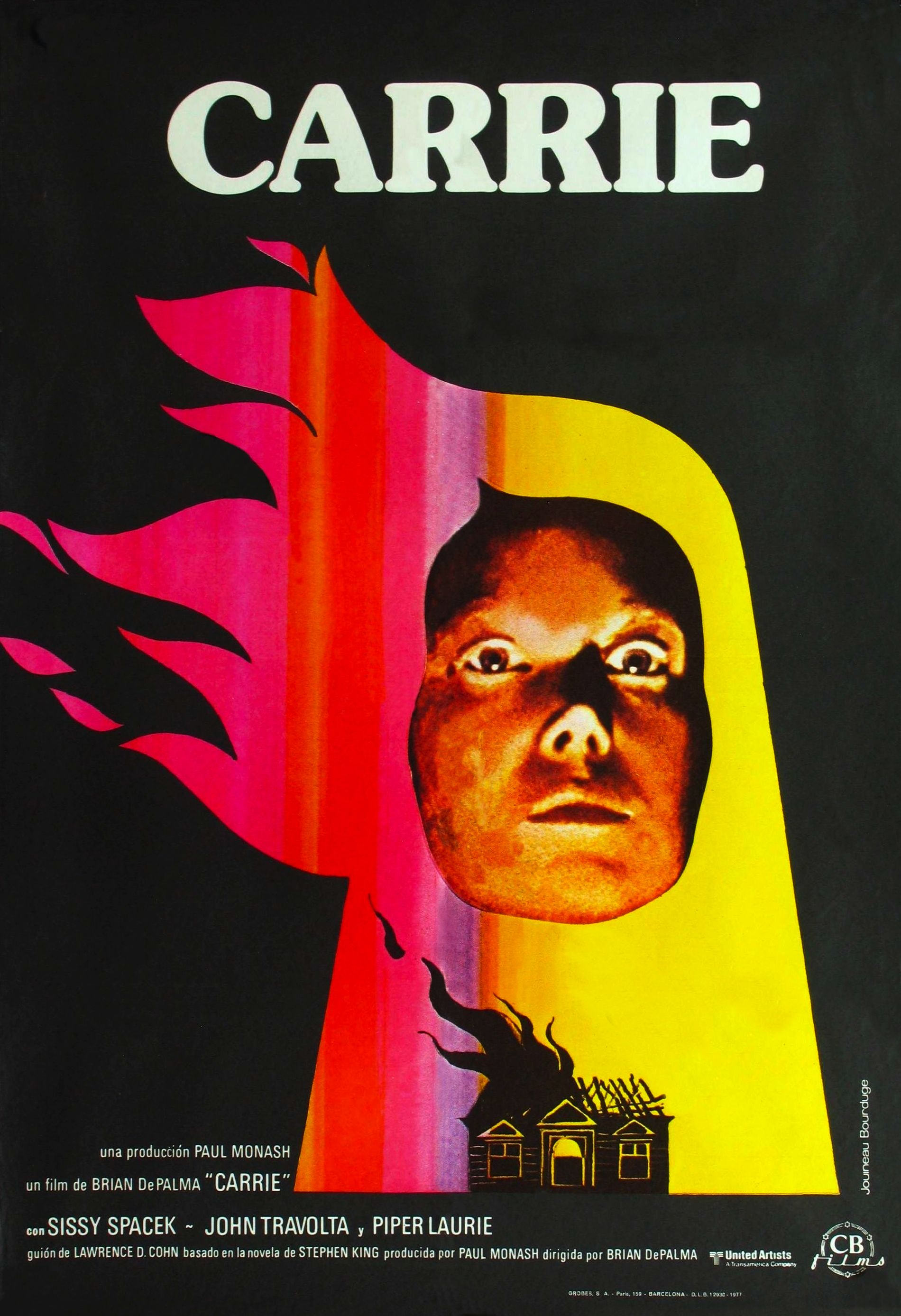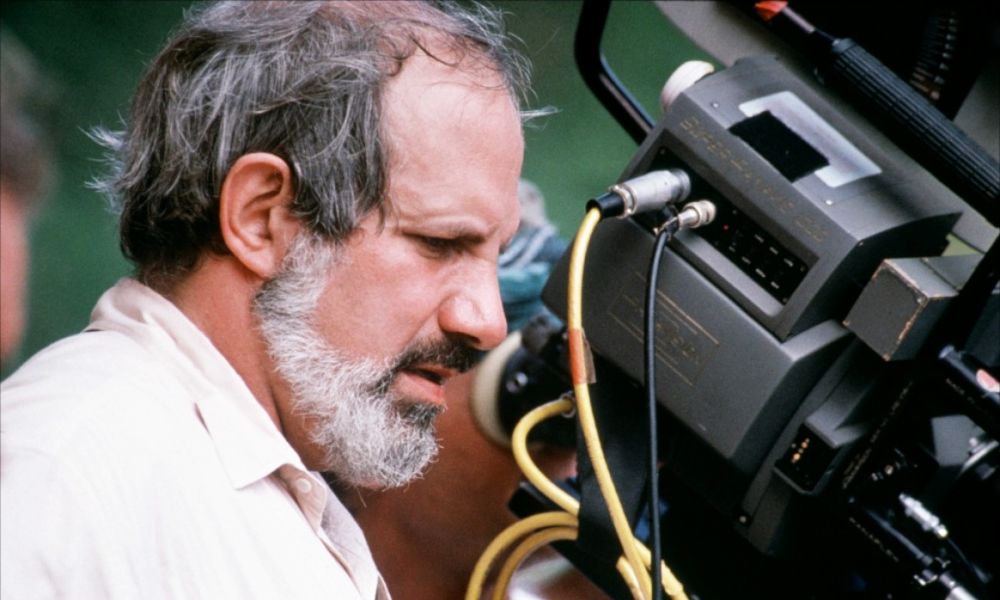
"Brian De Palma is the most controversial director to have emerged from the movie brat generation of film school graduates. A misogynist, a genius, a copycat, a cine-literate aesthete, an emotionless technician, all of these epithets have been thrown his way - and they all have some validity." - Lloyd Hughes (The Rough Guide to Film, 2007)
Brian De Palma
Director / Screenwriter / Producer
(1940- ) Born September 11, Newark, New Jersey, USA
Top 250 Directors
(1940- ) Born September 11, Newark, New Jersey, USA
Top 250 Directors
Key Production Countries: USA, France
Key Genres: Thriller, Psychological Thriller, Crime Thriller, Crime, Gangster Film, Horror, Erotic Thriller, Mystery, War Drama, Action, Political Satire, Supernatural Thriller
Key Collaborators: Paul Hirsch (Editor), Bill Pankow (Editor), Stephen H. Burum (Cinematographer), Pino Donaggio (Composer), Jerry Greenberg (Editor), Dennis Franz (Character Actor), John Lithgow (Leading Actor), Robert De Niro (Leading Actor), David Koepp (Screenwriter), George Litto (Producer), Art Linson (Producer), Vilmos Zsigmond (Cinematographer)
Key Genres: Thriller, Psychological Thriller, Crime Thriller, Crime, Gangster Film, Horror, Erotic Thriller, Mystery, War Drama, Action, Political Satire, Supernatural Thriller
Key Collaborators: Paul Hirsch (Editor), Bill Pankow (Editor), Stephen H. Burum (Cinematographer), Pino Donaggio (Composer), Jerry Greenberg (Editor), Dennis Franz (Character Actor), John Lithgow (Leading Actor), Robert De Niro (Leading Actor), David Koepp (Screenwriter), George Litto (Producer), Art Linson (Producer), Vilmos Zsigmond (Cinematographer)
"The conventional dismissal of Brian De Palma—that he is a mere “Hitchcock imitator”—though certainly unjust, provides a useful starting point, the relation being far more complex than such a description suggests. It seems more appropriate to talk of symbiosis than of imitation: if De Palma borrows Hitchcock's plot-structures, the impulse is rooted in an authentic identification with the Hitchcock thematic that results in (at De Palma’s admittedly infrequent best) valid variations that have their own indisputable originality." - Robin Wood (International Dictionary of Films and Filmmakers, 1991)
"Like Hitch, De Palma is famed for his elegant camera movements, shock cutting, use of lurid colour (especially red), and meticulously staged set-pieces of violent action - in short, technique - but unlike the master he lacks originality and ideas... There is a cold, clinical misanthropy (and, indeed, misogyny) to much of De Palma's work, evident in his readiness to subordinate his thinly drawn characters to flashy visual effect." - Geoff Andrew (The Director's Vision, 1999)
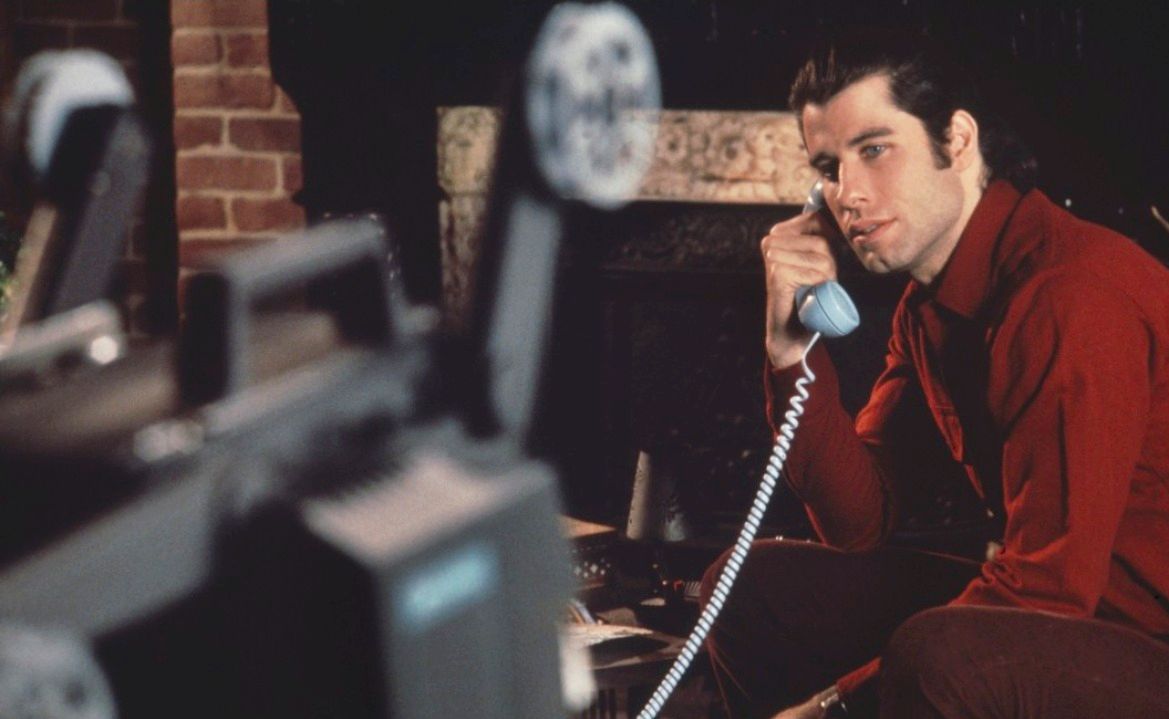
Blow Out (1981)
"His early lower-budget thrillers, although superbly manufactured, were too bloody and garish for the average taste and infuriated many critics. But De Palma began gaining respectability with Dressed to Kill (1980) and following several critical setbacks, reached the apex in the late 80s with such high-powered productions as The Untouchables (1987) and Casualties of War (1989). A superb technician, he was finally crafting material worthy of his bold, often dazzling, visual flair." - The MacMillan International Film Encyclopedia, 1994
"Right now, we can imagine a budding young filmmaker or critic discovering a De Palma movie for the first time, soaking up its elaborate formal conceits, and having his or her eyes and ears opened by all the amazing, boundlessly clever tricks with time, space, narrative and perspective. We cannot today imagine the cinema – or life as a cinephile – without the dazzling, virtuosic, mind-boggling games that De Palma has opened up for us, and that he explores at the height of his inventiveness." - Adrian Martin & Cristina Álvarez López (Film Critic: Adrian Martin, 2018)
"There is a self-conscious cunning in De Palma's work, ready to control everything except his own cruelty and indifference. He is the epitome of mindless style and excitement swamping taste or character. Of course, he was a brilliant kid. But his usefulness in an historical survey is to point out the dangers of movies falling into the hands of such narrow movie-mania, such cold-blooded prettification." - David Thomson (The New Biographical Dictionary of Film, 2002)
"Of all the filmmakers to emerge from the American new wave in the 1970s, none would prove as polarising as Brian De Palma. None would communicate meaning in their films in such direct cinematic terms either, or speak the language of cinema with such clarity and fluency. The surfaces of Brian De Palma’s cinema are touched with an aesthetic and technical rapture, the very mechanics of the medium the key to unpacking deeper truths. Depending on who you believe, he’s either a misogynist or the ‘master of the macabre’, the filmmaker for whom his greatest fan – the film critic Pauline Kael – conjured an image of “Welles, Peckinpah, Scorsese and Spielberg… stunned, bowing to the ground, choking with laughter.”" - Manuela Lazic & Matthew Thrift (BFI, 2016)
"Brian De Palma has often been criticised for imitating Sir Alfred Hitchcock but, for modern audiences, De Palma is the superior master of suspense. His best cinematic moments - often grand, slow-moving vistas of tension and violence - are some of the most memorable in film history." - Darryl Wiggers (501 Movie Directors, 2007)
"'I think that Hitchcock probably has had the best story ideas and cinema ideas in the history of the cinema, and I'm just trying to follow the master a little bit." - Brian De Palma (Directing the Film, 1976)
"I've dropped myself into straightforward character pieces in order to explore that form and reap its values. But you are sort of restricted visually when your first requirement is to tell a fairly straightforward story." - Brian De Palma
Selected Filmography
{{row.titlelong}}
GF Greatest Films ranking (★ Top 1000 ● Top 2500)
21C 21st Century ranking (☆ Top 1000)
T TSPDT N 1,000 Noir Films R Jonathan Rosenbaum
21C 21st Century ranking (☆ Top 1000)
T TSPDT N 1,000 Noir Films R Jonathan Rosenbaum
Brian De Palma / Fan Club
Edgar Wright, Quentin Tarantino, Adrian Martin, David Jenkins, Jessica Hausner, Filipe Furtado, Marco Dutra, Machiyama Tomohiro, Ricardo Luis Alvarez, Stephanie Zacharek, Peter Sobczynski, Alex Ross Perry.
Edgar Wright, Quentin Tarantino, Adrian Martin, David Jenkins, Jessica Hausner, Filipe Furtado, Marco Dutra, Machiyama Tomohiro, Ricardo Luis Alvarez, Stephanie Zacharek, Peter Sobczynski, Alex Ross Perry.
"Fan Club"
These film critics/filmmakers have, on multiple occasions, selected this director’s work within film ballots/lists that they have submitted.
These film critics/filmmakers have, on multiple occasions, selected this director’s work within film ballots/lists that they have submitted.