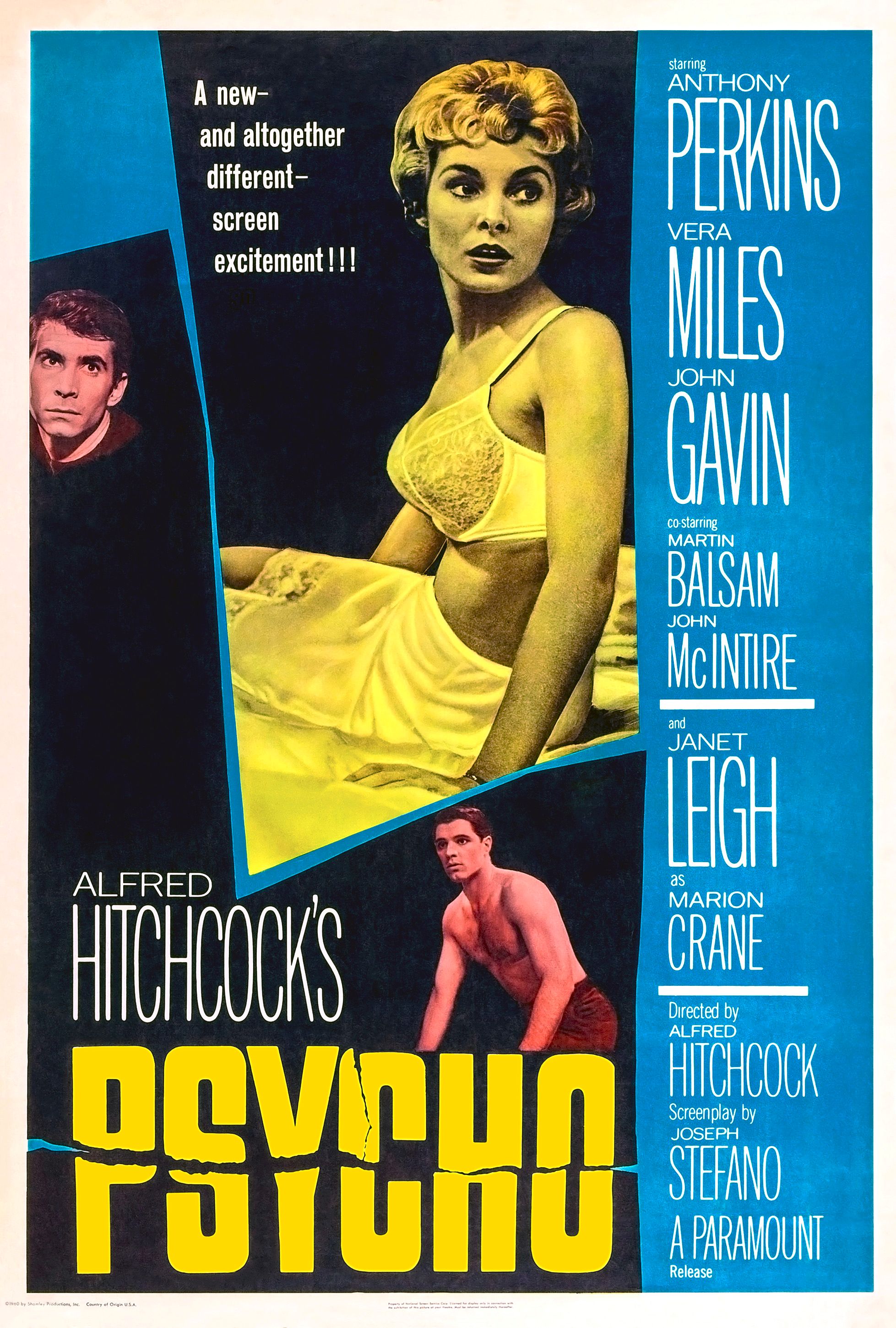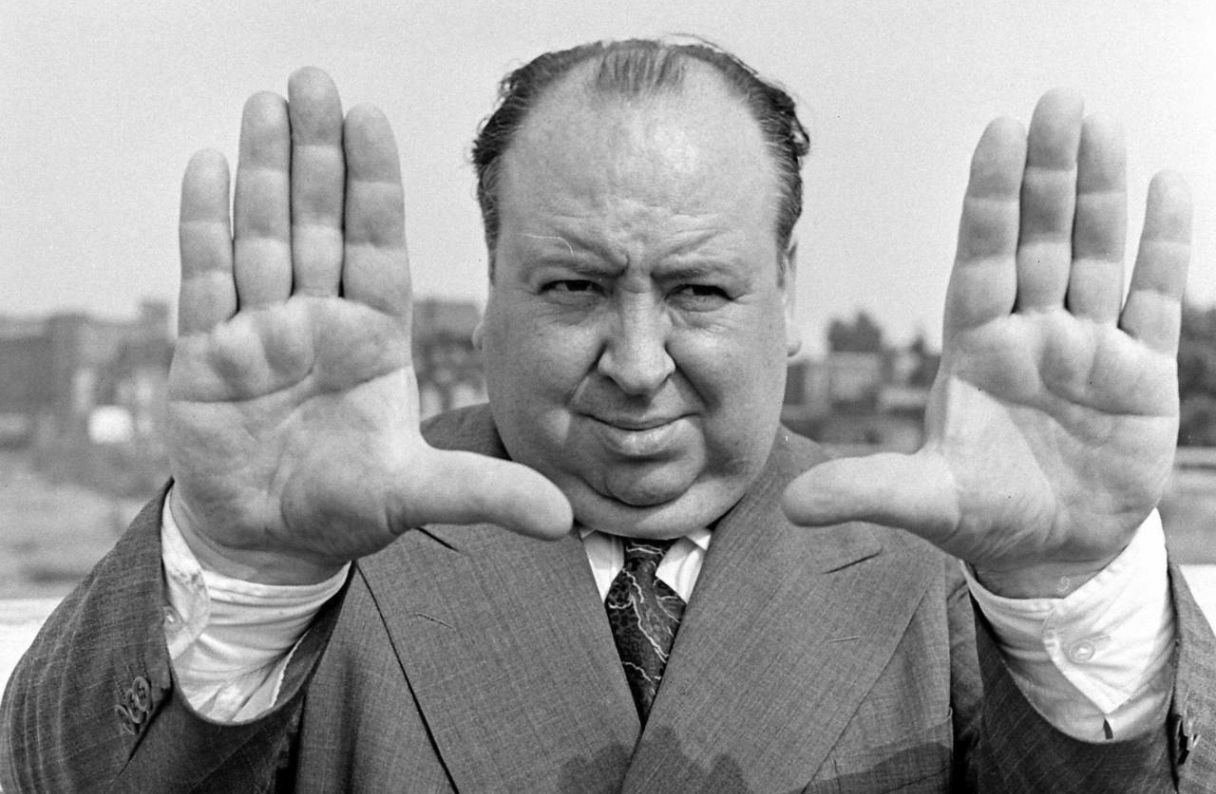
"He was indisputably the master of suspense… Beyond technical experimentation, Hitchcock's true mastery lay in his melding of dense philosophical reflection on themes of universal significance to brilliant, often scathing, detailed social observation." - Murray Pomerance (501 Movie Directors, 2007)
Alfred Hitchcock
Director / Producer / Screenwriter
(1899-1980) Born August 13, Leytonstone, London, England
Top 250 Directors / 50 Key Noir Directors
(1899-1980) Born August 13, Leytonstone, London, England
Top 250 Directors / 50 Key Noir Directors
Key Production Countries: UK, USA
Key Genres: Thriller, Psychological Thriller, Spy Film, Romantic Mystery, Mystery, Drama, Romance, Comedy, Comedy Thriller, Political Thriller, Chase Movie, Crime Drama
Key Collaborators: Alma Reville (Screenwriter), Robert Burks (Cinematographer), George Tomasini (Editor), Bernard Herrmann (Composer), Charles Bennett (Screenwriter), Jack E. Cox (Cinematographer), Michael Balcon (Producer), Leo G. Carroll (Leading Character Actor), C. Wilfred Arnold (Production Designer), Joan Harrison (Screenwriter), John Maxwell (Producer), Hal Pereira (Production Designer)
Key Genres: Thriller, Psychological Thriller, Spy Film, Romantic Mystery, Mystery, Drama, Romance, Comedy, Comedy Thriller, Political Thriller, Chase Movie, Crime Drama
Key Collaborators: Alma Reville (Screenwriter), Robert Burks (Cinematographer), George Tomasini (Editor), Bernard Herrmann (Composer), Charles Bennett (Screenwriter), Jack E. Cox (Cinematographer), Michael Balcon (Producer), Leo G. Carroll (Leading Character Actor), C. Wilfred Arnold (Production Designer), Joan Harrison (Screenwriter), John Maxwell (Producer), Hal Pereira (Production Designer)
"The extreme peculiarity of Hitchcock’s art (if his films do not seem very odd it is only because they are so familiar) can be partly accounted for by the way in which these aesthetic influences from high art and revolutionary socialism were pressed into the service of British middle-class popular entertainment. Combined with Hitchcock’s all-pervasive scepticism (‘‘Everything’s perverted in a different way, isn’t it?’’), this process resulted in an art that at once endorsed (superficially) and undermined (profoundly) the value system of the culture within which it was produced, be that culture British or American." - Robin Wood (International Dictionary of Films and Filmmakers, 1991)
"Alfred Hitchcock is the supreme technician of the American cinema. Even his many enemies cannot begrudge him that distinction. Like Ford, Hitchcock cuts in his mind, and not in the cutting room with five different setups for every scene. His is the only contemporary style that unites the divergent classical traditions of Murnau (camera movement) and Eisenstein (montage)." - Andrew Sarris (The American Cinema, 1968)
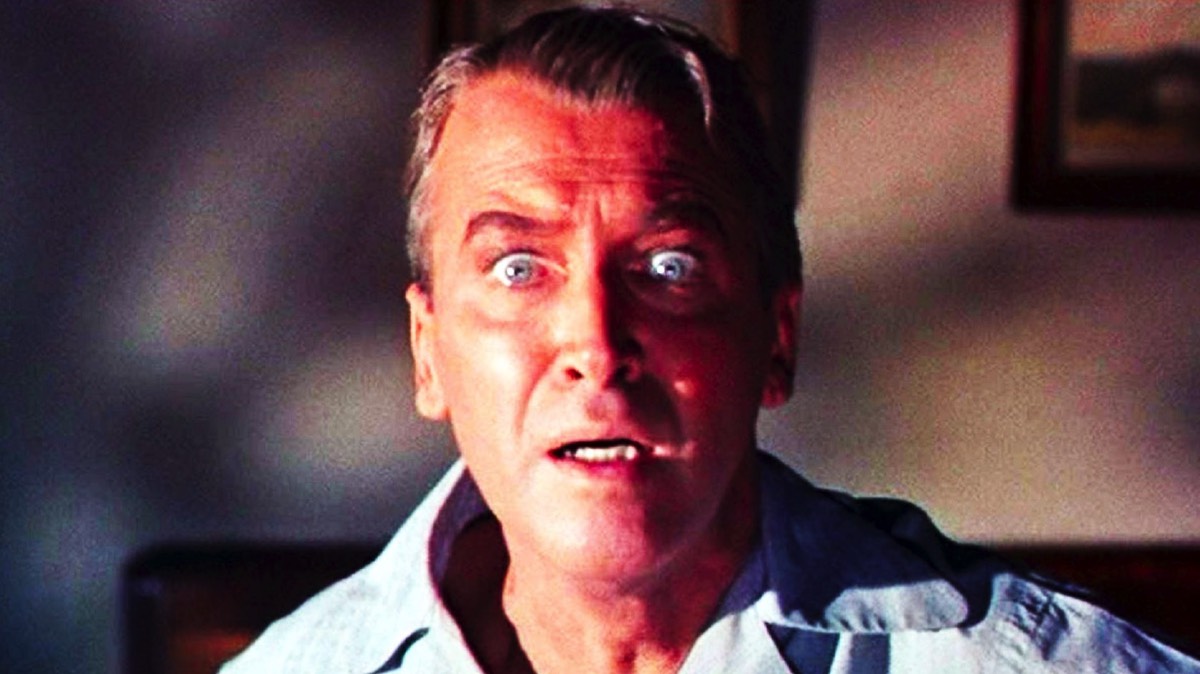
Vertigo (1958)
"Although he chose to limit his thematic range to the genre of suspenseful melodrama and has disappointed some high-minded critics with his lack of seriousness or interest in important social issues. Hitchcock is without question among the few most gifted directors who ever worked in the film medium. A supreme technician and stylist with an unmistakable personal imprint and a great visual artists, he is impossible to dismiss as just the "Master of Suspense", as he has been frequently described." - The MacMillan International Film Encyclopedia, 1994
"More than most filmmakers, Hitchcock took into his control the development and production of his stories, and embraced television as a medium, which helped, along with his film cameos, to create a persona who was recognizable by the public. One of the earliest to instinctively understand the power of branding, “Hitch” became the most famous director who ever lived. He had an instinct for self-promotion, putting himself in his own movie trailers. He created a wry comedic persona –the director who winks at the audience as he sets out to scare the bejeezus out of them." - IndieWire, 2015
"The master of suspense, Hitchcock is a genius at filming the unexpected, from whole scripts to characters and little, insignificant plot elements." - William R. Meyer (The Film Buff's Catalog, 1978)
"For five decades, Alfred Hitchcock explored our innermost anxieties, desires, and obsessions in his diabolically constructed thrillers, which redefined the mechanics of screen terror through meticulous editing, voyeuristic camera work, and unforgettable set pieces." - The Criterion Channel
"Though he seemingly cared little if backdrop scenery was obviously artificial, he was a superb technician, expert at orchestrating the irruption of menacing, life-changing chaos into a complacent, deceptively safe and ordered world." - Geoff Andrew (The Director's Vision, 1999)
"With 53 movies spanning over 50 years, Alfred Hitchcock is one of the most prolific and influential filmmakers to arise out of the 20th century. He began his career working on silent films in England, and eventually moved to the United States to create some of Hollywood's biggest movies of the 1950s and '60s. His films frequently feature espionage, mistaken identities, claustrophobic locations, and unnerving camera movements to maximize tension. It's clear from his strongest work that Hitchcock was fascinated by questions of morality, voyeurism, and human psychology." - Wesley Stenzel (Entertainment Weekly, 2023)
"It is impossible for anyone who has seen even one of his films to deny Hitchcock his place inside the cinema's pantheon of greats, for his was the most 'cinematic' mind of all, and at the same time the most isolated from 'real life' of all the great directors. Cinema made Hitchcock just as surely as the stage made Laurence Olivier, and he was equally in thrall to it, subsuming his unconscious mind, and ours, to its magic." - Mario Reading (The Movie Companion, 2006)
"A prankster and a deeply felt obsessive, a confessor and an enigma, a self-contradictor and a clear, purposeful visionary – Alfred Hitchcock’s identity as artist and impresario is as personal as his title ‘Master of Suspense’ is obligatory. We think of Hitchcock less as a descendant of other storytellers than in terms of innovations and preoccupations: thrillingly distinct murder scenes; ‘MacGuffin’ plot devices; wrong-man escapes and spy adventures leading to chases, with extraordinary climaxes in monuments from the British Museum to Mount Rushmore. We think of voyeurism, of floating and lurching inward camera moves, of blondes in peril, and of the cottage industry Hitchcock became in his cameo roles, publicity shots and TV product lines like Alfred Hitchcock Presents." - Ian Mantgani (BFI, 2016)
"Any American director who says he hasn't been influenced by him is out of his mind." - John Frankenheimer
"He directed Britain's first talking picture, Blackmail (1929), and went on to build a reputation as the Master of Suspense. His impressive body of work is noted for its dark wit, ice-cool blonde heroines and increasing psychological complexity." - Chambers Film Factfinder, 2006
"One of the most truly famous names among Hollywood directors, Alfred Hitchcock remained essentially British in his attitudes, sense of humour and low-keyed style of directing throughout his career... The universal, timeless quality of his best work, his themes and preoccupations, is reflected in the work of many followers who imitated him throughout the 60s and 70s, including Polanski, De Palma and François Truffaut." - Joel W. Finler (The Movie Directors Story, 1985)
"I don't understand why we have to experiment with film. I think everything should be done on paper. A musician has to do it, a composer. He puts a lot of dots down and beautiful music comes out. And I think that students should be taught to visualize. That's the one thing missing in all this. The one thing that the student has got to do is to learn that there is a rectangle up there - a white rectangle in a theatre - and it has to be filled." - Alfred Hitchcock (Directing the Film, 1976)
"Dialogue should simply be a sound among other sounds, just something that comes out of the mouths of people whose eyes tell the story in visual terms." - Alfred Hitchcock
"I enjoy playing the audience like a piano." - Alfred Hitchcock
Selected Filmography
{{row.titlelong}}
GF Greatest Films ranking (★ Top 1000 ● Top 2500)
T TSPDT N 1,000 Noir Films
R Jonathan Rosenbaum S Martin Scorsese
T TSPDT N 1,000 Noir Films
R Jonathan Rosenbaum S Martin Scorsese
Alfred Hitchcock / Favourite Films
The Enchanted Cottage (1924) John S. Robertson, Forbidden Fruit (1921) Cecil B. DeMille, The Gold Rush (1925) Charles Chaplin, I Am a Fugitive from a Chain Gang (1932) Mervyn LeRoy, The Isle of Lost Ships (1923) Maurice Tourneur, The Last Command (1928) Josef von Sternberg, Saturday Night (1922) Cecil B. DeMille, Scaramouche (1923) Rex Ingram, Sentimental Tommy (1921) John S. Robertson, Variety (1925) E.A. Dupont.
Source: A Life in Darkness and Light by Patrick McGilligan (list is from 1939).
The Enchanted Cottage (1924) John S. Robertson, Forbidden Fruit (1921) Cecil B. DeMille, The Gold Rush (1925) Charles Chaplin, I Am a Fugitive from a Chain Gang (1932) Mervyn LeRoy, The Isle of Lost Ships (1923) Maurice Tourneur, The Last Command (1928) Josef von Sternberg, Saturday Night (1922) Cecil B. DeMille, Scaramouche (1923) Rex Ingram, Sentimental Tommy (1921) John S. Robertson, Variety (1925) E.A. Dupont.
Source: A Life in Darkness and Light by Patrick McGilligan (list is from 1939).
Alfred Hitchcock / Fan Club
Andrew Sarris, Martin Scorsese, François Truffaut, José Luis Guarner, Michał Oleszczyk, Jonathan Rosenbaum, Miguel Marías, Fernando Méndez-Leite, Roger Ebert, Philip French, Robin Wood, David Sterritt.
Andrew Sarris, Martin Scorsese, François Truffaut, José Luis Guarner, Michał Oleszczyk, Jonathan Rosenbaum, Miguel Marías, Fernando Méndez-Leite, Roger Ebert, Philip French, Robin Wood, David Sterritt.
"Fan Club"
These film critics/filmmakers have, on multiple occasions, selected this director’s work within film ballots/lists that they have submitted.
These film critics/filmmakers have, on multiple occasions, selected this director’s work within film ballots/lists that they have submitted.