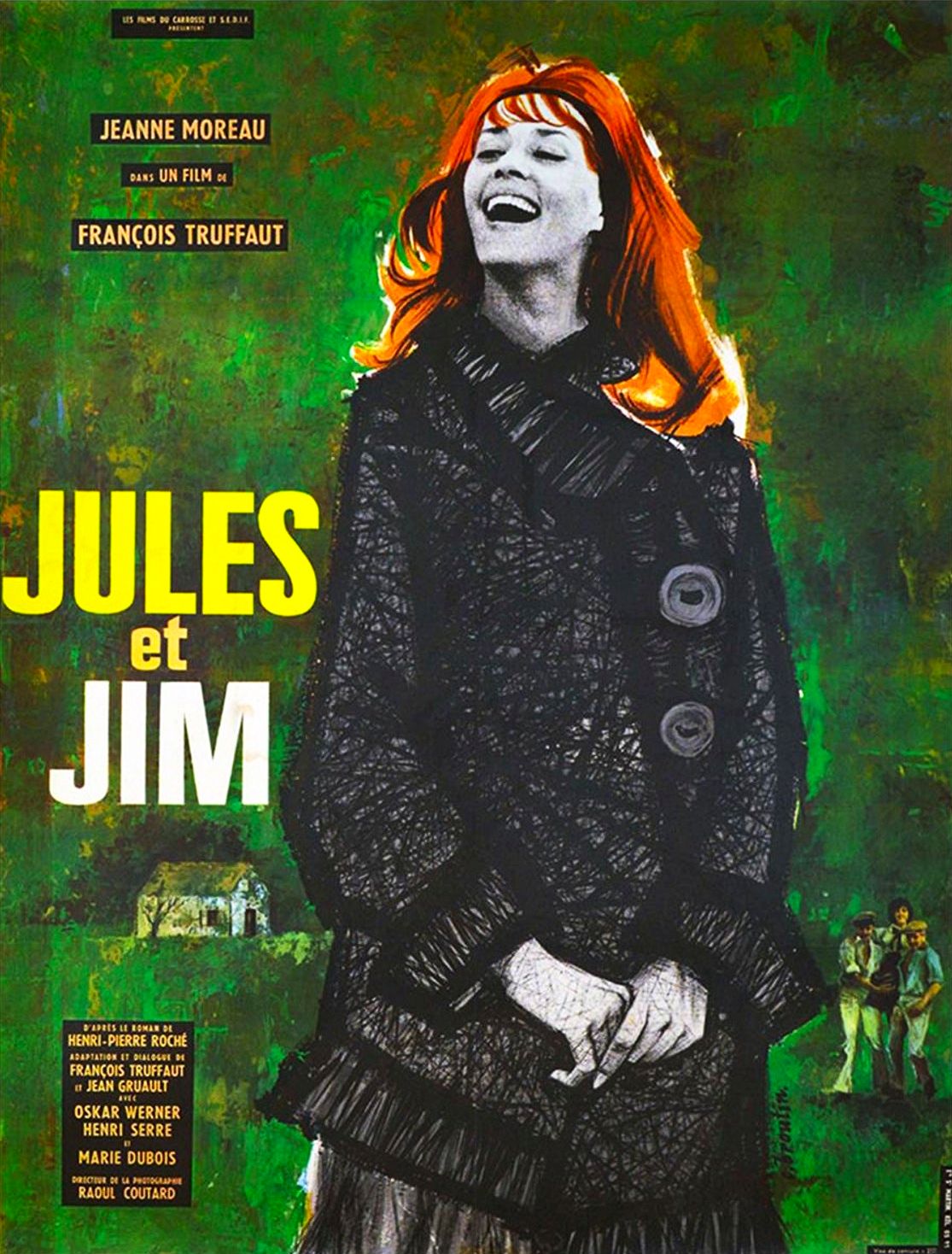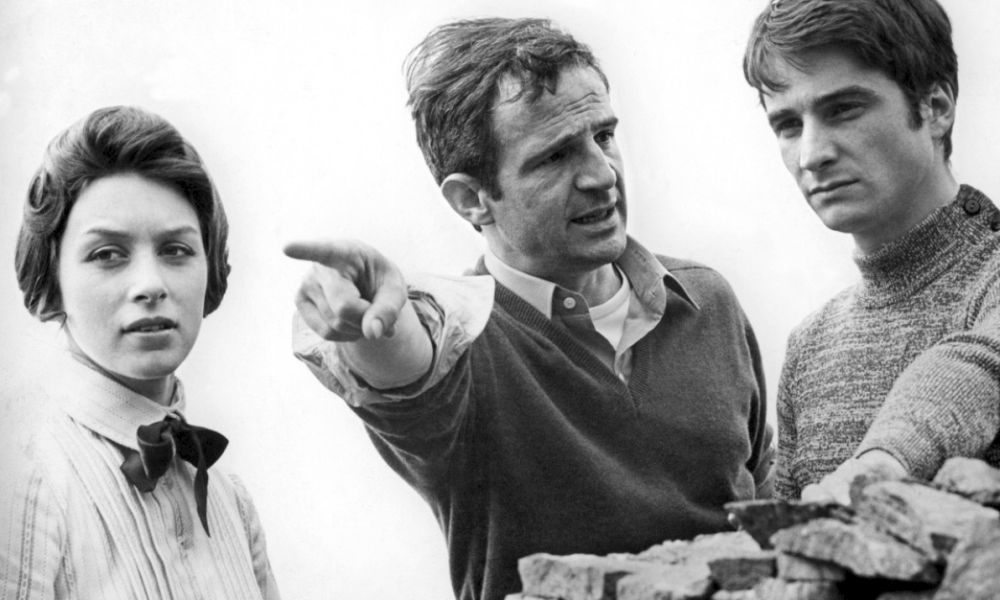
"His finest work is precariously but deftly balanced between sympathetic involvement with his characters' doubts, frustration and confusion, and gently ironic detachment; accordingly, he favoured the medium close-up and medium-shot, linear but subtly elliptical narratives and, occasionally, voiceover narration, literary in tone." - Geoff Andrew (The Director's Vision, 1999)
François Truffaut
Director / Screenwriter / Producer / Actor
(1932-1984) Born February 6, Paris, France
Top 250 Directors
(1932-1984) Born February 6, Paris, France
Top 250 Directors
Key Production Country: France
Key Genres: Drama, Romantic Drama, Comedy Drama, Romance, Period Film, Psychological Drama, Romantic Comedy, Post-Noir (Modern Noir), Melodrama, Coming-of-Age, Childhood Drama, Psychological Thriller
Key Collaborators: Marcel Berbert (Producer), Georges Delerue (Composer), Nestor Almendros (Cinematographer), Martine Barraqué (Editor), Suzanne Schiffman (Screenwriter), Jean-Pierre Kohut-Svelko (Production Designer), Jean-Pierre Leaud (Leading Actor), Jean Gruault (Screenwriter), Yann Dedet (Editor), Jean-Louis Richard (Screenwriter), Raoul Coutard (Cinematographer), Agnes Guillemot (Editor)
Key Genres: Drama, Romantic Drama, Comedy Drama, Romance, Period Film, Psychological Drama, Romantic Comedy, Post-Noir (Modern Noir), Melodrama, Coming-of-Age, Childhood Drama, Psychological Thriller
Key Collaborators: Marcel Berbert (Producer), Georges Delerue (Composer), Nestor Almendros (Cinematographer), Martine Barraqué (Editor), Suzanne Schiffman (Screenwriter), Jean-Pierre Kohut-Svelko (Production Designer), Jean-Pierre Leaud (Leading Actor), Jean Gruault (Screenwriter), Yann Dedet (Editor), Jean-Louis Richard (Screenwriter), Raoul Coutard (Cinematographer), Agnes Guillemot (Editor)
"Truffaut remained true to the Cahiers legacy by inserting into each film references to his favorite periods of film history and his admired directors (Lubitsch, Hitchcock, Renoir). Jules and Jim, set in the early days of cinema, provided an occasion to incorporate silent footage and to employ old -fashioned irises. Truffaut sought not to destroy traditional cinema but to renew it. In the Cahiers spirit he aimed to enrich commercial filmmaking by balancing personal expression with a concern for his audience: "I have to feel I am producing a piece of entertainment." - Kristin Thompson & David Bordwell (Film History: An Introduction, 2009)
"François Truffaut was one of five young French film critics, writing for André Bazin's Cahiers du Cinema in the early 1950s, who became the leading French filmmakers of their generation... Unlike his friend and contemporary, Jean-Luc Godard, Truffaut remained consistently committed to his highly formal themes of art and life, film and fiction, youth and education, art and education, rather than venturing into radical political critiques of film forms and film imagery." - Gerald Mast (International Dictionary of Films and Filmmakers, 1991)
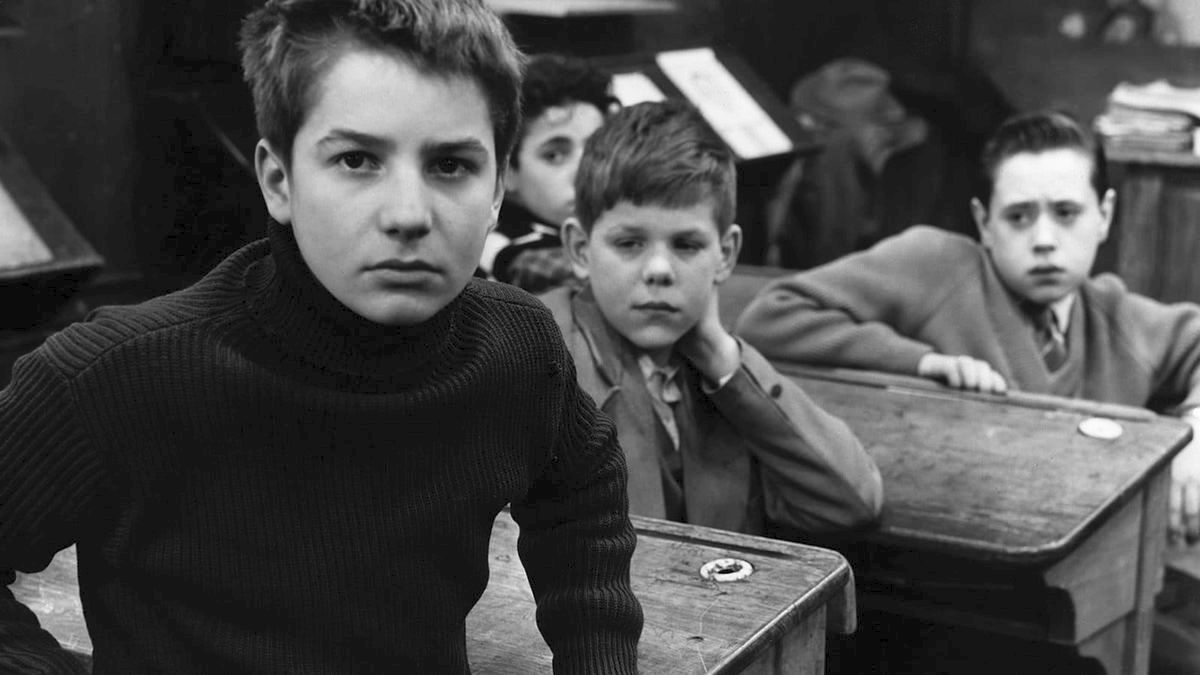
The 400 Blows (1959)
"Truffaut’s influence on cinema was international in scope. He conveyed in his films and in his writing an apparently inexhaustible and infectious enthusiasm for the possibility of authentic personal expression in the cinema. Perhaps his most moving film after The 400 Blows, L’Enfant Sauvage (The Wild Child, 1970) stars Truffaut as a scientist who attempts to communicate with an Abandoned autistic child. Throughout his life, Truffaut believed that human communication could transcend language and culture. No doubt, his influence on young filmmakers derives from this faith." - Hilary Ann Radner (Schirmer Encyclopedia of Film, 2007)
"After years working as a film critic at publications like Cahiers du Cinéma, along with peers such as Jean-Luc Godard and Eric Rohmer, Truffaut became one of the most significant directors of the French New Wave of the 1950s and 1960s. This seminal movement, which revolutionised filmmaking with its preference both for a playful approach to narrative and for shooting on location, would go on to influence the ambitions and practice of many filmmakers of the 60s, 70s and beyond, while countless filmmakers, from Steven Spielberg and Bong Joon-ho to Greta Gerwig and Wes Anderson, continue to hold Truffaut’s work in high esteem." - BFI, 2022
"A passionately romantic humanist like Renoir, Truffaut was also a devout admirer of the skills of Hitchcock, which he attempted to emulate in several of his own thrillers. He published a book of a series of interviews he conducted with Hitchcock, whom he repeatedly identified as his idol, but temperamentally and emotionally his affinity with Renoir seemed to be the stronger side of his split artistic personality" - The MacMillan International Film Encyclopedia, 1994
"Truffaut went from runaway schoolboy to bad-boy Cahiers du cinema critic to wildly acclaimed filmmaker before the age of 27, and sadly, passed away of a brain tumor aged only 52, and the result is that his career can sometimes seem like a brief, if brilliant one, especially in contrast to that of friend and colleague Jean Luc-Godard, who's still working today. But Truffaut packed a lot into his quarter-century of work, dancing between autobiography (his Antoine Doinel series), crime drama, period fare, sly comedy, and sometimes all of the above." - Oliver Lyttelton (IndieWire, 2014)
"This distinguished French film-maker was an extraordinary man to pin down, in that he almost never made the same kind of film twice, and his films varied infuriatingly from very good to mediocre. There are autobiographical elements in many of them, which are veined with ideas of childhood, loneliness, women, mothers and obsessional objects;" - David Quinlan (Quinlan's Film Directors, 1999)
"Truffaut made only a few films that are not flawed, several that have serious weaknesses in conception and realization, one or two content to treat the surface of a subject, but none without a youthful enthusiasm for movies. He treated material speculatively, in the way of an idealised Hollywood director in the days of constant production, priding himself on an ability to make any assignment beautiful and entertaining… Whether or how well his films will last remains to be seen. Whatever the answer to that question, for many people who love film, Truffaut will always seem like the most accessible and engaging crest to the New Wave." - David Thomson (The New Biographical Dictionary of Film, 2002)
"Truffaut's work moves, sometimes uncertainly, between the highly personal style of his best films (with their tendency towards episodic structure, diffident heroes, and suggestions of improvisation), and those which seem to reflect American influences." - Roger Manvell (The International Encyclopedia of Film, 1972)
"Truffaut was always a committed cineaste, who remained, up to his death from a brain tumour at 52, totally at ease with the revolutionary filmic language he had helped create. His critical reputation may have slipped slightly in some quarters, but the magnitude of his achievements as both theorist and auteur should not be underestimated." - Lloyd Hughes (The Rough Guide to Film, 2007)
"One of France's most sympathetic film-makers, François Truffaut was closely associated with the nouvelle vague of the late Fifties… Truffaut's films are always marked by a distinctive gentleness, a graceful humour, and a truly personal cinematic sense.." - The Illustrated Who's Who of the Cinema, 1983
"Enthusiasm, lucidity, and freedom of expression characterise the films of François Truffaut, a leading force in the French new Wave. They are obviously made by someone who wants to retain a certain innocence." - Ronald Bergan (Film - Eyewitness Companions, 2006)
"A seminal director in the French New Wave, Truffaut is a master at illustrating the small joys and sorrows of human existence, with a particular talent for understanding children." - William R. Meyer (The Film Buff's Catalog, 1978)
"The film of tomorrow will not be directed by civil servants of the camera, but by artists for whom shooting a film constitutes a wonderful and thrilling adventure." - François Truffaut
Selected Filmography
{{row.titlelong}}
GF Greatest Films ranking (★ Top 1000 ● Top 2500)
T TSPDT N 1,000 Noir Films
R Jonathan Rosenbaum S Martin Scorsese
T TSPDT N 1,000 Noir Films
R Jonathan Rosenbaum S Martin Scorsese
François Truffaut / Favourite Films
All the President's Men (1976) Alan J. Pakula, L'Atalante (1934) Jean Vigo, The Big Sleep (1946) Howard Hawks, Casque d'or (1952) Jacques Becker, Citizen Kane (1941) Orson Welles, The Criminal Life of Archibaldo de la Cruz (1955) Luis Buñuel, Day of Wrath (1943) Carl Theodor Dreyer, Dial M for Murder (1954) Alfred Hitchcock, Duel (1971) Steven Spielberg, The Enigma of Kaspar Hauser (1974) Werner Herzog, Fingers (1978) James Toback, Foolish Wives (1922) Erich von Stroheim, Gentlemen Prefer Blondes (1953) Howard Hawks, The Girl Can't Help It (1956) Frank Tashlin, Hollywood or Bust (1956) Frank Tashlin, The Honeymoon Killers (1970) Leonard Kastle, I Confess (1953) Alfred Hitchcock, It Should Happen to You (1954) George Cukor, Johnny Guitar (1954) Nicholas Ray, A King in New York (1957) Charles Chaplin, Kiss Me Deadly (1955) Robert Aldrich, The Lady Vanishes (1938) Alfred Hitchcock, The Magnificent Ambersons (1942) Orson Welles, Marnie (1964) Alfred Hitchcock, La Marseillaise (1938) Jean Renoir, My Night at Maud's (1969) Eric Rohmer, The Naked Dawn (1955) Edgar G. Ulmer, The Night of the Hunter (1955) Charles Laughton, Notorious (1946) Alfred Hitchcock, Orphans of the Storm (1922) D.W. Griffith, The Quiet Man (1952) John Ford, Rebecca (1940) Alfred Hitchcock, The Rules of the Game (1939) Jean Renoir, Shadow of a Doubt (1943) Alfred Hitchcock, Summer Interlude (1951) Ingmar Bergman, Sunrise (1927) F.W. Murnau, Testament of Orpheus (1960) Jean Cocteau, To Catch a Thief (1955) Alfred Hitchcock, Toni (1935) Jean Renoir, Touch of Evil (1958) Orson Welles, Tristana (1970) Luis Buñuel, Trouble in Paradise (1932) Ernst Lubitsch, Ugetsu monogatari (1953) Kenji Mizoguchi, Verboten! (1959) Samuel Fuller, Vivre sa vie (1962) Jean-Luc Godard, The Wrong Man (1956) Alfred Hitchcock, Young and Innocent (1937) Alfred Hitchcock, Zero for Conduct (1933) Jean Vigo.
Source: Unknown (1979)
All the President's Men (1976) Alan J. Pakula, L'Atalante (1934) Jean Vigo, The Big Sleep (1946) Howard Hawks, Casque d'or (1952) Jacques Becker, Citizen Kane (1941) Orson Welles, The Criminal Life of Archibaldo de la Cruz (1955) Luis Buñuel, Day of Wrath (1943) Carl Theodor Dreyer, Dial M for Murder (1954) Alfred Hitchcock, Duel (1971) Steven Spielberg, The Enigma of Kaspar Hauser (1974) Werner Herzog, Fingers (1978) James Toback, Foolish Wives (1922) Erich von Stroheim, Gentlemen Prefer Blondes (1953) Howard Hawks, The Girl Can't Help It (1956) Frank Tashlin, Hollywood or Bust (1956) Frank Tashlin, The Honeymoon Killers (1970) Leonard Kastle, I Confess (1953) Alfred Hitchcock, It Should Happen to You (1954) George Cukor, Johnny Guitar (1954) Nicholas Ray, A King in New York (1957) Charles Chaplin, Kiss Me Deadly (1955) Robert Aldrich, The Lady Vanishes (1938) Alfred Hitchcock, The Magnificent Ambersons (1942) Orson Welles, Marnie (1964) Alfred Hitchcock, La Marseillaise (1938) Jean Renoir, My Night at Maud's (1969) Eric Rohmer, The Naked Dawn (1955) Edgar G. Ulmer, The Night of the Hunter (1955) Charles Laughton, Notorious (1946) Alfred Hitchcock, Orphans of the Storm (1922) D.W. Griffith, The Quiet Man (1952) John Ford, Rebecca (1940) Alfred Hitchcock, The Rules of the Game (1939) Jean Renoir, Shadow of a Doubt (1943) Alfred Hitchcock, Summer Interlude (1951) Ingmar Bergman, Sunrise (1927) F.W. Murnau, Testament of Orpheus (1960) Jean Cocteau, To Catch a Thief (1955) Alfred Hitchcock, Toni (1935) Jean Renoir, Touch of Evil (1958) Orson Welles, Tristana (1970) Luis Buñuel, Trouble in Paradise (1932) Ernst Lubitsch, Ugetsu monogatari (1953) Kenji Mizoguchi, Verboten! (1959) Samuel Fuller, Vivre sa vie (1962) Jean-Luc Godard, The Wrong Man (1956) Alfred Hitchcock, Young and Innocent (1937) Alfred Hitchcock, Zero for Conduct (1933) Jean Vigo.
Source: Unknown (1979)
François Truffaut / Fan Club
Martin Scorsese, Mike Leigh, Whit Stillman, Christian Petzold, Dan Sallitt, Sukhdev Sandhu, Armond White, Andreas Kilb, Joseph McBride, Wim Wenders, Tony Macklin, John Woo.
Martin Scorsese, Mike Leigh, Whit Stillman, Christian Petzold, Dan Sallitt, Sukhdev Sandhu, Armond White, Andreas Kilb, Joseph McBride, Wim Wenders, Tony Macklin, John Woo.
"Fan Club"
These film critics/filmmakers have, on multiple occasions, selected this director’s work within film ballots/lists that they have submitted.
These film critics/filmmakers have, on multiple occasions, selected this director’s work within film ballots/lists that they have submitted.