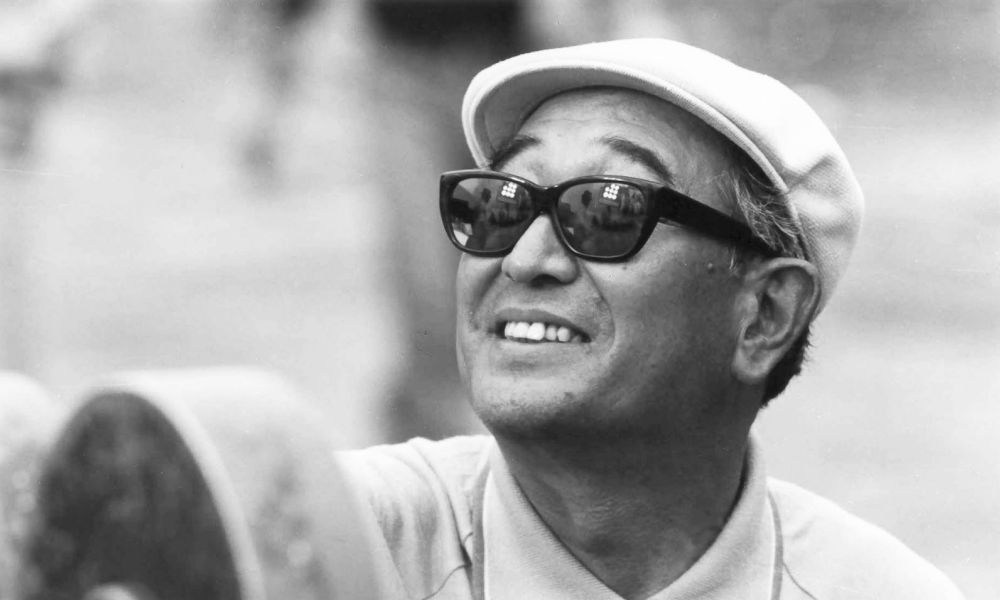
"The best-known Japanese director in the west, Akira Kurosawa has achieved an international popularity that comes from making films with a strong similarity to American movies as well as a deep fidelity to the Japanese tradition." - Ronald Bergan (Eyewitness Companions: Film, 2006)
Akira Kurosawa
Key Production Country: Japan
Key Genres: Drama, Samurai Film, Period Film, Psychological Drama, Adventure, Medical Drama, Family Drama, Ensemble Film, Costume Adventure, Urban Drama, Epic, Historical Epic
Key Collaborators: Takashi Shimura (Leading Character Actor), Toshiro Mifune (Leading Actor), Yoshirô Muraki (Production Designer), Hideo Oguni (Screenwriter), (Character Actor), Asakazu Nakai (Cinematographer), Minoru Chiaki (Leading Character Actor), Takao Saito (Cinematographer), Masaru Satô (Composer), Ryûzô Kikushima (Screenwriter), Shinobu Hashimoto (Screenwriter), Sôjirô Motoki (Producer)
Key Genres: Drama, Samurai Film, Period Film, Psychological Drama, Adventure, Medical Drama, Family Drama, Ensemble Film, Costume Adventure, Urban Drama, Epic, Historical Epic
Key Collaborators: Takashi Shimura (Leading Character Actor), Toshiro Mifune (Leading Actor), Yoshirô Muraki (Production Designer), Hideo Oguni (Screenwriter), (Character Actor), Asakazu Nakai (Cinematographer), Minoru Chiaki (Leading Character Actor), Takao Saito (Cinematographer), Masaru Satô (Composer), Ryûzô Kikushima (Screenwriter), Shinobu Hashimoto (Screenwriter), Sôjirô Motoki (Producer)
"It would be hard to imagine the modern American cinema without Kurosawa’s palpable influence, whether in the action staging of Sam Peckinpah, Walter Hill, and Martin Scorsese or the distinctive editing patterns that so clearly set off the films of Francis Ford Coppola, George Lucas, and Steven Spielberg. And this is no less true of his influence on internationally acclaimed directors ranging from Italy’s Western auteur, Sergio Leone, to Hong Kong’s master of balletic violence, John Woo. The strategic use of slow motion, the transformation of Sergei Eisenstein’s handling of crowd scenes, the use of jump cuts on movement, the intermixing of long takes and montage, have all entered the lexicon of the modern action cinema." - David Desser (Schirmer Encyclopedia of Film, 2006)
"If in the more deliberately humanist dramas his sentimentality seems sometimes contrived and maudlin, his feel for action and his concern for historical authenticity reveal a talent that both delights in and transcends genre limitations. Certainly, his best work merges psychological precision, narrative subtlety and visual bravura to extraordinary effect." - Geoff Andrew (The Film Handbook, 1989)
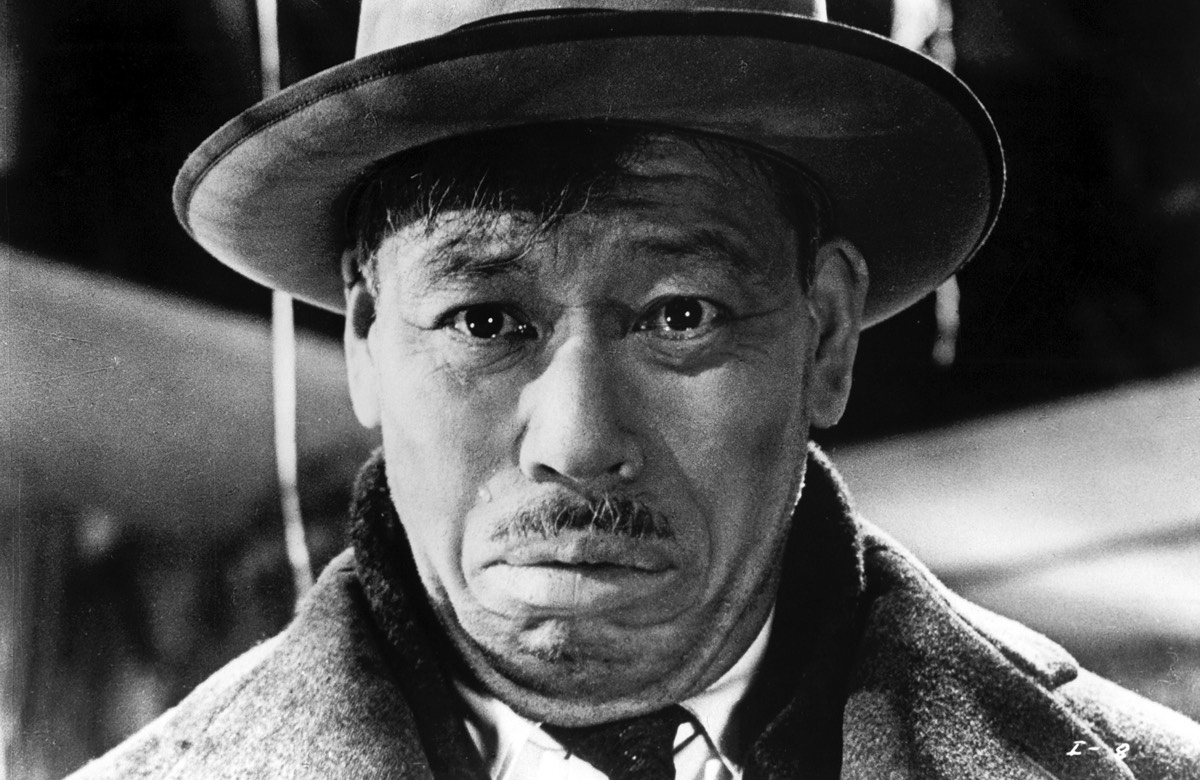
Ikiru (1952)
"Like his counterparts and most admired models, Jean Renoir, John Ford, and Kenji Mizoguchi, Kurosawa has taken his cinematic inspirations from the full store of world film, literature, and music. And yet the completely original screenplays of his two greatest films, Ikiru and Seven Samurai, reveal that his natural story-telling ability and humanistic convictions transcend all limitations of genre, period and nationality." - Audie Bock (International Dictionary of Films and Filmmakers, 1991)
"Akira Kurosawa is one of Japanese cinema’s few household names in the west, due to such groundbreaking jidaigeki period action films as Seven Samurai (1954), The Hidden Fortress (1958) and Kagemusha (1980). The enduring popularity of such titles lies in no small part to their open influence from Hollywood, particularly the westerns of directors such as John Ford. This in itself is reflected in the ease by which they’ve in turn established an action template so readily adapted by filmmakers from all over the world. Take a look at any recent historical epic, or indeed the Manichean battle scenes that comprise so much of Peter Jackson’s Tolkien adaptations, and try to imagine how they might look in an alternate universe in which Kurosawa never existed." - Jasper Sharp (BFI, 2020)
"The current awareness of Japanese cinema in the West began with Kurosawa, even if he has now been surpassed... Despite his appetite for disparate subjects in the 1950s, his period films look insubstantial against Mizoguchi's, just as Rashomon's debate on truth is trite beside Ugetsu. As to the contemporary Japanese experience, Kurosawa now trails behind a new generation." - David Thomson (The New Biographical Dictionary of Film, 2002)
"The term 'giant' is used too often to describe artists. But in the case of Akira Kurosawa, we have one of the rare instances where the term fits." - Martin Scorsese
"A great director of wit, irony, and passion, Kurosawa has lensed some of the greatest Japanese films." - William R. Meyer (The Film Buff's Catalog, 1978)
"Movie directors, or should I say people who create things, are very greedy and they can never be satisfied... That's why they can keep on working. I've been able to work for so long because I think next time, I'll make something good." - Akira Kurosawa
Selected Filmography
{{row.titlelong}}
GF Greatest Films ranking (★ Top 1000 ● Top 2500)
T TSPDT N 1,000 Noir Films
R Jonathan Rosenbaum S Martin Scorsese
T TSPDT N 1,000 Noir Films
R Jonathan Rosenbaum S Martin Scorsese
Akira Kurosawa / Fan Club
Philip French, Martin Scorsese, Richard Williams, David Stratton, Kenneth Turan, King Hu, John Woo, Matt Singer, Edna Fainaru, Ian J. MacLeod, Peggy Chiao, John Sayles.
Philip French, Martin Scorsese, Richard Williams, David Stratton, Kenneth Turan, King Hu, John Woo, Matt Singer, Edna Fainaru, Ian J. MacLeod, Peggy Chiao, John Sayles.
"Fan Club"
These film critics/filmmakers have, on multiple occasions, selected this director’s work within film ballots/lists that they have submitted.
These film critics/filmmakers have, on multiple occasions, selected this director’s work within film ballots/lists that they have submitted.