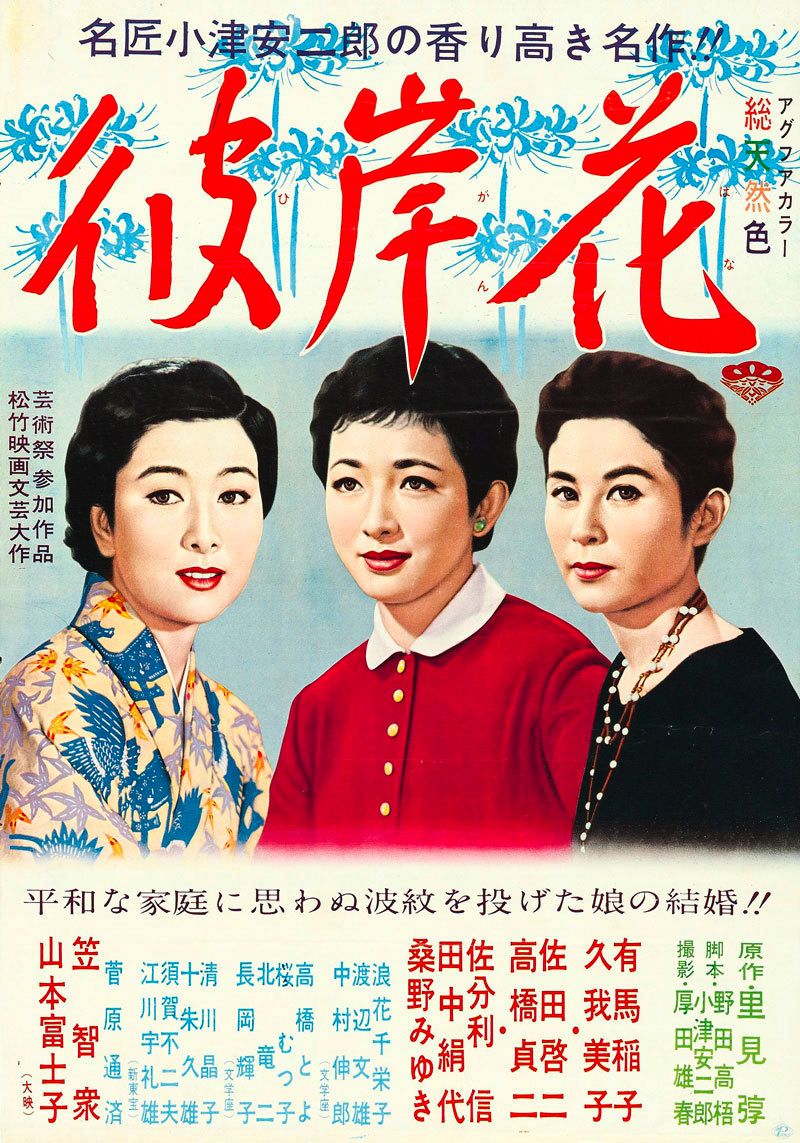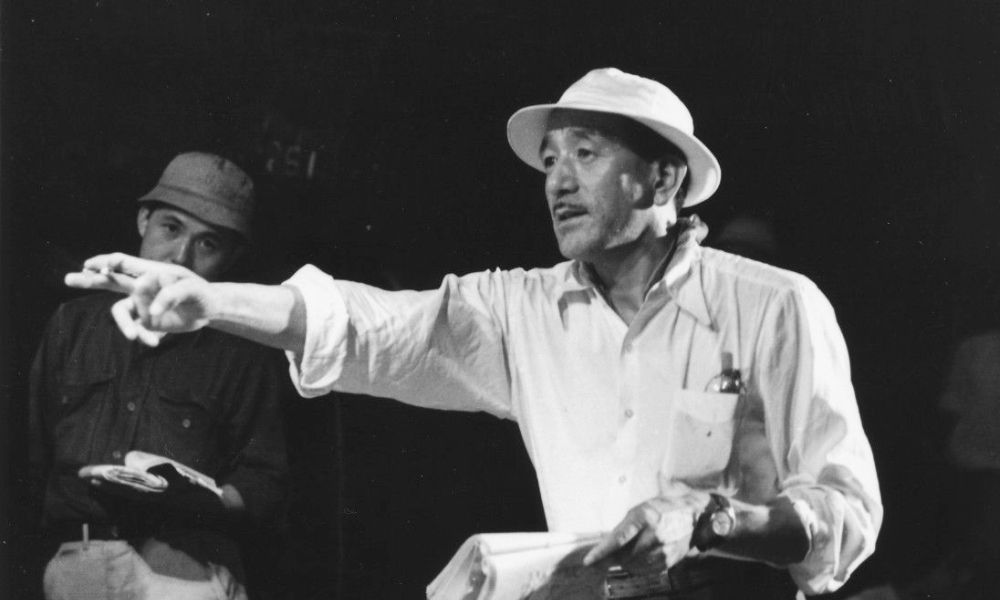
"Of the great Japanese directors, Yasujiro Ozu is often cited as the most authentically Japanese, his work a byword for cool austerity. Scorning such vulgar devices as fades, dissolves, tracking shots, or pans, he shoots with a largely unmoving camera, almost always from about three feet above the ground - roughly the eye line, it has often been noted, of someone sitting cross-legged on a tatami mat." - Philip Kemp (501 Movie Directors, 2007)
Yasujiro Ozu
Key Production Country: Japan
Key Genres: Drama, Family Drama, Comedy Drama, Melodrama, Domestic Comedy, Psychological Drama, Marriage Drama, Reunion Films
Key Collaborators: Chishu Ryu (Leading Character Actor), Yûharu Atsuta (Cinematographer), Tatsuo Hamada (Production Designer), Kôgo Noda (Screenwriter), Yoshiyasu Hamamura (Editor), Takeshi Sakamoto (Leading Character Actor), Tadao Ikeda (Screenwriter), Hideo Shigehara (Cinematographer), Kuniko Miyake (Character Actress), Haruko Sugimura (Character Actress), Chôko Iida (Leading Character Actress), Setsuko Hara (Leading Actress)
Key Genres: Drama, Family Drama, Comedy Drama, Melodrama, Domestic Comedy, Psychological Drama, Marriage Drama, Reunion Films
Key Collaborators: Chishu Ryu (Leading Character Actor), Yûharu Atsuta (Cinematographer), Tatsuo Hamada (Production Designer), Kôgo Noda (Screenwriter), Yoshiyasu Hamamura (Editor), Takeshi Sakamoto (Leading Character Actor), Tadao Ikeda (Screenwriter), Hideo Shigehara (Cinematographer), Kuniko Miyake (Character Actress), Haruko Sugimura (Character Actress), Chôko Iida (Leading Character Actress), Setsuko Hara (Leading Actress)
"Ozu's most important characteristic in his way of watching the world. While that attitude is modest and unassertive, it is also the source of great tenderness for people. It is as if Ozu's one personal admission was the faith that the basis of decency and sympathy can only be sustained by the semi-religious effort to observe the world in his style; in other words, contemplation calms anxious activity. As with Mizoguchi, one comes away from Ozu heartened by his humane intelligence and by the gravity we have learned." - David Thomson (The New Biographical Dictionary of Film, 2002)
"His films almost invariably deal with the lives and domestic problems of the Japanese middle-class family. His style is exquisite in its simplicity. Technically, it is characterized by stationary-camera shots usually taken from a low angle... He seldom varied his camera angle and almost never resorted to such devices as fades, dissolves, pans, or tracking shots... Yet despite this laconic use of some of the basic "phrases" and punctuation marks in the language of the cinema, he turned out films of great beauty and magnetic power." - The MacMillan International Film Encyclopedia, 1994
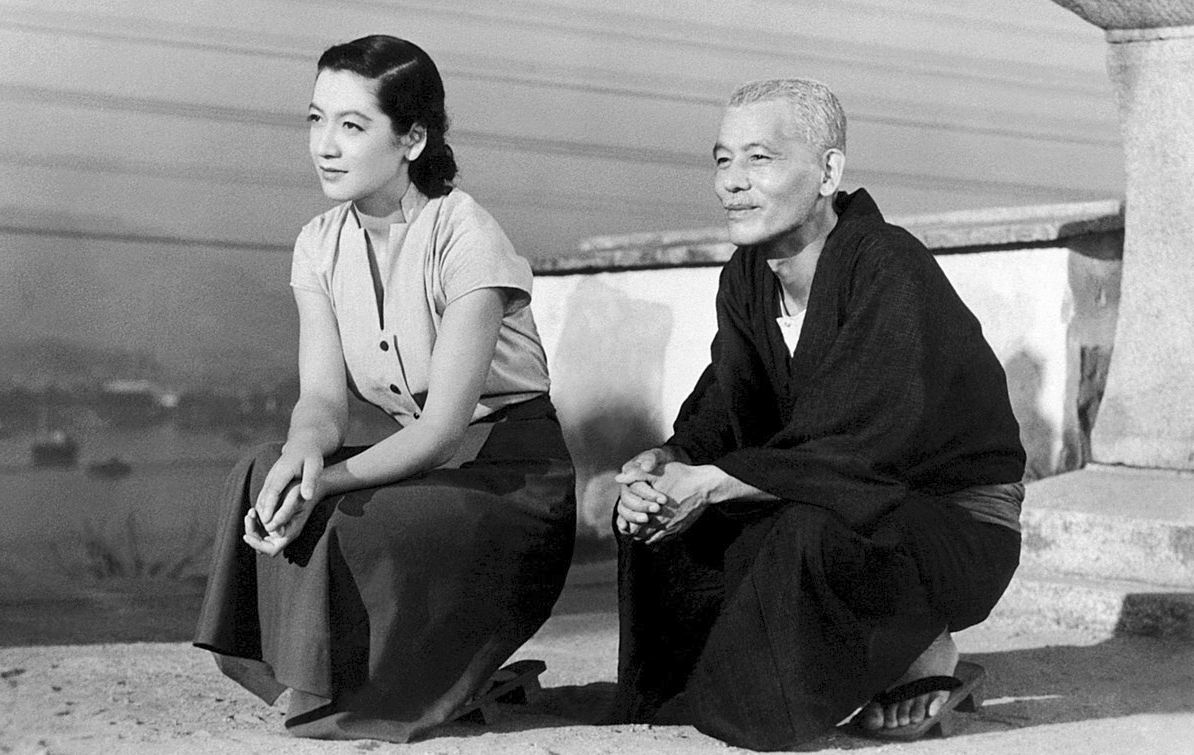
Tokyo Story (1953)
"Although the two men are dissimilar in almost all other respects, Ozu had something in common with Alfred Hitchcock, in that his films were worked out to the last detail, blueprints which he and his scriptwriter, Kogo Noda, would construct during late-night drinking sessions." - David Quinlan (Quinlan's Film Directors, 1999)
"Ozu's work remains significant not only for its extraordinary richness and emotional power but also because it suggests the extent to which a filmmaker working in popular mass-production filmmaking can cultivate a highly individual approach to film form and style." - David Bordwell (International Dictionary of Films and Filmmakers, 1991)
"Although it is possible to find Ozu's vision of the world over-sentimentalized and predictable, it is hardly possible to deny him his unique quality and flavour. He was an artist who did what he had to do." - John Gillett (The International Encyclopedia of Film, 1972)
"Ozu enjoyed a long career stretching from the silent era to the 1960s, but was considered too Japanese for Westerners to understand. Consequently, few of his films were exported - unlike the more dynamic pictures of Akira Kurosawa, for example. As he grew older, Ozu increasingly rejected Hollywood-style storytelling skills, relying on truth and beauty to prevail. They always did. He also returned repeatedly to a single theme - a parent's concern to see a daughter married." - The Movie Book, 1999
"A chronicler of Japanese society in transition, Ozu dealt with the life and problems of the young, middle-aged, and elderly in a simple, compassionate way." - William R. Meyer (The Film Buff's Catalog, 1978)
"I have formulated my own directing style in my head, proceeding without any unnecessary imitation of others." - Yasujiro Ozu
Selected Filmography
{{row.titlelong}}
Yasujiro Ozu / Fan Club
Behzad Rahimian, Tadao Sato, Paul Schrader, Derek Malcolm, Jonathan Rosenbaum, David Robinson, Inácio Araújo, Shigehiko Hasumi, Geoff Andrew, Jeffrey M. Anderson, Safi Yazdanian, Roger Ebert.
Behzad Rahimian, Tadao Sato, Paul Schrader, Derek Malcolm, Jonathan Rosenbaum, David Robinson, Inácio Araújo, Shigehiko Hasumi, Geoff Andrew, Jeffrey M. Anderson, Safi Yazdanian, Roger Ebert.
"Fan Club"
These film critics/filmmakers have, on multiple occasions, selected this director’s work within film ballots/lists that they have submitted.
These film critics/filmmakers have, on multiple occasions, selected this director’s work within film ballots/lists that they have submitted.