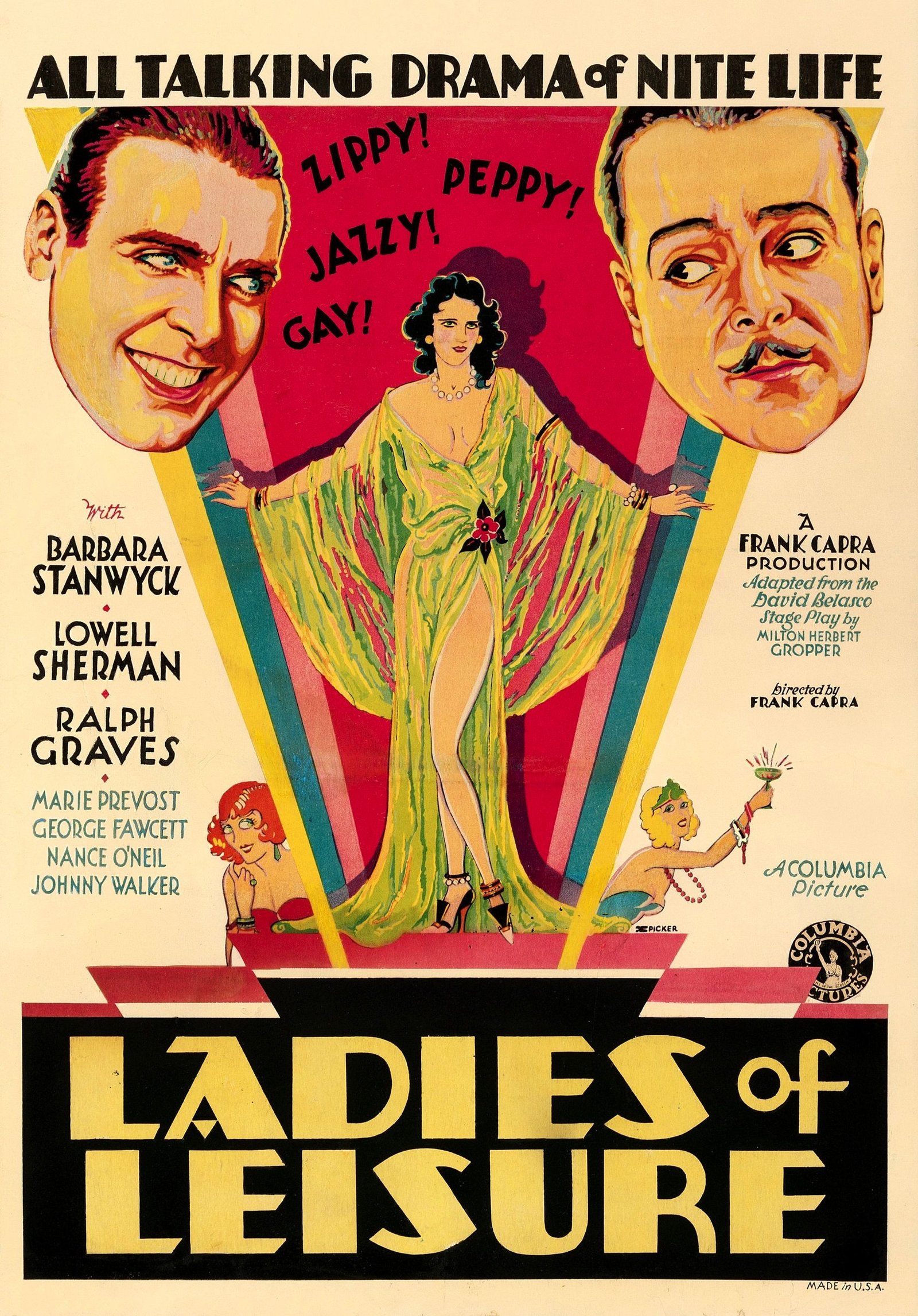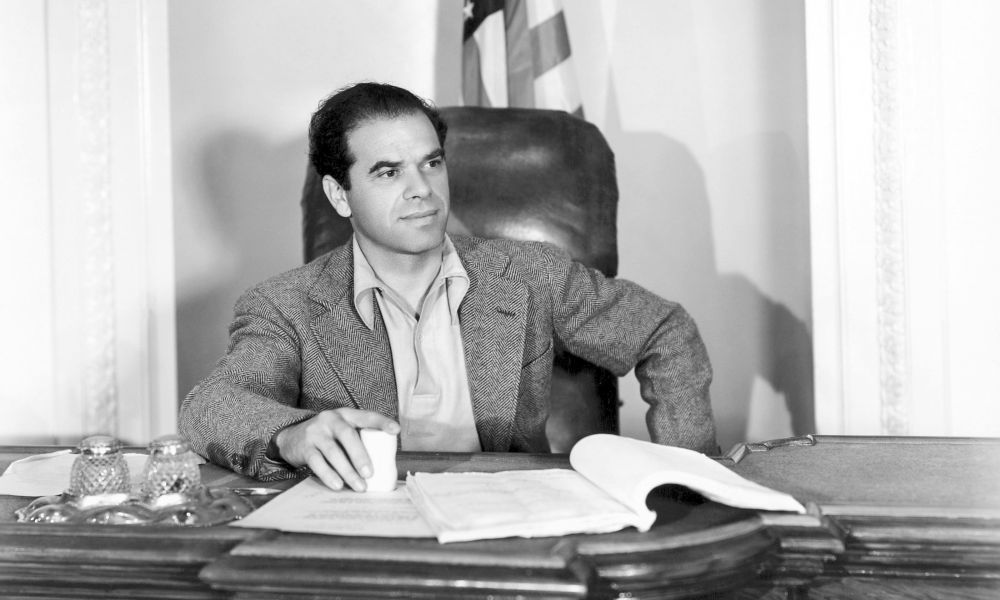
"At a time when Hollywood hardly looked outside its studios, Frank Capra crafted a unique combination of social commentary and slapstick caprioles. Populist and humanist, uplifting, fast, and funny, Capra's creations are among Hollywood's most memorable movies and are nostalgically treasured and ritually reviewed as true cult classics." - Ernest Mathijs (501 Movie Directors, 2007)
Frank Capra
Director / Producer / Screenwriter
(1897-1991) Born May 18, Bisacquino, Sicily, Italy
Top 250 Directors
(1897-1991) Born May 18, Bisacquino, Sicily, Italy
Top 250 Directors
Key Production Country: USA
Key Genres: Comedy, Comedy Drama, Romance, Drama, Americana, Romantic Drama, Romantic Comedy, Screwball Comedy, Comedy of Manners, Slapstick, Message Movie, Melodrama
Key Collaborators: Joseph Walker (Cinematographer), Robert Riskin (Screenwriter), Stephen Goosson (Production Designer), Harry Cohn (Producer), Gene Havlick (Editor), Jo Swerling (Screenwriter), Maurice Wright (Editor), Barbara Stanwyck (Leading Actress), Dimitri Tiomkin (Composer), H.B. Warner (Character Actor), Walter Connolly (Leading Character Actor), Thomas Mitchell (Leading Character Actor)
Key Genres: Comedy, Comedy Drama, Romance, Drama, Americana, Romantic Drama, Romantic Comedy, Screwball Comedy, Comedy of Manners, Slapstick, Message Movie, Melodrama
Key Collaborators: Joseph Walker (Cinematographer), Robert Riskin (Screenwriter), Stephen Goosson (Production Designer), Harry Cohn (Producer), Gene Havlick (Editor), Jo Swerling (Screenwriter), Maurice Wright (Editor), Barbara Stanwyck (Leading Actress), Dimitri Tiomkin (Composer), H.B. Warner (Character Actor), Walter Connolly (Leading Character Actor), Thomas Mitchell (Leading Character Actor)
"Frank Capra's populism charmed Depression audiences, won industry acclaim, and impressed a generation of film historians... The archetypal Capra scenario found an idealistic hero from the sticks triumphing over city slickers mired in cynicism, corruption and too many big words. Written by Robert Riskin with vernacular verve and a reverence for republican rhetoric, Capra's comedies proved strong vehicles for the gauche young James Stewart and Gary Cooper, and the spunky heroines of Jean Arthur and Barbara Stanwyck." - Richard Armstrong (The Rough Guide to Film, 2007)
"Like Chaplin, Frank Capra began his film career as a simple, effective comic talent and progressed to 'message movies'. And, as with Chaplin, the populism of his later films demonstrated both a decline in humour and disturbing political ambiguities." - Geoff Andrew (The Film Handbook, 1989)
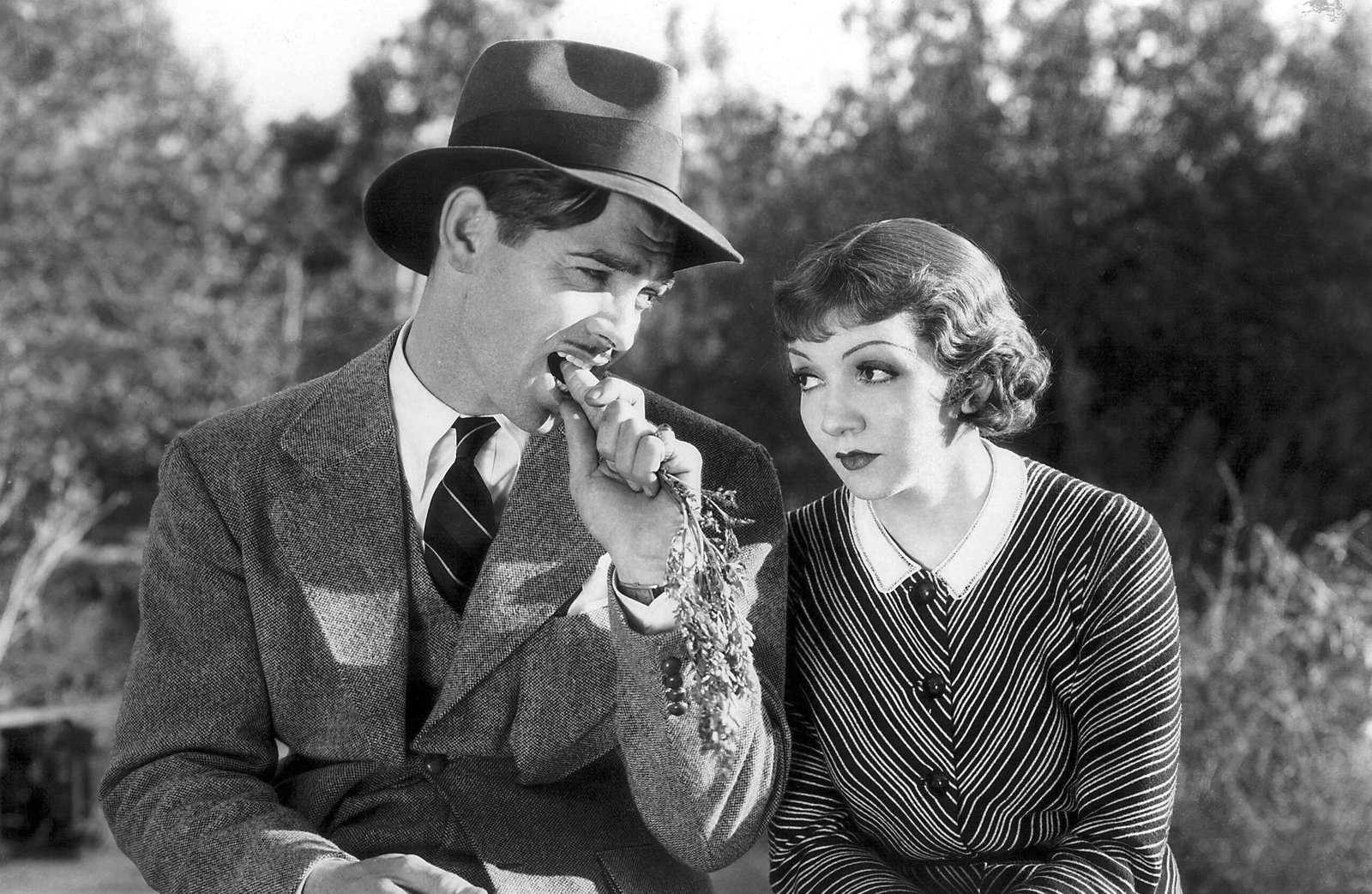
It Happened One Night (1934)
"Many of Capra's most famous films can be read as excessively sentimental and politically naive. These readings, however, tend to neglect the bases for Capra's success - his skill as a director of actors, the complexity of his staging configurations, his narrative economy and energy, and most of all, his understanding of the importance of the spoken word in sound film." - Charles Affron (International Dictionary of Films and Filmmakers, 1991)
"In recognizing the facts of human suffering, uncertainty, anxiety, the everyday struggles of life, Capra, with his unquenchable optimism, was a healing force. This good doctor, who was also a great director, became a restorer of men's spirits." - François Truffaut
"Nowadays, the mere mention of Capra's name is enough to make literate and learned film-writers dip their pens in bile. But when, between director and actor, you actually pump the breath of life into impossibly idealized Everymen, as Gary Cooper, James Stewart, or Barbara Stanwyck did, a powerful emotional current is given out from the screen. The fact that they have nothing to do with the real world has absolutely no bearing on that." - David Quinlan (Quinlan's Illustrated Guide to Film Directors, 1999)
"Of all Hollywood directors, Frank Capra is the most loved and the least respected. From the early 1930s to the mid 40s, as the maker of such classic movies as It Happened One Night (1934), You Can't Take it with You (1938) and Mr Smith Goes to Washington (1939), he achieved fame, won Oscars and found huge audiences. Yet for every film-fan who warms to his work, there's a hard-nosed critic eager to pounce on this purveyor of "Capra-corn". He offers a personal vision, but it's one that has been judged suspect, offering up a sentimental and duplicitous Americanism." - Michael Newton (The Guardian, 2010)
"Capra is a master of the socially significant film. His work is full of optimism, humor, love, patriotism, and respect for traditional values." - William R. Meyer (The Film Buff's Catalog, 1978)
"In his best films during the 1930s and 1940s, Capra was able to humanize on the screen the ideal of the American character. His films showed ordinary people from small towns triumphing over evil and powerful forces by doing what was right and sensible. "Let others make films about the grand sweeps of history. I'd make mine about the bloke that pushes the broom," he wrote in his autobiography." - Dian G. Smith (Great American Film Directors, 1987)
"I think of the medium as a people-to-people medium, not cameraman-to-people, not direction-to-people, not writers-to-people, but people-to-people... You can only involve an audience with people. You can't involve them with gimmicks, with sunsets, with hand-held cameras, zoom shots, or anything else. They couldn't care less about those things. But you give them something to worry about, some person they can worry about, and care about, and you've got them, you've got them involved." - Frank Capra (Directing the Film, 1976)
Selected Filmography
Loading filmography...
Frank Capra / Fan Club
Pedro Maso, Javier Coma, Leonard Maltin, Juan José Campanella, Pete Docter, José Luis Guarner, Pupi Avati, Mark Kermode, Rich Cline, Matt Singer, Louis Marcorelles, Gil Parrondo.
Pedro Maso, Javier Coma, Leonard Maltin, Juan José Campanella, Pete Docter, José Luis Guarner, Pupi Avati, Mark Kermode, Rich Cline, Matt Singer, Louis Marcorelles, Gil Parrondo.
"Fan Club"
These film critics/filmmakers have, on multiple occasions, selected this director’s work within film ballots/lists that they have submitted.
These film critics/filmmakers have, on multiple occasions, selected this director’s work within film ballots/lists that they have submitted.