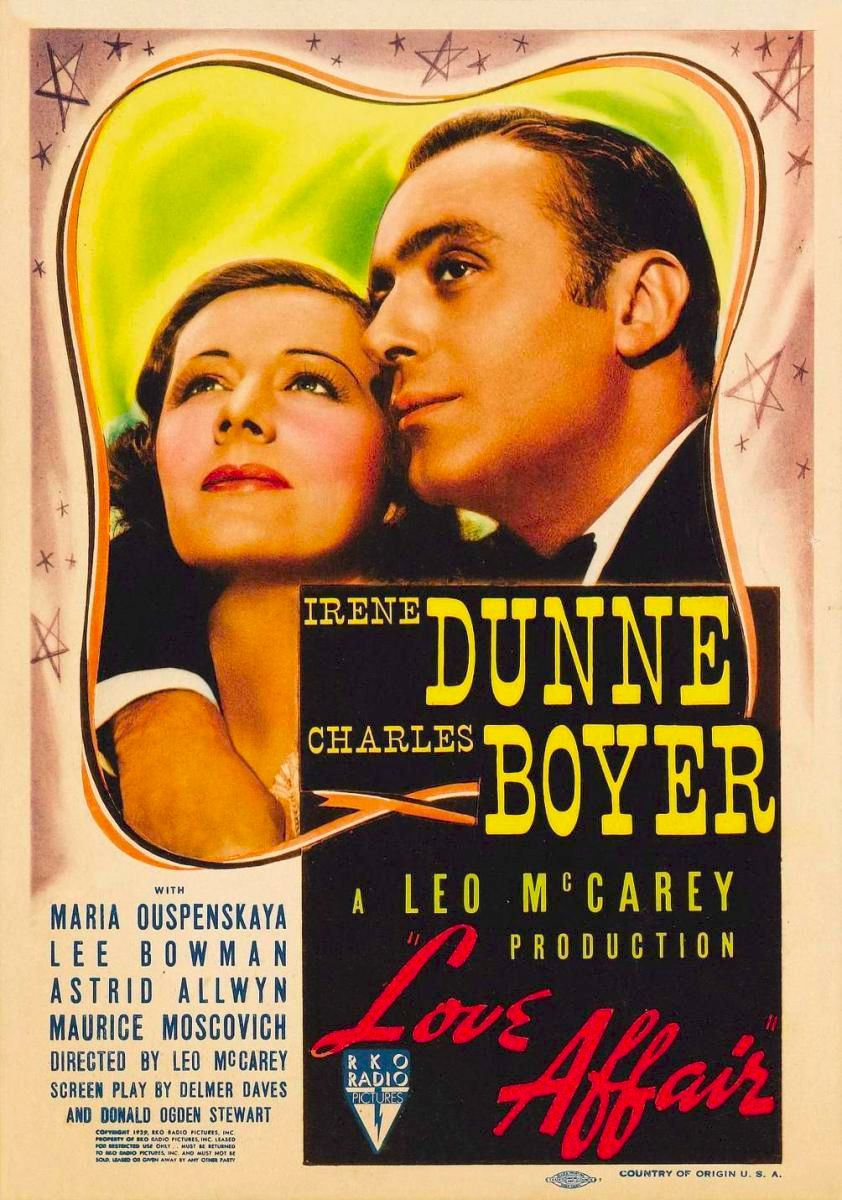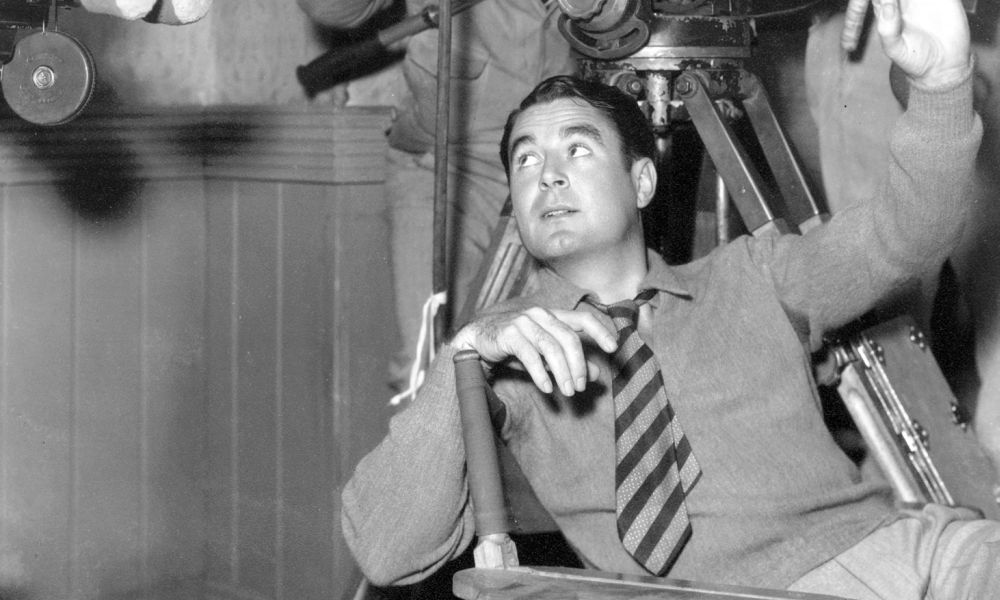
"Irreverence and a blithe, refreshing disregard for the conventions of a genre characterized the work of McCarey, one of America's golden men of the 1930-1945 period... He made wild comedies of character full of lovely telling moments - comic, touching or exciting - and even the weepies, although maudlin by today's tastes, brim with warmth and humour." - David Quinlan (Quinlan's Film Directors, 1999)
Leo McCarey
Director / Producer / Screenwriter
(1896-1969) Born October 3, Los Angeles, California, USA
Top 250 Directors
(1896-1969) Born October 3, Los Angeles, California, USA
Top 250 Directors
Key Production Country: USA
Key Genres: Comedy, Slapstick, Short Film, Drama, Romance, Melodrama, Screwball Comedy, Romantic Drama, Romantic Comedy, Religious Drama, Farce, Comedy Drama
Key Collaborators: Hans Dreier (Production Designer), Leroy Stone (Editor), Robert Emmett Dolan (Composer), Cary Grant (Leading Actor), Hal Roach (Producer), George Barnes (Cinematographer), Richard C. Currier (Editor), William Flannery (Production Designer), Harry Bernard (Character Actor), Stan Laurel (Leading Actor), Bing Crosby (Leading Actor), Irene Dunne (Leading Actress)
Key Genres: Comedy, Slapstick, Short Film, Drama, Romance, Melodrama, Screwball Comedy, Romantic Drama, Romantic Comedy, Religious Drama, Farce, Comedy Drama
Key Collaborators: Hans Dreier (Production Designer), Leroy Stone (Editor), Robert Emmett Dolan (Composer), Cary Grant (Leading Actor), Hal Roach (Producer), George Barnes (Cinematographer), Richard C. Currier (Editor), William Flannery (Production Designer), Harry Bernard (Character Actor), Stan Laurel (Leading Actor), Bing Crosby (Leading Actor), Irene Dunne (Leading Actress)
"Leo McCarey's supervision of 1930s and 40s Hollywood comedies is more akin to contract studio authorship than independent auteurism... After holding various jobs in the film industry, McCarey began writing gags and directing Charlie Chase two-reelers at the Hal Roach studio in 1923... In 1929 McCarey graduated to features and hit his stride. With a winning combination of zany humour and popular sentiment, he directed some of the era's biggest star vehicles." - Richard Armstrong (The Rough Guide to Film, 2007)
"Leo McCarey has always presented auteur criticism with one of its greatest challenges and one that has never been convincingly met... He worked consistently (and apparently quite uncomplainingly) within the dominant codes of shooting and editing that comprise the anonymous "classical Hollywood" style... Yet his name is on some of the best - and best-loved - Hollywood films (as well as on some that embarrass many of even his most fervent defenders)." - Robin Wood (The St. James Film Directors Encyclopedia, 1998)
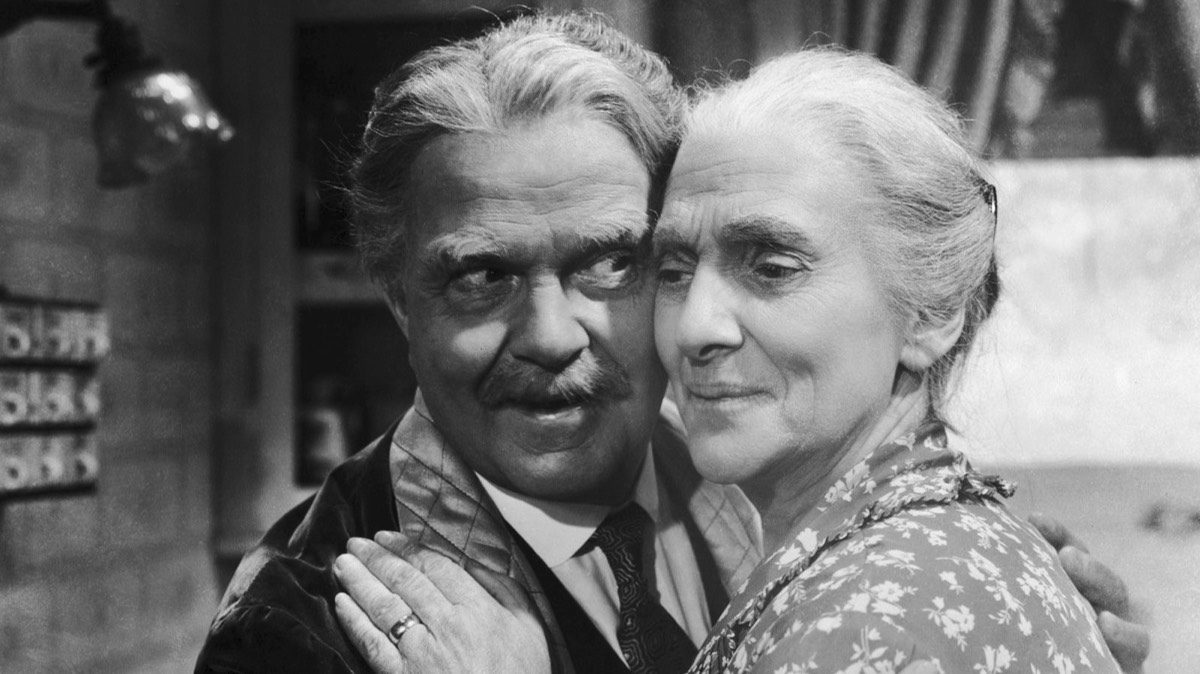
Make Way for Tomorrow (1937)
"Blending an explosive sense of humor with unabashed sentimentality, McCarey came up with such comedy gems as Ruggles of Red Gap and The Awful Truth and such maudlin pearls as Make Way for Tomorrow and Going My Way." - The MacMillan International Film Encyclopedia, 1994
"Equally adept at working with character comics like Charlie Chase and Stan Laurel, or dramatic performers like Ingrid Bergman and Charles Boyer, McCarey straddled silent slapstick, screwball comedy, light romance, and sentimental melodrama, while working his way through the tangle of religion, politics, and sex otherwise known as American culture. McCarey spent 30 years creating a film universe that was not only successful, but made him one of Hollywood’s most unassumingly personal filmmakers." - The Museum of Modern Art, 2016
"Leo McCarey represents a principle of improvisation in the history of the American film. Noted less for his rigorous direction than for his relaxed digressions, McCarey has distilled a unique blend of farce and sentimentality in his best efforts... McCarey's moments may outlive his movies... After enough great moments are assembled, however, a personal style must be assumed even though it is difficult to describe." - Andrew Sarris (The American Cinema, 1968)
"More than just a gag man, McCarey developed a fine storytelling sense. He also had a flair for sentimental stories, as proved by the wrenching portrait of old age, Make Way for Tomorrow (1937), the touching romance Love Affair (1939), and Going My Way (1944, for which he won his second Best Director Oscar, and snagged another for his screenplay)." - Leonard Maltin's Movie Encyclopedia, 1995
"Jean Renoir once said that McCarey understood people better than anyone else in Hollywood. That facility enabled him to create warm, witty, sometimes zany comedies and gentle dramas." - William R. Meyer (The Film Buff's Catalog, 1978)
"McCarey understood people, as Renoir said, and was able to convey this knowledge through his rapport with actors. His training in the pantomime of the silent era and method of spontaneous scene-building pushed his performers to physically expressive heights unmatched in classical Hollywood. He could compress a lifetime of repressed emotion into one delicate close-up of Ingrid Bergman's incandescent face, or indicate a priest's mild subversiveness by having Bing Crosby take a hop over a hedgerow. These little gestures over the course of his career constructed entire inner worlds, so each character is recognizably human, recognizably flawed. This made McCarey's comedies sad and his tragedies funny; that is, they contained the world in all its frustrating contradictions." - R. Emmet Sweeney (DGA, 2012)
"I only know I like my characters to walk in clouds, I like a little bit of the fairy tale. As long as I'm there behind the camera lens, I'll let somebody else photograph the ugliness of the world." - Leo McCarey
Selected Filmography
Loading filmography...
Leo McCarey / Fan Club
José Luis Garci, Robin Wood, Dan Sallitt, Miguel Marías, José Luis Guarner, Filipe Furtado, Jonathan Rosenbaum, Peter von Bagh, Edgar Wright, Carlos Losilla, Jesús Cortés, Molly Haskell.
José Luis Garci, Robin Wood, Dan Sallitt, Miguel Marías, José Luis Guarner, Filipe Furtado, Jonathan Rosenbaum, Peter von Bagh, Edgar Wright, Carlos Losilla, Jesús Cortés, Molly Haskell.
"Fan Club"
These film critics/filmmakers have, on multiple occasions, selected this director’s work within film ballots/lists that they have submitted.
These film critics/filmmakers have, on multiple occasions, selected this director’s work within film ballots/lists that they have submitted.