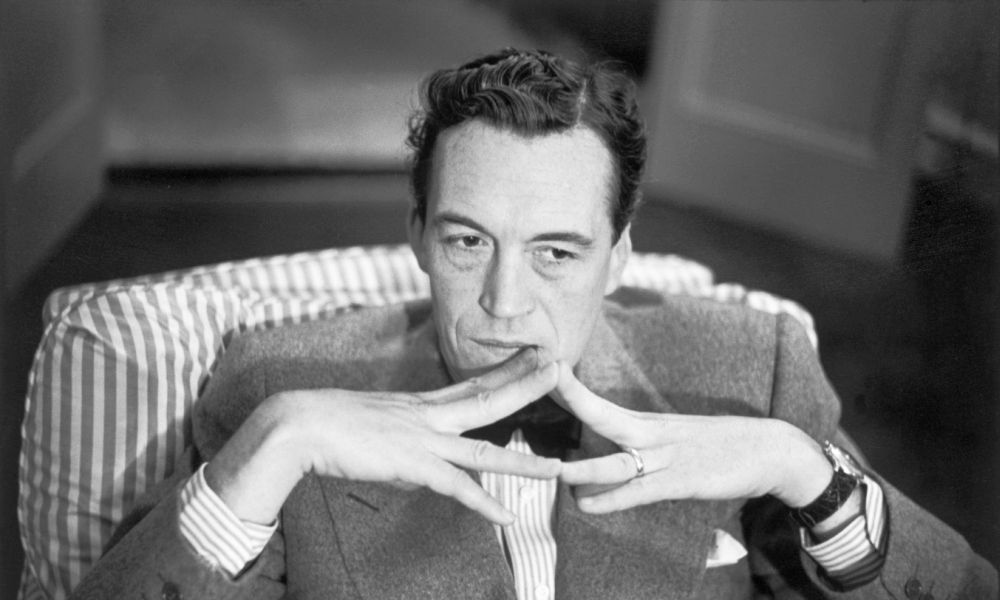
"Huston's skill as a director was always that the emotions in his films, whether love, fear, hatred, determination, holiness, greed or desperation, seemed genuinely felt, and he extracted some extraordinarily deep performances from actors not previously noted for extreme mobility." - David Quinlan (Quinlan's Film Directors, 1999)
John Huston
Director / Screenwriter / Actor / Producer / Cinematographer
(1906-1987) Born August 5, Nevada, Missouri, USA
Top 250 Directors / 50 Key Noir Directors
(1906-1987) Born August 5, Nevada, Missouri, USA
Top 250 Directors / 50 Key Noir Directors
Key Production Countries: USA, UK
Key Genres: Drama, Adventure, Period Film, Psychological Drama, Crime, Adventure Drama, Gangster Film, Historical Film, Romantic Drama, Romantic Adventure, Film Noir, Western
Key Collaborators: Russell Lloyd (Editor), Humphrey Bogart (Leading Character Actor), Stephen Grimes (Production Designer), Oswald Morris (Cinematographer), Ralph Kemplen (Editor), Alex North (Composer), Ray Stark (Producer), John Foreman (Producer), Ray Stark (Producer), Roberto Silvi (Editor), Anjelica Huston (Leading Actress), Gladys Hill (Screenwriter)
Key Genres: Drama, Adventure, Period Film, Psychological Drama, Crime, Adventure Drama, Gangster Film, Historical Film, Romantic Drama, Romantic Adventure, Film Noir, Western
Key Collaborators: Russell Lloyd (Editor), Humphrey Bogart (Leading Character Actor), Stephen Grimes (Production Designer), Oswald Morris (Cinematographer), Ralph Kemplen (Editor), Alex North (Composer), Ray Stark (Producer), John Foreman (Producer), Ray Stark (Producer), Roberto Silvi (Editor), Anjelica Huston (Leading Actress), Gladys Hill (Screenwriter)
"John Huston was one of the most bewilderingly uneven of U.S. directors. Throughout his career, his finest movies appeared cheek-by-jowl with his worst: no decade of his work was without its masterpieces or its turkeys. Huston himself affected an insouciant attitude to his variable oeuvre, interspersing committed films with shrugged-off assignments... During the 1960s, Huston's critical standing slumped. But his reputation later revived thanks to the seemingly effortless mastery shown in Fat City (1972)." - Philip Kemp (501 Movie Directors, 2007)
"Huston was always ready to be presented as the movie director who told manly, energetic stories, and liked to end them on a wry chuckle. He was himself a writer, a painter, a boxer, a horseman, a wanderer, a gambler, an adventurer, and a womanizer. More than most, he relished the game of getting a movie set up and the gamble of out-daring and intimidating the studios. His best pictures reflect those tastes and that attitude and had an expansive, airy readiness for ironic endings, fatal bad luck, and the laughter that knows men are born to fail." - David Thomson, (The New Biographical Dictionary of Film, 2002)
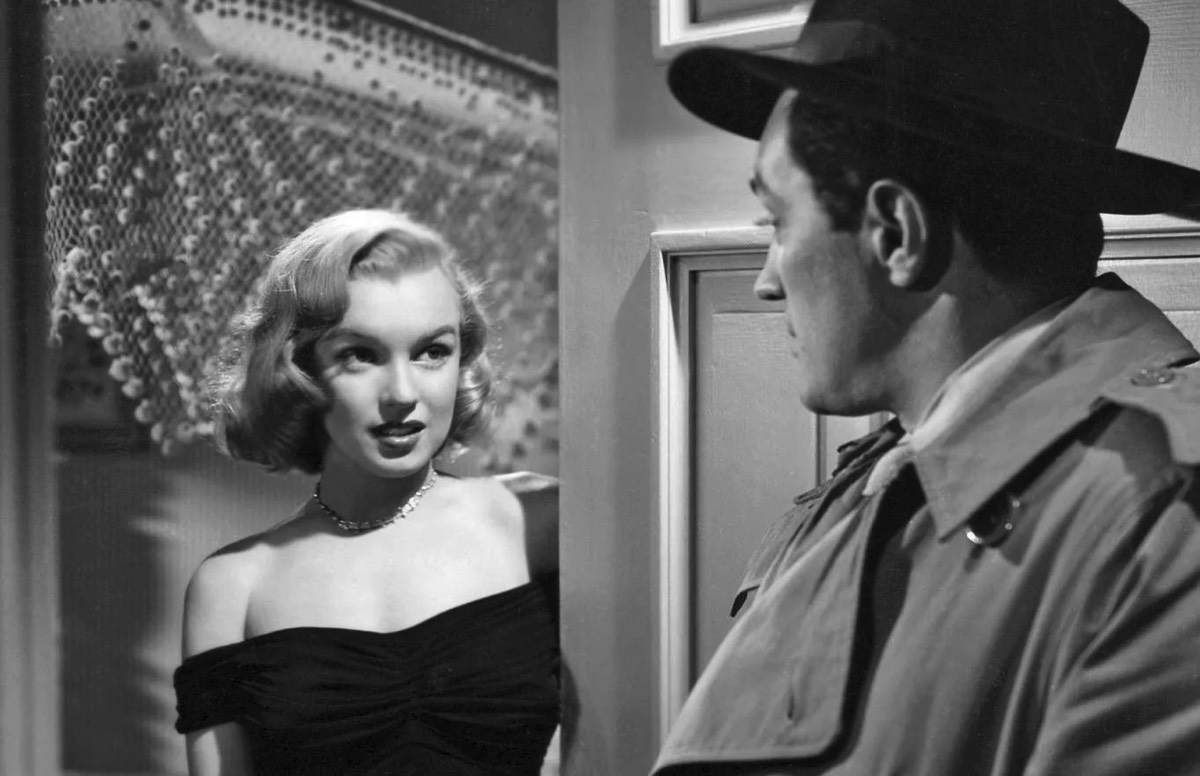
The Asphalt Jungle (1950)
"Huston's protagonists often represent extremes. They are either ignorant, pathetic, and doomed by their lack of self-understanding or intelligent, arrogant, but equally doomed by their lack of self-understanding. Between these extremes is the cool, intelligent protagonist who will sacrifice everything for self-understanding and independence. Huston always finds the first group pathetic, the second tragic, and the third heroic. He reserves his greatest respect for the man who retains his dignity in spite of pain and disaster." - Stuart M. Kaminsky (International Dictionary of Films and Filmmakers, 1991)
"Of the larger-than-life directors in American film lore, none was more cantankerously independent, innovative, and reckless than Huston, whose virile storytelling often seems inextricably bound to a personal legend expounded in a raft of novels, plays, and memoirs by and about him. The 1950s alone—the period when he made the transition from studio director to the first truly autonomous, international director—generated at least nine works in which a key character is based on Huston or a disguised version of him." - Gary Giddins (Directors Guild of America, 2010)
"Huston, who favoured working from literary sources, seldom made films that seemed at all personal. Ambitious but erratic, he preferred to ignore the restraints of genre but rarely produced anything original or emotionally involving; often he seemed content to shoot character actors in exotic locations, unsure as to the thematic substance, weight or tone of his material. That said, his finest work casts a beady eye over human aspiration, with the allure of power and an easy life inevitably wrecking the best-laid plans." - Geoff Andrew (The Director's Vision, 1999)
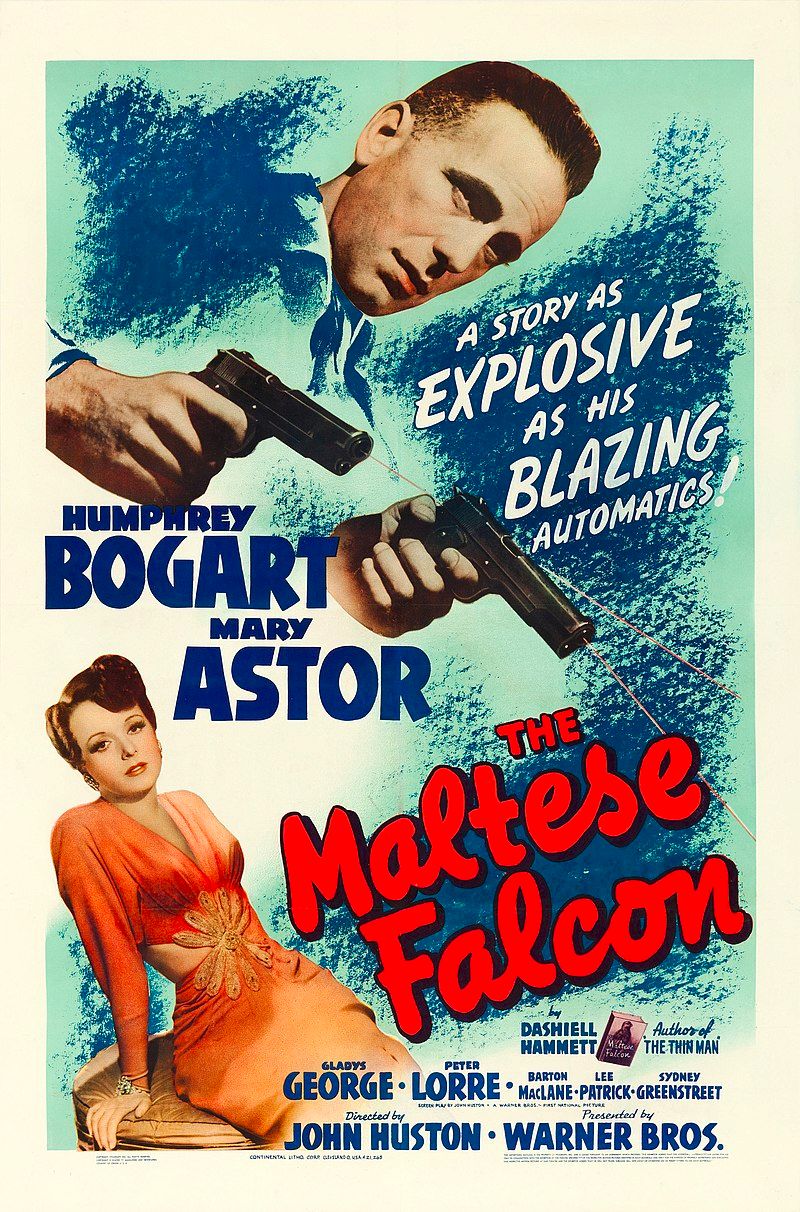
"Along with John Ford, Howard Hawks and Raoul Walsh, he was one of the most significant American-born directors working in the studio system, turning out 37 feature films as director between the early 1940s and the late 80s. These start with one of the most celebrated debut films ever made, detective noir The Maltese Falcon (1941), and culminate with one of the archetypal last films – his elegiac 1987 adaptation of James Joyce’s short story The Dead… In between, his output could be erratic. Not every John Huston movie is a keeper. But he also made an impressive number of A-grade classics, proving unusually adept at tackling movie versions of canonical literature." - Sam Wigley (BFI, 2018)
"A respected screenwriter, he made his directorial debut with The Maltese Falcon (1941). A master storyteller enthralled by grand adventures and larger than life characters, he won a Best Director Academy Award for The Treasure of the Sierre Madre (1948)." - Chambers Film Factfinder, 2006
"A romantic, a maverick, a moralist who cloaks his fables as entertainment, Huston is one of the grand individualists of American films. Because of their unconventionality, not all of his best films were immediately successful, but new audiences continue to delight in the vitality of John Huston’s work, which, like its creator, has triumphantly weathered the test of time." - American Film Institute
"In the beginning the American male in the films of John Huston was a hard-talking idealist, but he slowly turned into a cynical, alienated loser. The director studies men from top to bottom and everywhere in between." - William R. Meyer (The Film Buff's Catalog, 1978)
"The directing of a picture involves coming out of your individual loneliness and taking a controlling part in putting together a small world. A picture is made. You put a frame around it and move on. And one day you die. That is all there is to it." - John Huston
Selected Filmography
{{row.titlelong}}
GF Greatest Films ranking (★ Top 1000 ● Top 2500)
T TSPDT N 1,000 Noir Films
R Jonathan Rosenbaum S Martin Scorsese
T TSPDT N 1,000 Noir Films
R Jonathan Rosenbaum S Martin Scorsese
John Huston / Fan Club
Martin Scorsese, Ricardo Bedoya, Steven Gaydos, Michael Sragow, Rian Johnson, Morgan Freeman, Miguel Picazo, Dan Daor, José Luis Guarner, Charles Champlin, Roger Ebert, Christopher McQuarrie.
Martin Scorsese, Ricardo Bedoya, Steven Gaydos, Michael Sragow, Rian Johnson, Morgan Freeman, Miguel Picazo, Dan Daor, José Luis Guarner, Charles Champlin, Roger Ebert, Christopher McQuarrie.
"Fan Club"
These film critics/filmmakers have, on multiple occasions, selected this director’s work within film ballots/lists that they have submitted.
These film critics/filmmakers have, on multiple occasions, selected this director’s work within film ballots/lists that they have submitted.