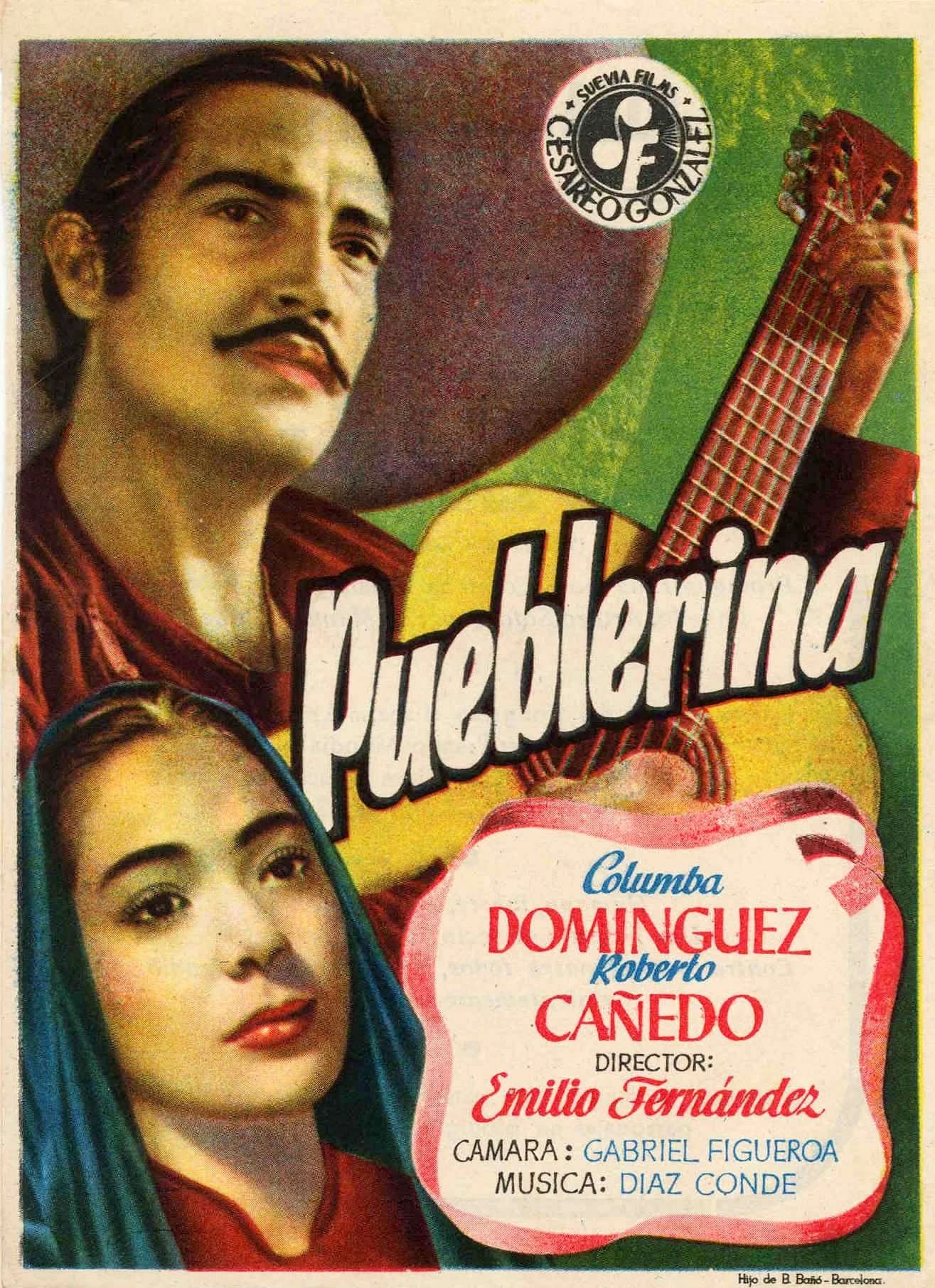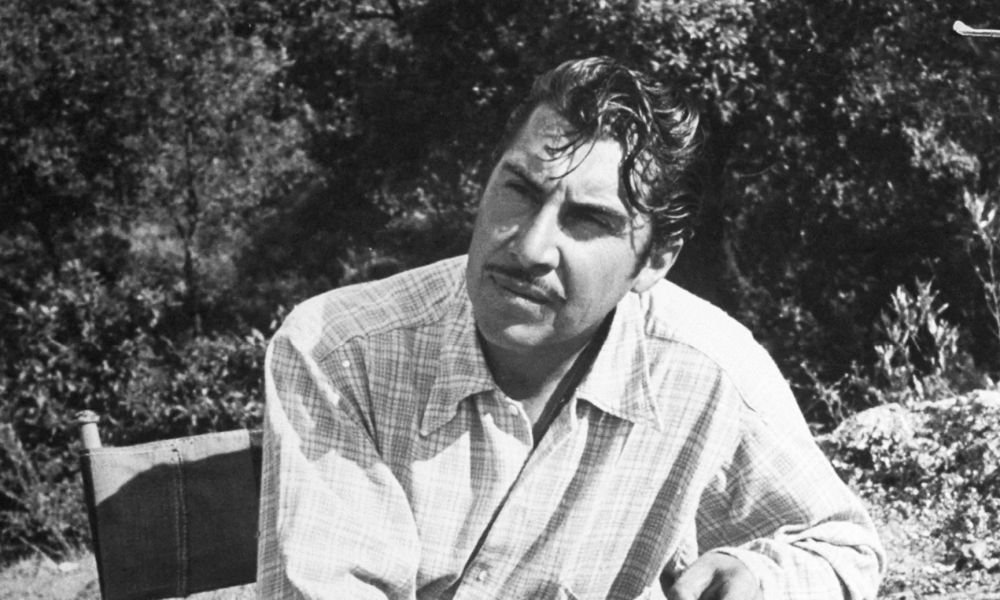
"If he did not already exist, it would be necessary to invent Emilio ‘‘El Indio’’ Fernández. His manneristic visual style, his folkloric themes and characters, and his distinctively Indian physiognomy made him an integral element of Mexico’s culture of nationalism, as well as the nation’s best-known director... Perhaps that which most distinguishes Fernández’s films is their strikingly beautiful visual style. Fernández and Gabriel Figueroa, the cinematographer, created the classical visual form of Mexican cinema." - John Mraz (International Dictionary of Films and Filmmakers, 2000)
Emilio Fernández
Director / Screenwriter / Actor
(1904-1986) Born March 26, Hondo, Coahuila, Mexico
(1904-1986) Born March 26, Hondo, Coahuila, Mexico
Key Production Country: Mexico
Key Genres: Drama, Romance, War, Crime, Thriller, Adventure
Key Collaborators: Gabriel Figueroa (Cinematographer), Gloria Schoemann (Editor), Mauricio Magdaleno (Screenwriter), Antonio Díaz Conde (Composer), Pedro Armendáriz (Leading Actor), Manuel Fontanals (Production Designer), Arturo Soto Rangel (Character Actor), Jorge Bustos (Editor), Roberto Cañedo (Leading Character Actor), Manuel Dondé (Character Actor), Eduardo Arozamena (Character Actor), Dolores Del Río (Leading Actress)
Key Genres: Drama, Romance, War, Crime, Thriller, Adventure
Key Collaborators: Gabriel Figueroa (Cinematographer), Gloria Schoemann (Editor), Mauricio Magdaleno (Screenwriter), Antonio Díaz Conde (Composer), Pedro Armendáriz (Leading Actor), Manuel Fontanals (Production Designer), Arturo Soto Rangel (Character Actor), Jorge Bustos (Editor), Roberto Cañedo (Leading Character Actor), Manuel Dondé (Character Actor), Eduardo Arozamena (Character Actor), Dolores Del Río (Leading Actress)
"Fernández did more than anyone else to create a Mexican national cinema, though by the Fifties his best work was regarded as dated and too melodramatic. He continued to act, appearing late in his career in Sam Peckinpah's The Wild Bunch, Pat Garrett and Billy the Kid and Bring Me the Head of Alfredo Garcia." - The Illustrated Who's Who of the Cinema, 1983
"Most of Fernández’s classic films are set outside the cities, with an emphasis in communities of peasants or fishermen. Sometimes, as we’ve seen, they are Indigenous communities. Indio’s films share much of the Golden Age Mexican cinema’s belief in a pure national spirit that manifest in those settings. Only for him—and a handful of other creators such as Roberto Gavaldón—this out-of-time myth has a dark side. Greedy foreigners abuse the dreams of a better life, of people living hand to mouth as in La perla (The Pearl, 1945). Or perhaps tradition and keeping up appearances condemn an unlucky girl, as in Las abandonadas." - Abel Muñoz Hénonin (Senses of Cinema, 2020)
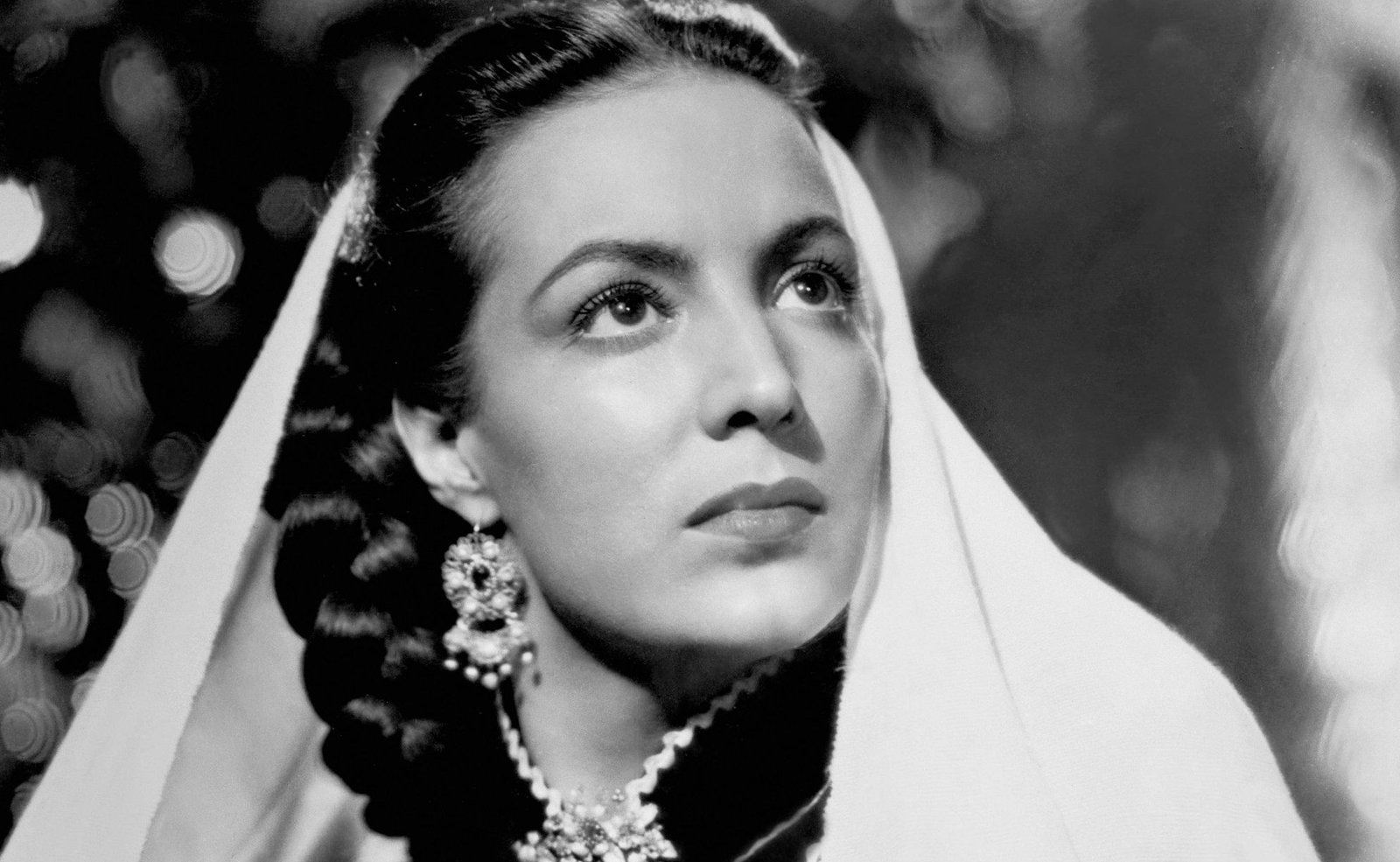
Enamorada (1946)
"After a period in America between 1924 and 1933, he established himself as a leading Mexican actor. His virile, Indian appearance made him particularly suitable for gaucho and bandit parts; when he took to direction in the early 1940s, his films explored similar territory taking in tragic, legendary and socially-orientated subjects - Maria Cande-Laria (1943), The Pearl (1946), Rio Escondido (1947), Maclovia (1948), La Red (1953). Many of there subjects were given a lush photographic sheen by the great cameraman, Gabriel Figueroa and, in fact, he and Fernández created the standard Mexican film image, with its vivid sunsets, ornate architecture and richly patterned exteriors." - John Gillett (The International Encyclopedia of Film, 1972)
"The son of a Kickapoo Indian and a revolutionary general, Emilio Fernández—known to generations of Mexican filmgoers as “El Indio”—was the most celebrated filmmaker to emerge from the Golden Age of Mexican cinema. Influenced equally by Hollywood narrative and Soviet montage techniques, Fernández brought an image of an eternal, elemental Mexico to the international festival circuit of the 1940s and ’50s." - The Museum of Modern Art, 2018
"Fernández was Mexico's greatest film director (and in international terms, one of the greatest directors that ever lived) and his art was to take the innate sentimentality of the Mexican character and turn it into tragic and beautiful poetry. He was a man who lived life to full, even overpowering, effect, as on the occasion when he once shot a critic during a heated altercation, and later killed a farm labourer in a similar dispute, for which, in traditional Mexican fashion, he served only six months in jail… With the great cinematographer Gabriel Figueroa at his side, and the sublime Pedro Armendariz and Dolores Del Rio to act for him, Fernández, at his best, showed that an ancient and ill-understood country, unfairly swamped by its more recent, rather brasher neighbour, may have its John Fords too." - Mario Reading (The Movie Companion, 2006)
"Film has to be healthy to inspire and entertain and move people to think. What will we leave our children if all we’re making are porquerias (filth)?" - Emilio Fernández
Selected Filmography
Loading filmography...
Emilio Fernández / Fan Club
Alberto Elena, Marina Díaz López.
Alberto Elena, Marina Díaz López.
"Fan Club"
These film critics/filmmakers have, on multiple occasions, selected this director’s work within film ballots/lists that they have submitted.
These film critics/filmmakers have, on multiple occasions, selected this director’s work within film ballots/lists that they have submitted.