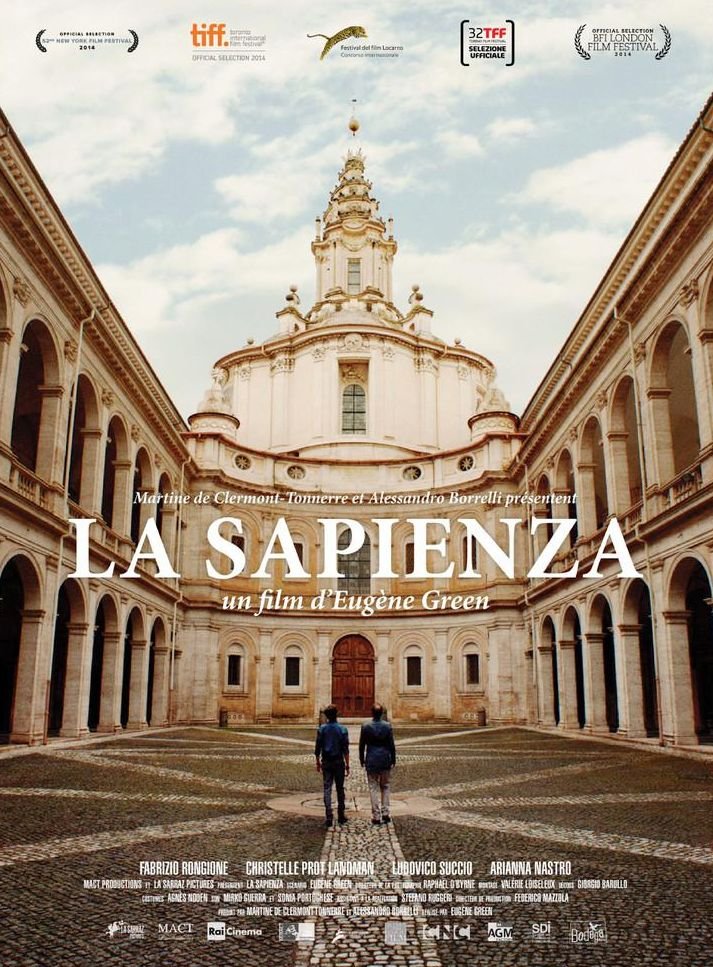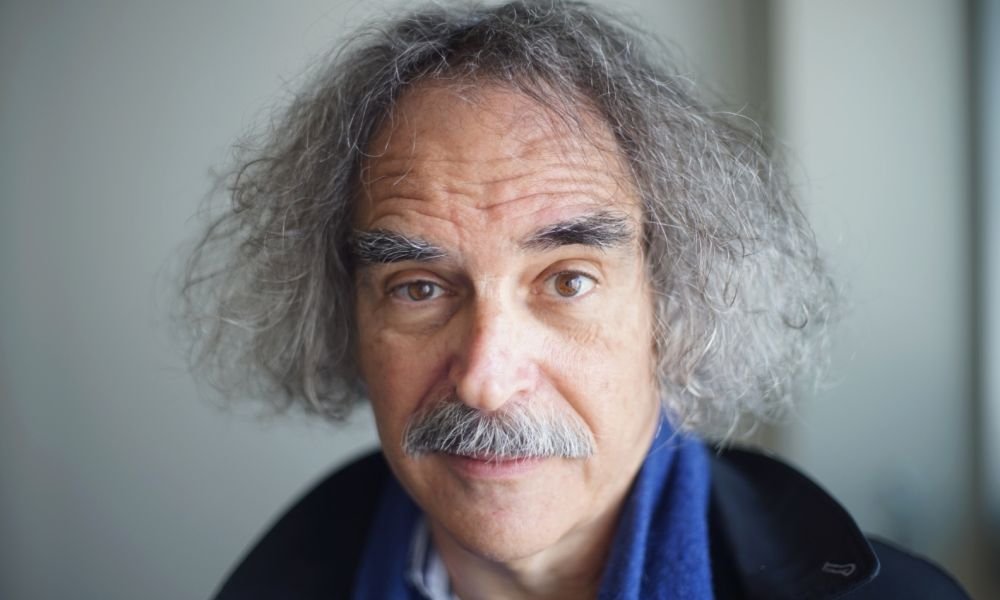
"The films of Eugène Green form some of the boldest, most unique, and most charming attractions in contemporary cinema. Since making his directorial debut at the age of 53 with Toutes les nuits (2001), he has consistently retained his own personal, inimitable style and developed it further: schooled in the film poetics of Robert Bresson, his actors perform in anti-psychological, minimalist fashion, reciting their lines while looking directly into the camera or with their gaze fixed on the person they’re addressing with penetrating directness." - Arsenal Filminstitut, 2018
Eugène Green
Director / Screenwriter
(1947- ) Born June 28, New York City, New York, USA
(1947- ) Born June 28, New York City, New York, USA
Key Production Countries: France, Belgium, Portugal
Key Genres: Drama, Fantasy, Family Drama, Farce, Music, Short Film
Key Collaborators: Raphaël O'Byrne (Cinematographer), Christelle Prot (Leading Character Actress), Adrien Michaux (Leading Character Actor), Martine de Clermont-Tonnerre (Producer), Alexis Loret (Leading Actor), Valérie Loiseleux (Editor), Pierre Bouillon (Production Designer), Fabrizio Rongione (Leading Actor), Natacha Régnier (Leading Actress), Laurène Cheilan (Leading Character Actress), Julia Gros de Gasquet (Character Actress), Mathieu Amalric (Character Actor)
Key Genres: Drama, Fantasy, Family Drama, Farce, Music, Short Film
Key Collaborators: Raphaël O'Byrne (Cinematographer), Christelle Prot (Leading Character Actress), Adrien Michaux (Leading Character Actor), Martine de Clermont-Tonnerre (Producer), Alexis Loret (Leading Actor), Valérie Loiseleux (Editor), Pierre Bouillon (Production Designer), Fabrizio Rongione (Leading Actor), Natacha Régnier (Leading Actress), Laurène Cheilan (Leading Character Actress), Julia Gros de Gasquet (Character Actress), Mathieu Amalric (Character Actor)
"Perhaps as a side effect of being forced to watch Battleship Potemkin multiple times in film school, many contemporary critics use “formalist” as a pejorative. However, the films of Eugène Green adhere to the rigorous conventions of the Baroque theater and succeed in parsing philosophical issues with a winning wry sense of humor." - Violet Lucca (Film Comment, 2015)
"Eugène Green was born an American in 1947 but has made his career and international reputation as a French filmmaker. Green left the US for Europe in the late sixties and eventually settled in France, where he founded the Théâtre de la Sapience, a theater company devoted to staging Baroque plays in their original form. In 1999, Green directed his first feature film, Toutes les nuits, drawing polarized, occasionally caricatural attention, both for his filmmaking—which was likened to Bresson’s for its highly enunciated French, “neutral” acting style, and formal rigor—and his vocal rejection of the country he was born in, which he refers to in French as “New Barbary.”" - Nicholas Elliott (BOMB Magazine, 2014)
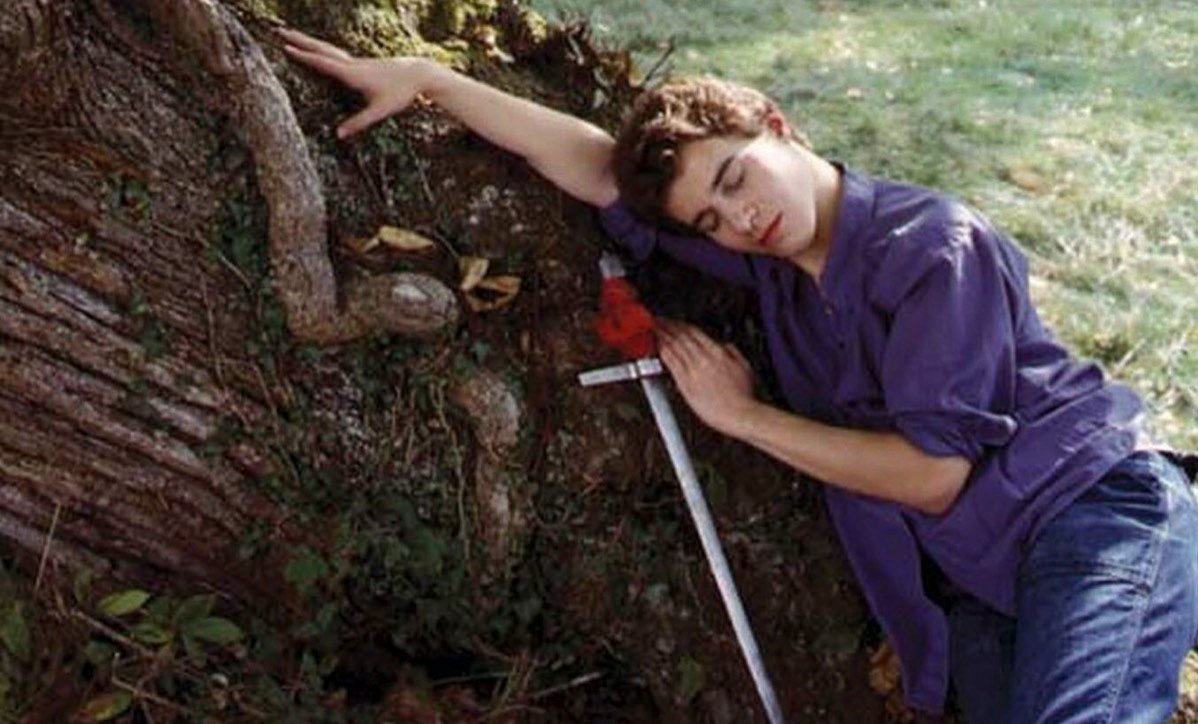
The Living World (2003)
"One of the great eccentrics of contemporary film, Eugène Green only began making movies in his mid-50s, after a career as an educator and specialist in baroque theater. Since releasing his debut, Toutes Les Nuits (2001), the writer-director has gone on to create a distinct and unusual body of work, influenced by baroque and medieval forms, fascinated by the power of language, and marked by a droll formalist sensibility and humor that brings to mind Robert Bresson." - Ignatiy Vishnevetsky (A.V. Club, 2017)
"Green’s films have been called quirky, sublime, and capable of restoring one’s faith in film – but what do they mean?… Like many works more interested in theoretical systems than the hefty ballast of fact, Green’s airy films levitate above any specific time or place. They accrue this lightness from their theatricality. Aside from obvious location shots, such as Paris marinating in the Seine, nearly every shot takes place on a stage set or a barren room and Green almost always cuts away from the action. He focuses on an object – a face, a door, a cup – while the story spills forward, unseen, on the audio track." - Ken Chen (Film International, 2011)
"For Green, the centre of his infatuation with the Baroque style and with cinema’s capabilities lies in what he calls “the Baroque oxymoron,” which concerns the people of the period’s devotion to the development of a more scientific understanding of the universe despite staying fully faithful to the notion that God is the supreme being. It’s this dialectical framework that has been the chief structural and methodological tool for all of Green’s films to date, down to the perversity of making “Baroque cinema” in such a mannered form." - Blake Williams (Cinema-Scope, 2014)
"All his films clearly possess a singular Baroque sensibility—he writes for the stage and founded his own theatre troupe back in 1977—and favor the art of direct-address conversations, with characters often expressing themselves straight into the camera. At the same time, an engrossing blend of slapstick and tragedy, farce and grotesque permeates all his work, making the overall tone of each sequence in his films powerfully diverse and inventive." - MUBI
"People who don’t like my films say that they’re intellectual and that they’re just treatises. There are ideas behind it, of course, but the basis of all my practices and the formal elements of my language is to produce emotion—but the emotion can lead to thought. If I had to speak of the thought, what the film expresses, it’s the idea, first of all, that the most important time is the present, but the present is an eternal present which contains all which has been and all which will be." - Eugène Green (Reverse Shot, 2015)
Selected Filmography
Loading filmography...
Eugène Green / Favourite Films
Au hasard Balthazar (1966) Robert Bresson, L'Eclisse (1962) Michelangelo Antonioni, The End of Summer (1961) Yasujiro Ozu, Fellini Satyricon (1969) Federico Fellini, The Flowers of St. Francis (1950) Roberto Rossellini, Gertrud (1964) Carl Theodor Dreyer, The Last Laugh (1924) F.W. Murnau, Shoeshine (1946) Vittorio De Sica, The Strange Case of Angelica (2010) Manoel de Oliveira, Ugetsu monogatari (1953) Kenji Mizoguchi, Wild Strawberries (1957) Ingmar Bergman, A Winter's Tale (1992) Eric Rohmer.
Source: Sight & Sound (2022)
Au hasard Balthazar (1966) Robert Bresson, L'Eclisse (1962) Michelangelo Antonioni, The End of Summer (1961) Yasujiro Ozu, Fellini Satyricon (1969) Federico Fellini, The Flowers of St. Francis (1950) Roberto Rossellini, Gertrud (1964) Carl Theodor Dreyer, The Last Laugh (1924) F.W. Murnau, Shoeshine (1946) Vittorio De Sica, The Strange Case of Angelica (2010) Manoel de Oliveira, Ugetsu monogatari (1953) Kenji Mizoguchi, Wild Strawberries (1957) Ingmar Bergman, A Winter's Tale (1992) Eric Rohmer.
Source: Sight & Sound (2022)
Eugène Green / Fan Club
Kieron Corless, Fábio Kawano, Miguel Marías, Mar Diestro-Dópido, Fernando E. Juan Lima, Radu Jude, Sam Wigley, Michel Mourlet, Filipe Furtado, Godfrey Cheshire, Nick Pinkerton.
Kieron Corless, Fábio Kawano, Miguel Marías, Mar Diestro-Dópido, Fernando E. Juan Lima, Radu Jude, Sam Wigley, Michel Mourlet, Filipe Furtado, Godfrey Cheshire, Nick Pinkerton.
"Fan Club"
These film critics/filmmakers have, on multiple occasions, selected this director’s work within film ballots/lists that they have submitted.
These film critics/filmmakers have, on multiple occasions, selected this director’s work within film ballots/lists that they have submitted.