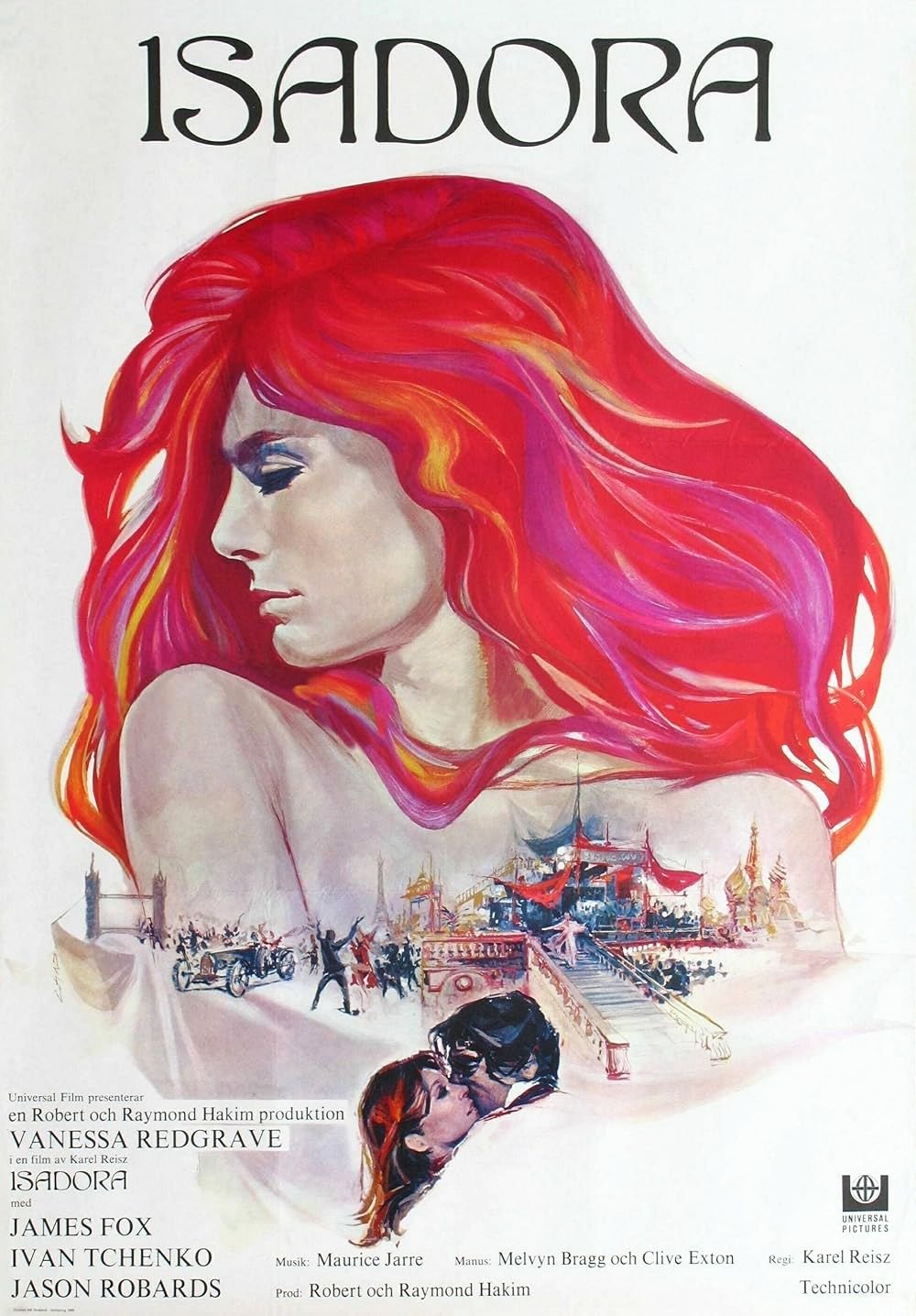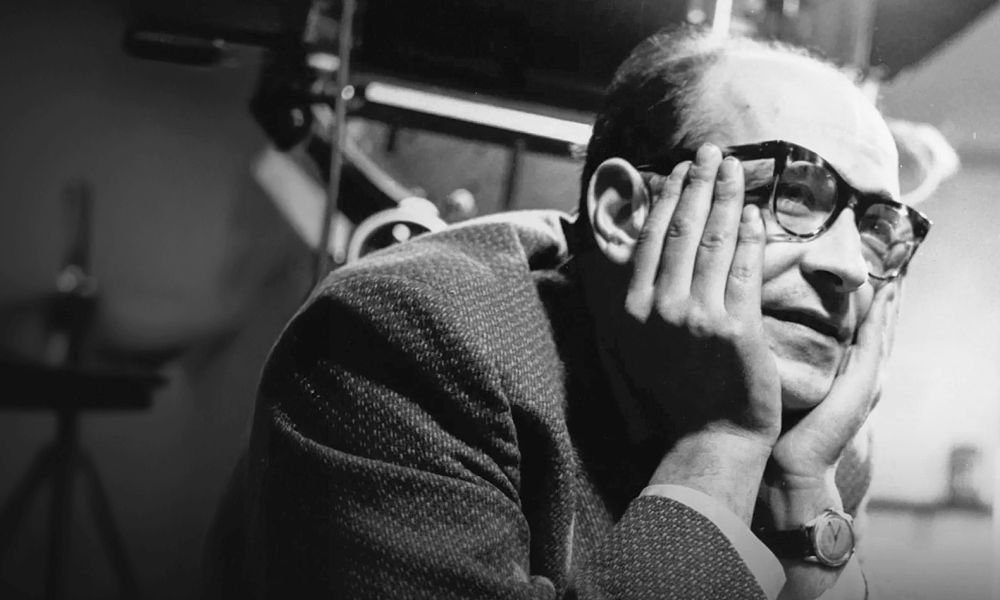
"Reisz always claimed that he had no specific interest in realism as such, it was simply a convenient means with which to challenge the orthodoxies of 1950s British film production. Instead his real concern seems to have been with social outcasts, those who find themselves temperamentally outside of the mainstream and frequently suffer persecution as a result. Considering his childhood experiences, this might be seen as less than surprising. It also confirms that there was a good deal more to Reisz than simply being a chronicler of working-class life." - Robert Shail (British Film Directors: A Critical Guide, 2007)
Karel Reisz
Director / Producer
(1926-2002) Born July 21, Ostrava, Czechoslovakia (now Czech Republic)
(1926-2002) Born July 21, Ostrava, Czechoslovakia (now Czech Republic)
Key Production Countries: UK, USA
Key Genres: Drama, Romance, Crime, Music, Biography, Thriller, Period Drama, History, Documentary
Key Collaborators: Leon Clore (Producer), John Bloom (Editor), John Dankworth (Composer), Nick Nolte (Leading Actor), Vanessa Redgrave (Leading Actress), Freddie Francis (Cinematographer), Larry Pizer (Cinematographer), Tom Priestley (Editor), David Warner (Character Actor)
Key Genres: Drama, Romance, Crime, Music, Biography, Thriller, Period Drama, History, Documentary
Key Collaborators: Leon Clore (Producer), John Bloom (Editor), John Dankworth (Composer), Nick Nolte (Leading Actor), Vanessa Redgrave (Leading Actress), Freddie Francis (Cinematographer), Larry Pizer (Cinematographer), Tom Priestley (Editor), David Warner (Character Actor)
"British director of Czech origins who came to England as a refugee at the age of twelve. He worked with Lindsay Anderson on the oxford journal Sequence, and was involved in Free Cinema… Outside the context of British social realism, Reisz's work has been consistently interesting - The Dog Soldiers/Who'll Stop the Rain (1978, US), The French Lieutenant's Woman (1981) - but never overwhelming. Like many other British directors, he was forced to turn to Hollywood in the 1970s and 1980s." - John Caughie (Encyclopedia of European Cinema, 1995)
"In terms of themes if not in style, Karel Reisz was the most consistent of the young directors most closely associated with the British New Wave of the late 1950s and early 60s. Though his output was disappointingly small and some of his films performed poorly at the box-office, Reisz regularly commanded critical respect and esteem as a film-maker, critic, and educator. His later work as a stage director of uncommon insight also brought him applause." - Neil Sinyard (BFI Screenonline)
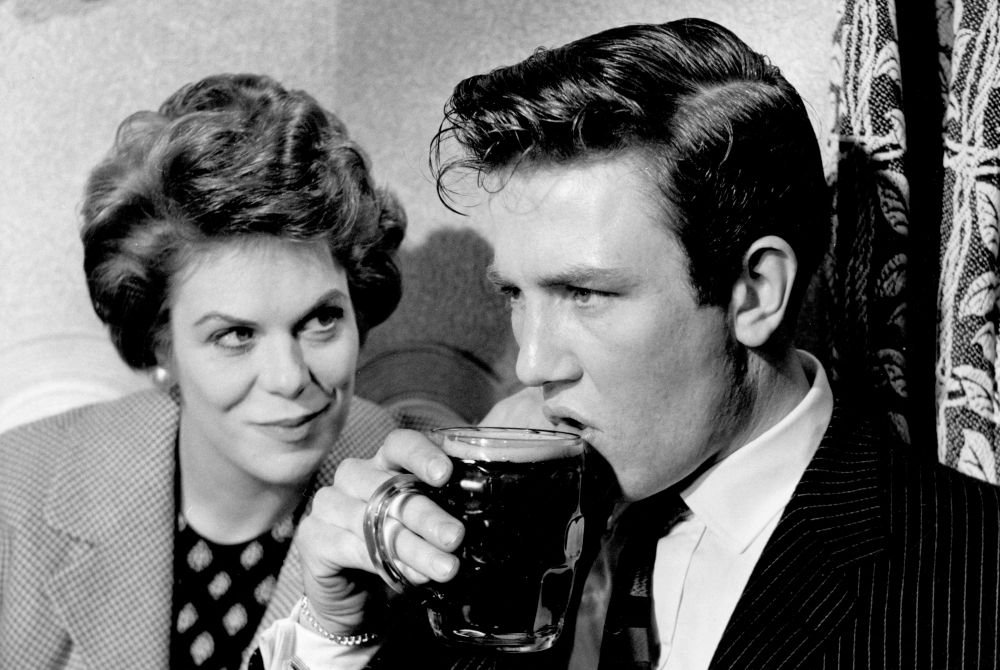
Saturday Night and Sunday Morning (1960)
"Less provocative than Anderson, less stylistically self-conscious than Richardson, Reisz shared with them an ambition to free the British cinema from its hidebound conservatism and unadventurous commercialism. Free Cinema set out to champion 'the significance of the everyday'. These were brave words, attuned to the mood of the time; but of the directors associated with the movement, Reisz, in his subsequent career, has seemed less concerned to send our social shock waves than to annotate, quietly and unfussily, the theme of personal identity." - David Wilson (Cinema: A Critical Dictionary, 1980)
"Though he would direct only 11 features in 30 years, Reisz’s influence was and is pervasive, perhaps because of his multifaceted, even contradictory, craftiness. He figured out an important trick for a cinema artist, not to mention a respectable Englishman: How to be heady and grounded at once, without being disingenuous. His commitment to social realism and directness of cinematic expression never seemed incongruous with an interest in semi-stylized biopics and thoroughly postmodern literary adaptations. Reisz was brave enough to make a film about Patsy Cline’s sad life story, with 1985’s Sweet Dreams, and maybe braver to cast Jessica Lange. The French Lieutenant’s Woman, in 1981, was his most popular and most fully realized work, and, as a period piece that oscillates between modern and Victorian views of the world, a long and liberated step from the manifesto mandates of Free Cinema." - PopMatters, 2002
"Czech-born film-maker, in Britain since boyhood. Very active on television, and a front runner in the 'free cinema' movement of the mid-1950s that led to his own Saturday Night and Sunday Morning, he has had a curiously spasmodic and unsatisfactory film career. In 1981, though, he made his best film for 15 years, The French Lieutenant's Woman, giving some grounds for hope for a revival in his film fortunes. A writer on film technique, Reisz began making documentaries in the 1950s, sometimes in collaboration with the other members of the Free Cinema Trio, Lindsay Anderson and Tony Richardson. These look dated now, but were effective in their time." - David Quinlan (Quinlan's Illustrated Guide to Film Directors, 1999)
"For me the great thing about a film is to allow everyone to make their contribution and to keep the process fluid. The process of adaptation is a free process and the process of rehearsal is a free process and the process of shooting is a free process." - Karel Reisz
Selected Filmography
Loading filmography...
Karel Reisz / Favourite Films
The Discreet Charm of the Bourgeoisie (1972) Luis Buñuel, Earth (1930) Alexander Dovzhenko, Fires Were Started (1943) Humphrey Jennings, The Lady Eve (1941) Preston Sturges, Nashville (1975) Robert Altman, Raging Bull (1980) Martin Scorsese, The Rules of the Game (1939) Jean Renoir, Strangers on a Train (1951) Alfred Hitchcock, They Were Expendable (1945) John Ford, Tokyo Story (1953) Yasujiro Ozu.
Source: Sight & Sound (2002)
The Discreet Charm of the Bourgeoisie (1972) Luis Buñuel, Earth (1930) Alexander Dovzhenko, Fires Were Started (1943) Humphrey Jennings, The Lady Eve (1941) Preston Sturges, Nashville (1975) Robert Altman, Raging Bull (1980) Martin Scorsese, The Rules of the Game (1939) Jean Renoir, Strangers on a Train (1951) Alfred Hitchcock, They Were Expendable (1945) John Ford, Tokyo Story (1953) Yasujiro Ozu.
Source: Sight & Sound (2002)
Karel Reisz / Fan Club
Dan Sallitt, Neil Young, James Toback, Nik Powell, Michał Oleszczyk, Gerald Peary, Lindsay Anderson.
Dan Sallitt, Neil Young, James Toback, Nik Powell, Michał Oleszczyk, Gerald Peary, Lindsay Anderson.
"Fan Club"
These film critics/filmmakers have, on multiple occasions, selected this director’s work within film ballots/lists that they have submitted.
These film critics/filmmakers have, on multiple occasions, selected this director’s work within film ballots/lists that they have submitted.