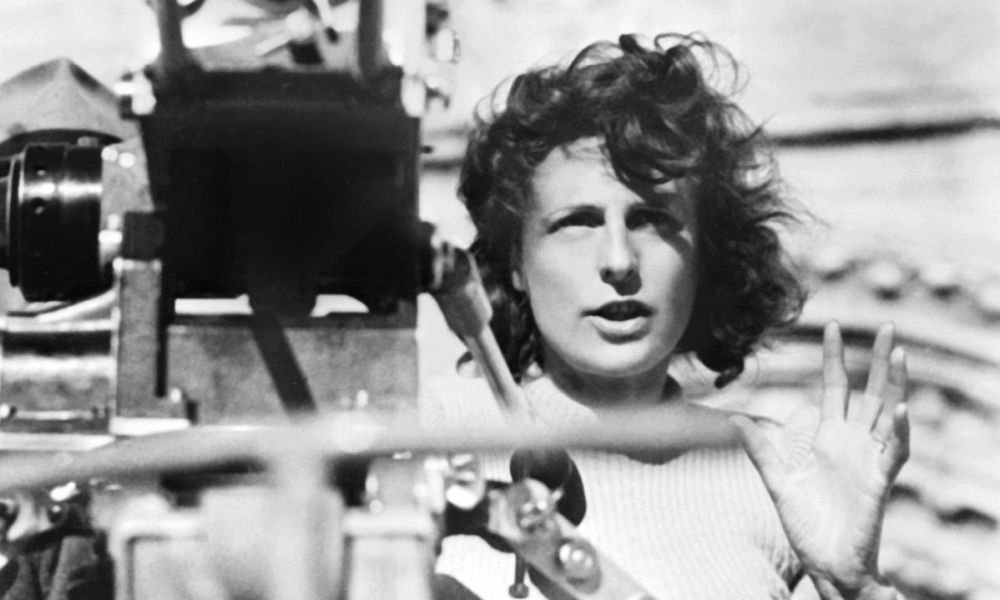
"One of the most controversial film directors of the 20th century, the woman who would be known as the "Film Queen of the Third Reich" has been both admired as a documentary genius and loathed as an accessory to a murderous regime." - Fernando Arenas (The Encyclopedia of Great Filmmakers, 2002)
Leni Riefenstahl
Director / Producer / Editor / Actress / Screenwriter
(1902-2003) Born August 22, Berlin, Germany
(1902-2003) Born August 22, Berlin, Germany
Key Production Country: Germany
Key Genres: Documentary, Propaganda Film, Politics & Government, Sports Documentary, Political Documentary, Drama
Key Collaborators: Albert Kling (Cinematographer), Heinz von Jaworsky (Cinematographer), Herbert Kebelmann (Cinematographer), Károly Vass (Cinematographer), Walter Frentz (Cinematographer), Werner Hundhausen (Cinematographer), Adolf Hitler, Herbert Windt (Composer), Josef Goebbels, Hermann Goring
Key Genres: Documentary, Propaganda Film, Politics & Government, Sports Documentary, Political Documentary, Drama
Key Collaborators: Albert Kling (Cinematographer), Heinz von Jaworsky (Cinematographer), Herbert Kebelmann (Cinematographer), Károly Vass (Cinematographer), Walter Frentz (Cinematographer), Werner Hundhausen (Cinematographer), Adolf Hitler, Herbert Windt (Composer), Josef Goebbels, Hermann Goring
"Considered in some quarters the nearest thing to a war criminal and in others a film genius, Leni Riefenstahl symbolizes the fate of a naive actress and director prompted to deal with devils - devils on the order of Adolf Hitler, who sparked her film career, and Joseph Goebbels, who almost as quickly curtailed it… Riefenstahl's technical virtuosity - her use of automatic and hand-held cameras, jump-cuts and impressionistic sound effects - influenced later German newsreels and films by the German Army Propaganda Companies, whose members were composed in part of her Olympia cameramen." - Lenny Rubenstein (The Virgin International Encyclopedia of Film, 1992)
"So, is Leni Riefenstahl a “great director”? The response obviously varies widely between who is being asked and which Leni Riefenstahl is being discussed. She is, to be sure, a textbook test case for the division between the artist and their art, and according to Glenn B. Infield, the debate over Riefenstahl being “a tarnished film goddess or an innocent martyr because of her relations with Adolf Hitler is an attempt to establish the limits to which an artist can go without assuming responsibility for the effects of artistic achievement on the human race as a whole.” What can’t be denied is her sustained impact. For better or worse, few filmmakers (and still fewer female filmmakers) have created works of such complexity, divisiveness, and brilliance, films that have indeed transcended the medium itself. “The only thing that can be agreed upon,” Jürgen Trimborn remarks, “is that although she is the most controversial director in the history of the cinema, she is also one of the most important film artists of the twentieth century.”" - Jeremy Carr (Senses of Cinema, 2021)
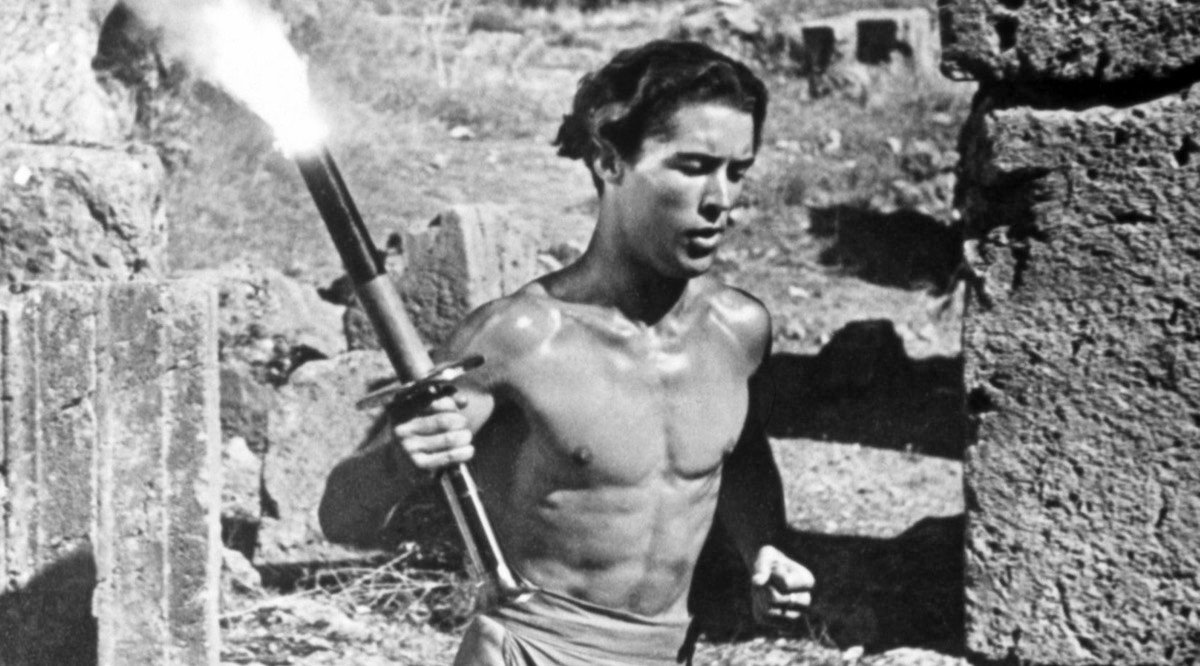
Olympia (1938)
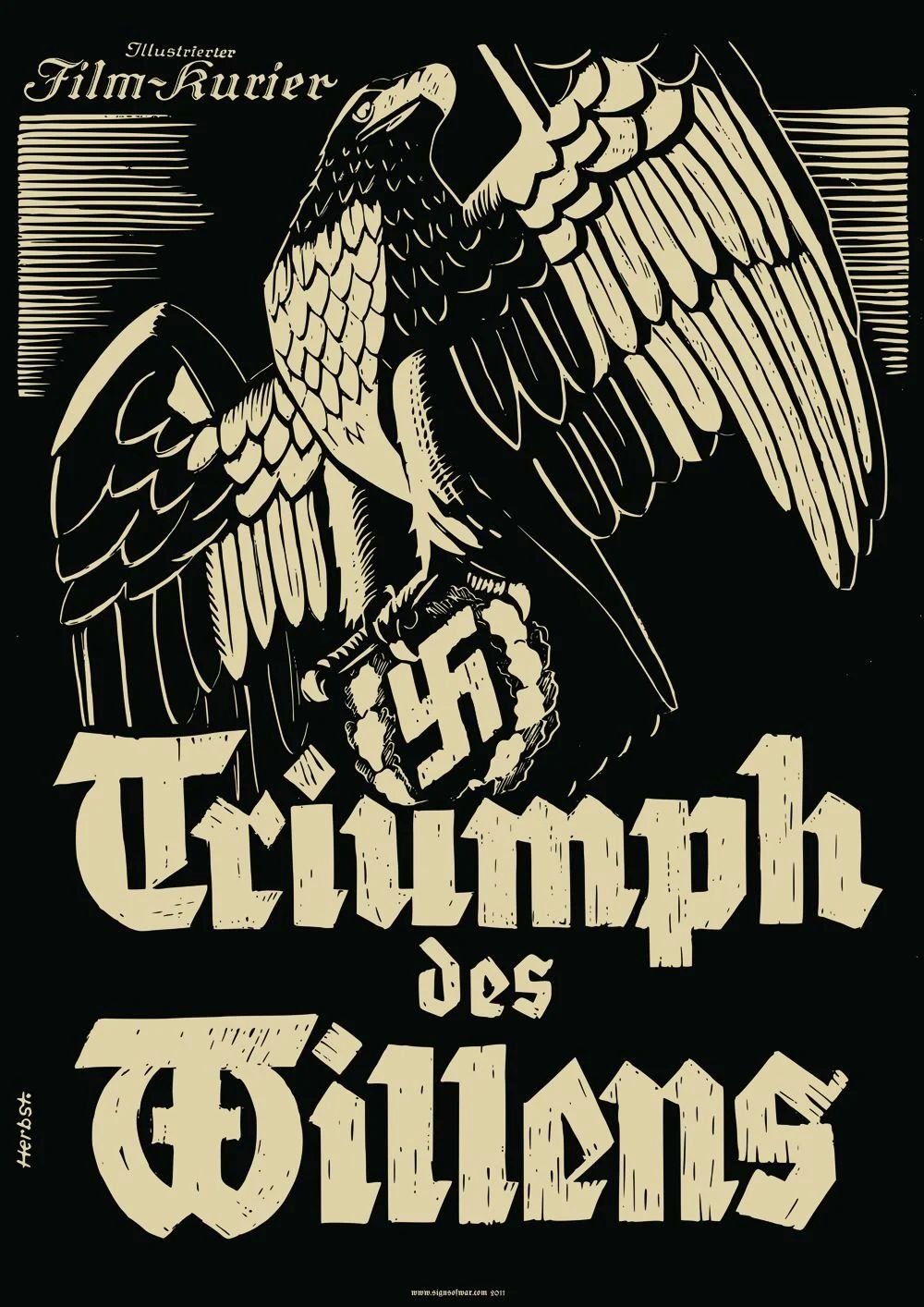
"Despite Leni Riefenstahl's protestations that her documentaries celebrating the Nazi Party and the Berlin Olympic Games were merely records of historic events, she shaped them brilliantly into great propaganda spectacles. Riefenstahl starred in her first feature, The Blue Light (1932), a "mountain film" in which nature, especially dramatic mountains, played a key role. Hitler was impressed and supplied her with more than 40 cameramen to shoot the 1934 Nuremberg Rally under the tile of Triumph of the Will (1935)." - Ronald Bergan (Film - Eyewitness Companions, 2006)
"The years 1932 to 1945 define the major filmmaking efforts of Leni Riefenstahl. Because she remained a German citizen making films in Hitler's Third Reich, two at the Fuhrer's request, she and her films were viewed as pro-Nazi. Riefenstahl claims she took no political position and committed no crimes. In 1948, a German court ruled that she was a follower of, not active in, the Nazi Party. Another court in 1952 reconfirmed her innocence of war crimes. But she is destined to remain a politically controversial filmmaker who made two films rated as masterpieces." - Louise Heck-Rabi (Film Reference)
"Leni Riefenstahl was the Third Reich's key visual ideologue. As such her films are known as pure propaganda, treaties of Nazi policy. Her involvement with Adolf Hitler and Joseph Goebbels ties her to the horror of Nazi atrocities, and her films cannot be viewed in isolation of that awareness: they share the blame… Ostracized after the war, Riefenstahl made only one more feature, Tiefland (1954), and in 2002, the documentary Impressionen unter Wasser, a final example of her creative genius. She remained until her death, a troubled veteran, unrepentant and irritated by insistent interrogation, but also visibly haunted by her past." - Ernest Mathijs (501 Movie Directors, 2007)
"Next to Orson Welles and Alfred Hitchcock, Leni Riefenstahl was the most technically talented Western filmmaker of her era." - Mark Cousins (The Story of Film, 2012)
"I filmed the truth as it was then. Nothing more." - Leni Riefenstahl
Selected Filmography
Loading filmography...
Leni Riefenstahl / Fan Club
Carrie Rickey, John Russell Taylor, Dawud Moslem, Fernando Duarte, Mark Cousins, Enno Patalas, José Luis Guarner.
Carrie Rickey, John Russell Taylor, Dawud Moslem, Fernando Duarte, Mark Cousins, Enno Patalas, José Luis Guarner.
"Fan Club"
These film critics/filmmakers have, on multiple occasions, selected this director’s work within film ballots/lists that they have submitted.
These film critics/filmmakers have, on multiple occasions, selected this director’s work within film ballots/lists that they have submitted.