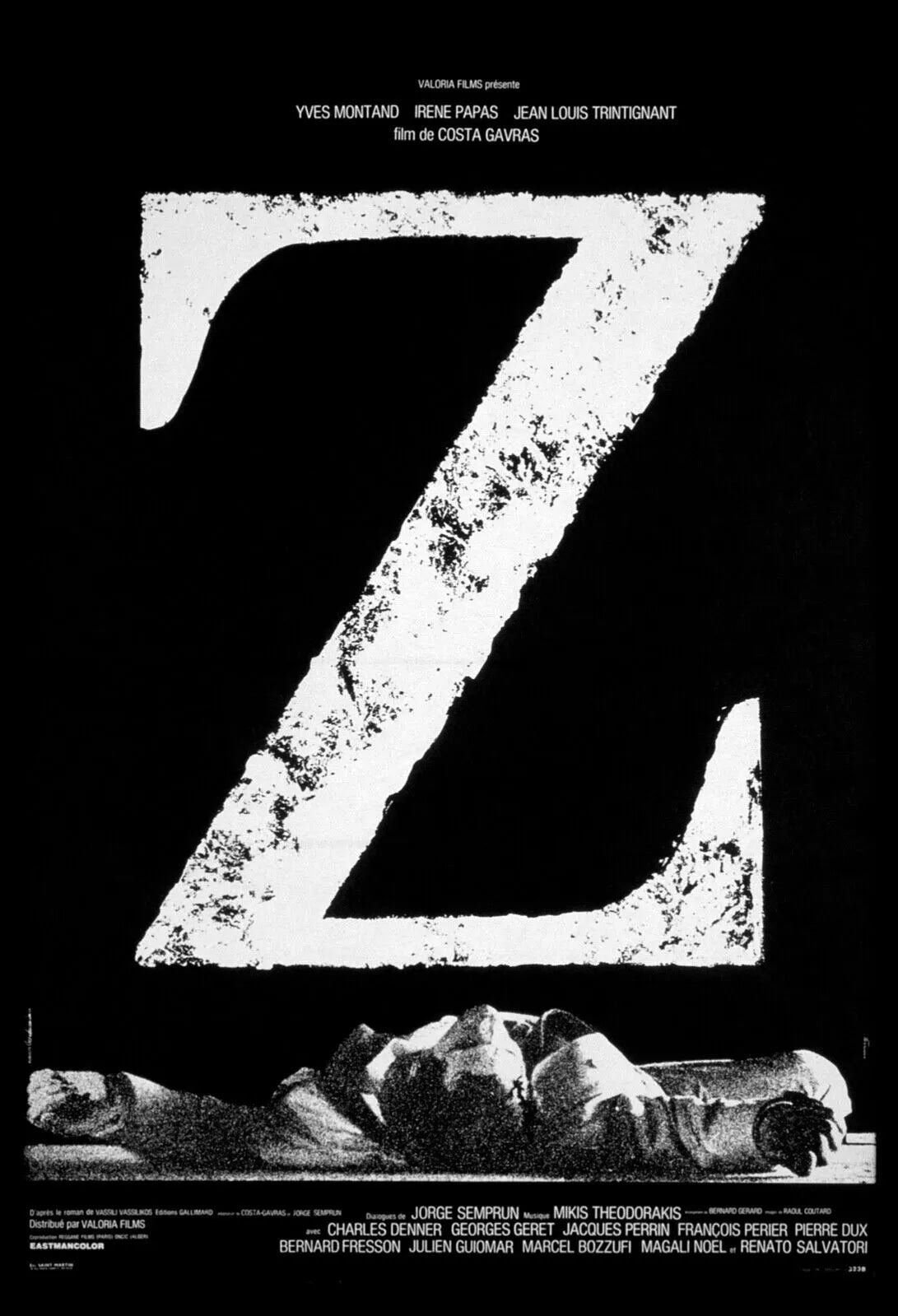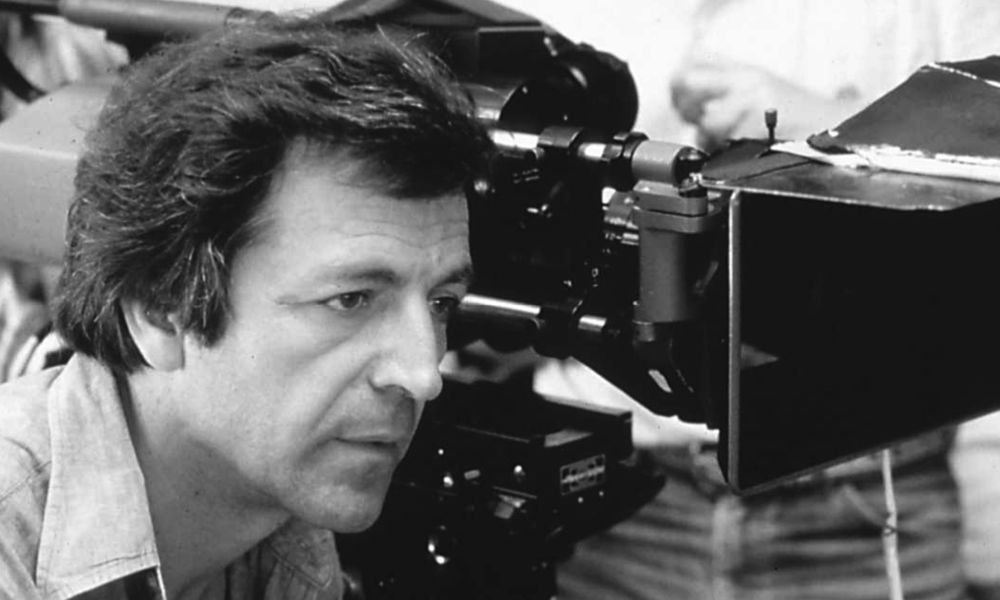
"The films of Constantin Costa-Gavras are exciting, enthralling, superior examples of dramatic moviemaking, but the filmmaker is far from being solely concerned with keeping the viewer in suspense. A Greek exile when he made Z, set in the country of his birth, Costa-Gavras is most interested in the motivations and misuses of power: politically, he may be best described as an anti-fascist, a humanist. As such, his films are as overtly political as any above-ground, internationally popular and respected filmmaker in history." - Rob Edelman (The St. James Film Directors Encyclopedia, 1998)
Costa-Gavras
Director / Screenwriter
(1933- ) Born February 13, Loutra-Iraias, Greece
(1933- ) Born February 13, Loutra-Iraias, Greece
Key Production Countries: France, USA
Key Genres: Drama, Thriller, Crime, Political Thriller, Mystery-Suspense, Political Drama, Tragedy, History, Biography
Key Collaborators: Patrick Blossier (Cinematographer), Françoise Bonnot (Editor), Yves Montand (Leading Actor), Ulrich Tukur (Leading Actor), Jacques Perrin (Leading Actor), Simone Signoret (Leading Actress), Jean-Claude Grumberg (Screenwriter), Joe Eszterhas (Screenwriter), Jorge Semprún (Screenwriter), Irwin Winkler (Producer), Michèle Ray-Gavras (Producer), Raoul Coutard (Cinematographer)
Key Genres: Drama, Thriller, Crime, Political Thriller, Mystery-Suspense, Political Drama, Tragedy, History, Biography
Key Collaborators: Patrick Blossier (Cinematographer), Françoise Bonnot (Editor), Yves Montand (Leading Actor), Ulrich Tukur (Leading Actor), Jacques Perrin (Leading Actor), Simone Signoret (Leading Actress), Jean-Claude Grumberg (Screenwriter), Joe Eszterhas (Screenwriter), Jorge Semprún (Screenwriter), Irwin Winkler (Producer), Michèle Ray-Gavras (Producer), Raoul Coutard (Cinematographer)
"Costa-Gavras is an angry director whose passion sometimes overrides his cinematic sense and whose films club away at their audience in much the same way as Yves Montand is attacked in Z." - David Quinlan (Quinlan's Film Directors, 1999)
"His career, spanning two continents and nearly six decades, is openly political; as he famously reiterated, everything is political. From Z (1969) to Missing (1982), from The Axe (2005) to Capital (2012) and Adults in the Room (2019), his variegated range of subject matters stays contemporary, relevant, human-centered, and brilliantly entertaining at the same time." - Yun-hua Chen (Film International, 2022)

Missing (1982)
"At their best, Costa-Gavras' muck-raking melodramas about conspiracy and corruption blend the personal and the political to dynamic, moving effect. With thinly disguised stories based on real-life events, he opted for polemics rather than objectivity to explore the abuse of power: casting stars as heroes, depicting governmental figures as boorish, shifty and self-serving, and structuring his stories as mysteries and thrillers, he aimed to bring political cinema to the masses. The result is often contrived, even stridently simplistic, but with its rapid editing, gritty, almost documentary-style camerawork, and impressive crowd scenes showing chaotic or violent action, his finest work has an urgency and immediacy at times reminiscent of newsreel footage." - Geoff Andrew (The Director's Vision, 1999)
"For a while, Costa-Gavras made it seem as though political filmmaking could really change the world. Born of Russian-Greek parentage, Costa-Gavras had a Greek Orthodox education, but owing to his father's suspected communism was denied entrance to university. Moving to Paris, where he took French citizenship in 1956, he attended the Sorbonne and the national film school IDHEC… Combining star performance, newsworthy confrontations, and cinéma-vérité aesthetics, 1970s Costa-Gavras links the high-art commitment of Jean-Luc Godard and Francesco Rosi with the commercial conspiracy thriller." - Richard Armstrong (The Rough Guide to Film, 2007)
"A master of political thrillers which show outrage at oppression." - William R. Meyer (The Film Buff's Catalog, 1978)
"I think that the arts in general and not only cinema have a political function in society – not in an ideological sense, but as in influencing our social behaviour. Aristotle has famously said that man is a political animal. Why a political animal? First of all, an animal lives in the company of other animals in a group, like human beings. The difference between animals and human beings is that animals only decide about themselves, while humans try to form societies and face difficulties together. Thus, that’s politics for me: what we do in our daily lives and how we interact with power and authority. For me, politics is everywhere; it’s not only about political parties and elections, which is of course a very important part of politics. My films are about our place in society and how we use power." - Costa-Gavras (Neos Kosmos, 2019)
Selected Filmography
Loading filmography...
Costa-Gavras / Fan Club
Gary Crowdus, Raymond Borde, A.V. Rockwell, Gerard Krawczyk, William Friedkin, David Stratton, Michael Atkinson, Robert Cashill, Dan Georgakas.
Gary Crowdus, Raymond Borde, A.V. Rockwell, Gerard Krawczyk, William Friedkin, David Stratton, Michael Atkinson, Robert Cashill, Dan Georgakas.
"Fan Club"
These film critics/filmmakers have, on multiple occasions, selected this director’s work within film ballots/lists that they have submitted.
These film critics/filmmakers have, on multiple occasions, selected this director’s work within film ballots/lists that they have submitted.