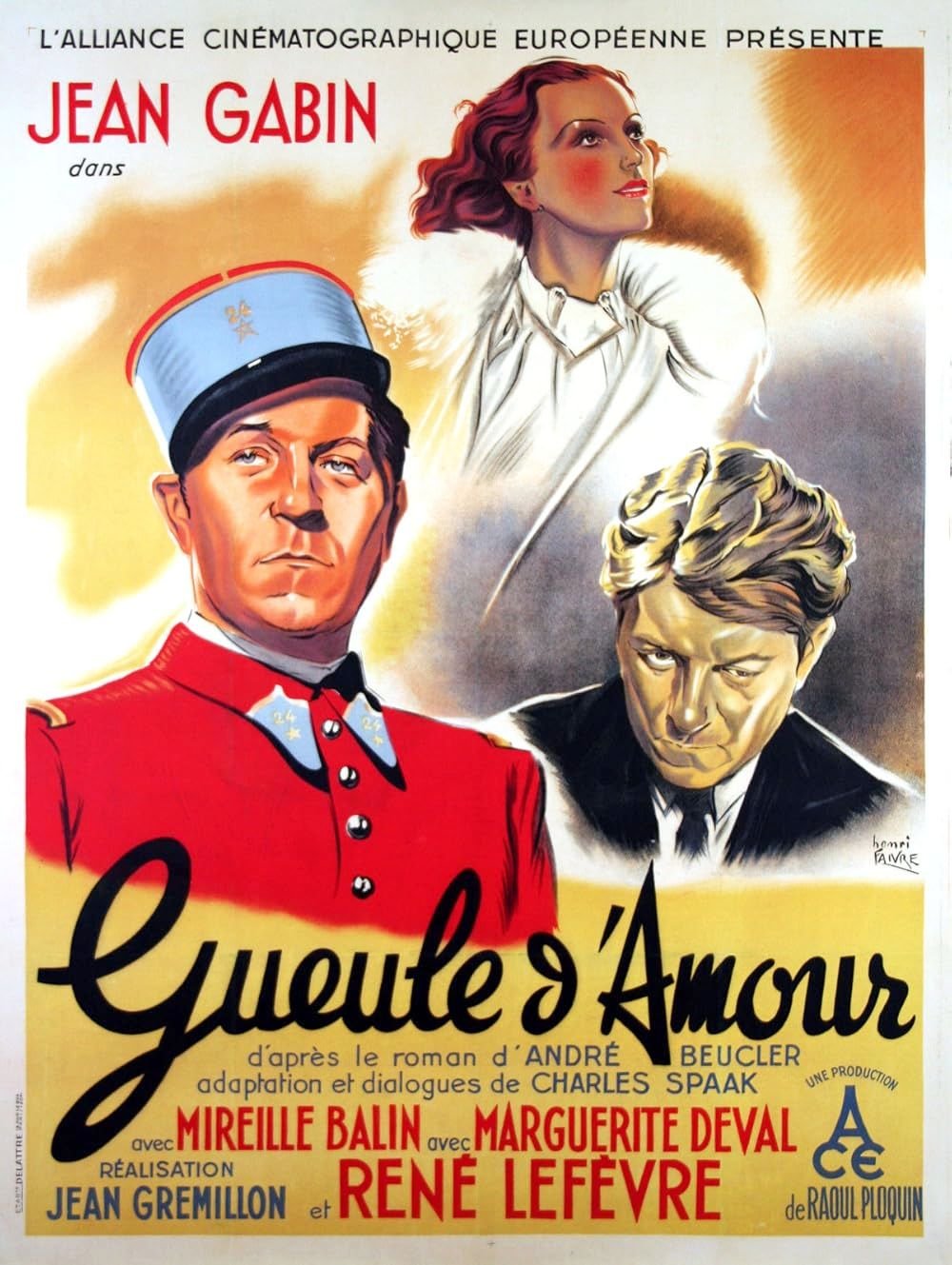
"One of the least known of the great French directors of the 1930s, Grémillon is possibly the most 'classic' in his combination of realism and popular genres… He also, unusually, offered portraits of remarkably strong and complex women in Le Ciel est à vous and L'Amour d'une femme, feminist heroines avant la lettre (respectively Madeleine Renaud and Micheline Presle), struggling equally with work and love. There as in Gueule d'amour, Grémillon made explosive use of melodrama, subverting (as Geneviève Sellier has noted) dominant cinema from inside, reaching a wide audience without compromising his own ideas." - Ginette Vincendeau (Encyclopedia of European Cinema, 1995)
Jean Grémillon
Director / Screenwriter / Editor / Composer
(1901-1959) Born March 4, Bayeux, Calvados, Basse-Normandie, France
(1901-1959) Born March 4, Bayeux, Calvados, Basse-Normandie, France
Key Production Countries: France, Germany
Key Genres: Drama, Romance, War, Short Film, Crime, Documentary
Key Collaborators: Louis Page (Cinematographer), Charles Spaak (Screenwriter), Louisette Hautecoeur (Editor), Roland Manuel (Composer), Madeleine Renaud (Leading Actress), Raoul Ploquin (Producer), Georges Périnal (Cinematographer), Charles Blavette (Leading Character Actor), André Barsacq (Production Designer), Geymond Vital (Character Actor), Léonce Corne (Character Actor), Jean Gabin (Leading Actor)
Key Genres: Drama, Romance, War, Short Film, Crime, Documentary
Key Collaborators: Louis Page (Cinematographer), Charles Spaak (Screenwriter), Louisette Hautecoeur (Editor), Roland Manuel (Composer), Madeleine Renaud (Leading Actress), Raoul Ploquin (Producer), Georges Périnal (Cinematographer), Charles Blavette (Leading Character Actor), André Barsacq (Production Designer), Geymond Vital (Character Actor), Léonce Corne (Character Actor), Jean Gabin (Leading Actor)
"A native of Normandy. Former musician. Wrote the music for many of his films. After documentaries and experimental shorts, he entered the commercial cinema with two populist pictures starring Jean Gabin, Gueule D'Amour (1937) and Remorques (1941). Under the restrictions of Vichy France, he made the melancholy, Lumière d'été (1943). One or two of his bleakly naturalistic films deserve to be better known outside France. After the war he concentrated on documentaries of his native province." - Ronald Bergan (A-Z of Movie Directors, 1983)
"His films are sensitive to the tensions between individuals and communities, between the cyclical patterns of daily life and the private obsessions or conflicts that break these rhythms. A trained musician, Grémillon could pinpoint shifts from harmony to dissonance, and his best films contain exceptionally subtle, complex treatments of human relationships. Admired in France, Grémillon remains virtually unknown in this country, and a tantalizing mystery even to those who have discovered him." - Imogen Sara Smith (Reverse Shot, 2014)
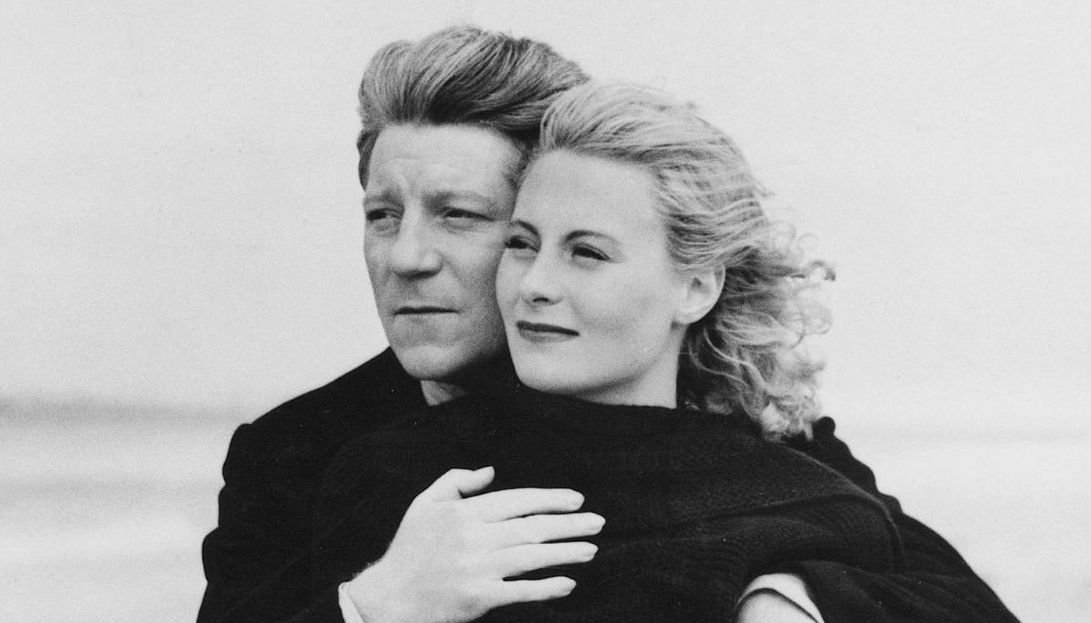
Stormy Waters (1941)
"Grémilion is not only underrated outside France; he is almost totally unknown. True, in the days of Sequence, Lumière d'Eté had a certain reputation in Britain. But he made a number of other interesting films, too. In France he has not been entirely forgotten: Straub claims him as one of the directors whose use of sound most influenced him. Cocteau cryptically epitomized him as 'A singular being in a plural world.'" - Richard Roud (Cinema: A Critical Dictionary, 1980)
"Grémillon’s Lady Killer and The Strange Mister Victor are truly wonderful films. Grémillon is that other great ‘Jean’ in French Cinema (the more well-known one of course being Jean Renoir). Through his films, Grémillon shows that he not only knows where or how to place the camera, but that he grasps the mysteries of this world. Each of his films surprises me. The actions of his characters, for instance, can sometimes appear almost contradictory, but Grémillon imbues them with truth. I still don’t know how he accomplished this. Grémillon is as much a mystery as this world." - Ryusuke Hamaguchi (Metrograph, 2023)
"After the war, Grémillon was president of the Cinémathèque until his death, and largely preoccupied with documentaries. Thus, he made few features with real freedom. He may be a subject for reevaluation. Certainly his films are intensely felt, the work of a man sensitive to music, painterly composition, and the subtleties of Normandy and Brittany… Gueule d’Amour leaves one in no doubt—Grémillon was a remarkable director… The film is unerringly modern and it makes one want to see anything by Grémillon." - David Thomson (The New Biographical Dictionary of Film, 2010)
"Jean Grémillon left his native Normandy with the ambition to be a composer, but while working in the orchestra pit as a silent film accompanist, he fell in love with movies. The lyrical, musical films that he would go on to create both predicted and transcended 1930s French “poetic realism”—for Grémillon was too much an iconoclast to belong to any movement. A documentarian first and last, he combined a dedication to real-life detail with a passion for flamboyant artifice—only one of the many contradictions that defined his personality. He was also a lover of liberty who made his greatest works during the German occupation, and a populist who chafed at working in industrial filmmaking, ending his career making shorts about the fine arts." - Museum of the Moving Image, 2014
Selected Filmography
Loading filmography...
Jean Grémillon / Fan Club
Bertrand Tavernier, Paul Vecchiali, Ryusuke Hamaguchi, Fernando Ganzo, Leos Carax, Miguel Marías, Santiago Gallego, Freddy Buache, Peter Rist, Olivier Père, Jesús Cortés, Jean Douchet.
Bertrand Tavernier, Paul Vecchiali, Ryusuke Hamaguchi, Fernando Ganzo, Leos Carax, Miguel Marías, Santiago Gallego, Freddy Buache, Peter Rist, Olivier Père, Jesús Cortés, Jean Douchet.
"Fan Club"
These film critics/filmmakers have, on multiple occasions, selected this director’s work within film ballots/lists that they have submitted.
These film critics/filmmakers have, on multiple occasions, selected this director’s work within film ballots/lists that they have submitted.