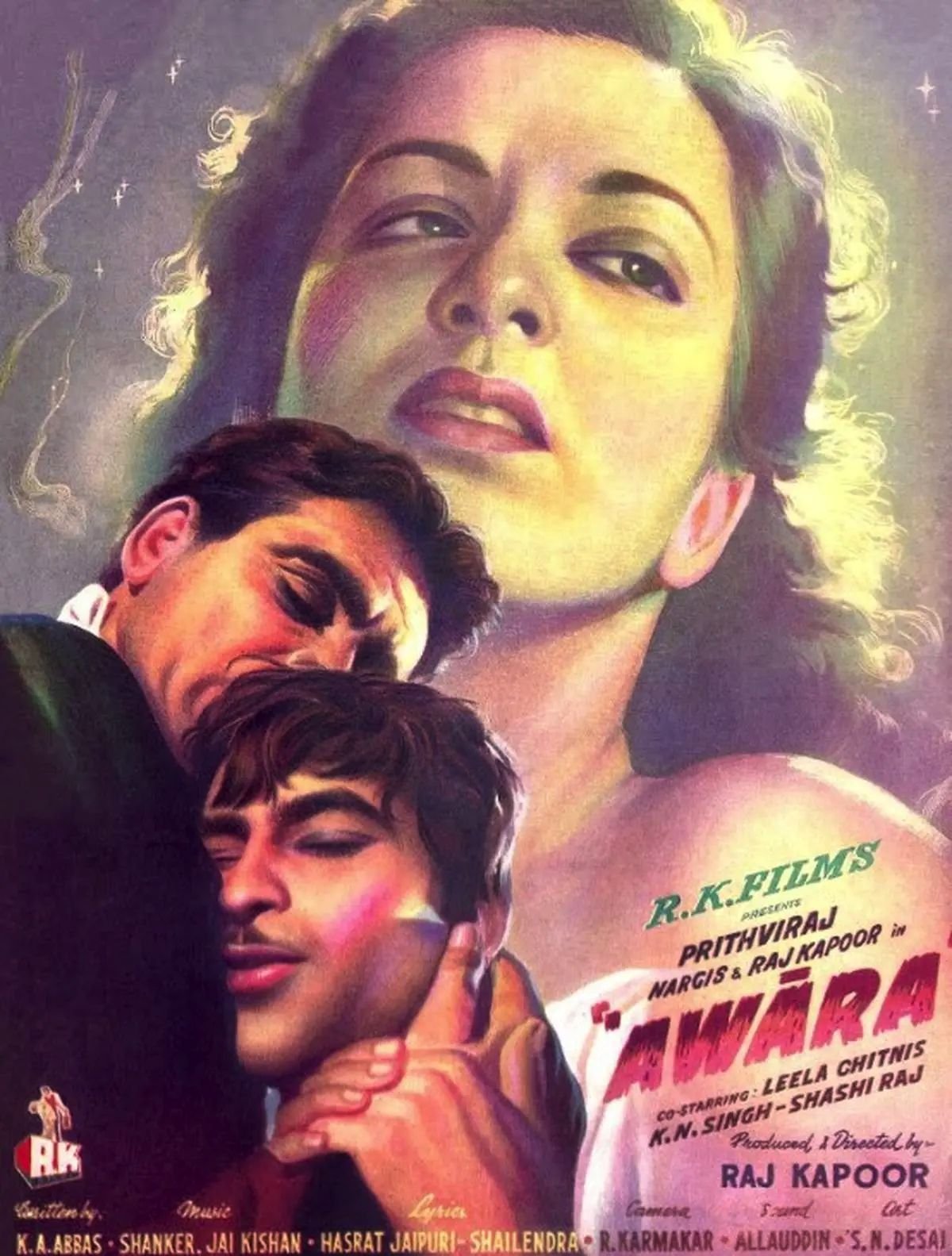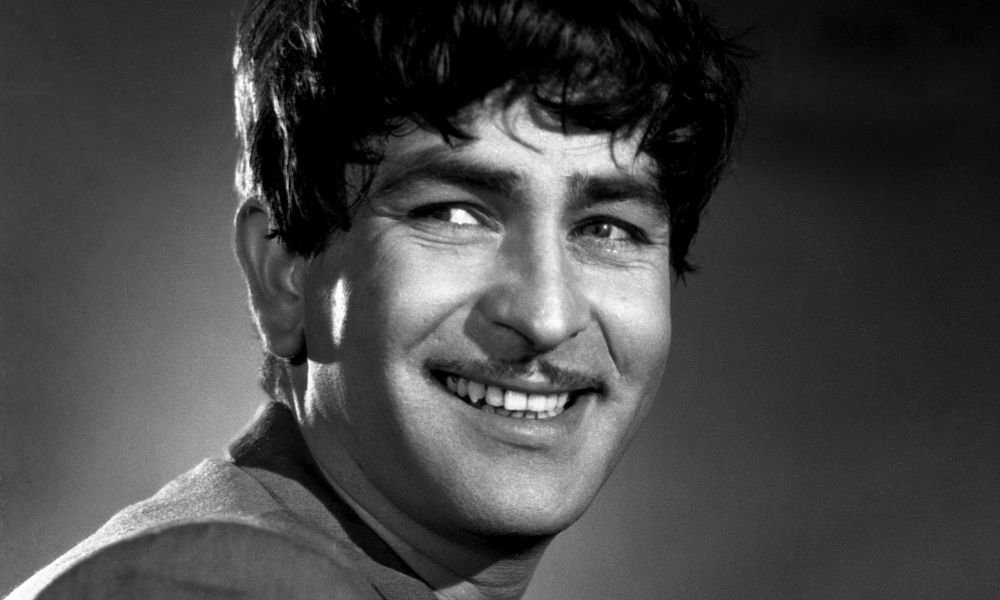
"The popularity of Raj Kapoor’s work derives from a paradoxical achievement: he intensified in his films both the lavishness and the social consciousness of the Hindi cinema. His films are characterized by elaborate sets, evocative music, new stars, dramatic confrontations and narrow escapes from heartbreak. At the same time he addressed poverty, injustice, and the plight of individuals insisting on their own way against the massive force of social conventions. Indian audiences responded enthusiastically to Raj Kapoor’s mixture of entertainment and serious issues; his films articulate at some level the longings of an entire people." - Satti Khanna (International Dictionary of Films and Filmmakers, 2000)
Raj Kapoor
Director / Producer / Actor / Editor
(1924-1988) Born December 14, Peshawar, North-West Frontier Province, British India (now Peshawar, Khyber Pakhtunkhwa, Pakistan)
(1924-1988) Born December 14, Peshawar, North-West Frontier Province, British India (now Peshawar, Khyber Pakhtunkhwa, Pakistan)
Key Production Country: India
Key Genres: Drama, Romance, Musical, Music, Tragedy, Comedy
Key Collaborators: Radhu Karmakar (Cinematographer), Jaikishan Dayabhai Pankal (Composer), Shankarsingh Raghuwanshi (Composer), Khwaja Ahmad Abbas (Screenwriter), M.R. Achrekar (Production Designer), Nargis (Leading Actress), Jainendra Jain (Screenwriter), G.G. Mayekar (Editor), Rishi Kapoor (Leading Character Actor), Laxmikant Shantaram Kudalkar (Composer), Pyarelal Ramprasad Sharma (Composer), A. Rangaraj (Production Designer)
Key Genres: Drama, Romance, Musical, Music, Tragedy, Comedy
Key Collaborators: Radhu Karmakar (Cinematographer), Jaikishan Dayabhai Pankal (Composer), Shankarsingh Raghuwanshi (Composer), Khwaja Ahmad Abbas (Screenwriter), M.R. Achrekar (Production Designer), Nargis (Leading Actress), Jainendra Jain (Screenwriter), G.G. Mayekar (Editor), Rishi Kapoor (Leading Character Actor), Laxmikant Shantaram Kudalkar (Composer), Pyarelal Ramprasad Sharma (Composer), A. Rangaraj (Production Designer)
"For many years India's most popular screen personality, he began directing many of his own films in the late 40s, soon rising to a prominent position in the industry… His popularity soared with the release of Awara/The Vagabond (1951), a captivating, if simple-minded, melodrama sprinkled with songs, which he also directed and produced… It was typical of Kapoor's films—naive but sincere and entertaining explorations of good versus evil and wealth versus poverty… In his later films, Kapoor introduced a measure of sensuality into Indian cinema, an industry which usually shuns even kissing on the screen." - The Film Encyclopedia, 2012
"At once glossy and realist, slapstick and sorrowful, the juxtapositions of Kapoor's delirious films are like few that Western viewers have experienced. Epic musical numbers, noirish deep-focus cinematography, and insanely elaborate sets share center stage with paeans to the homeless, cries against the class system, and pleas for social mobility, with scripts (many written by the socialist-realist legend K.A. Abbas) seemingly drawn from Victor Hugo or Charles Dickens, then filtered through Frank Capra and Busby Berkeley." - BAMPFA, 2012
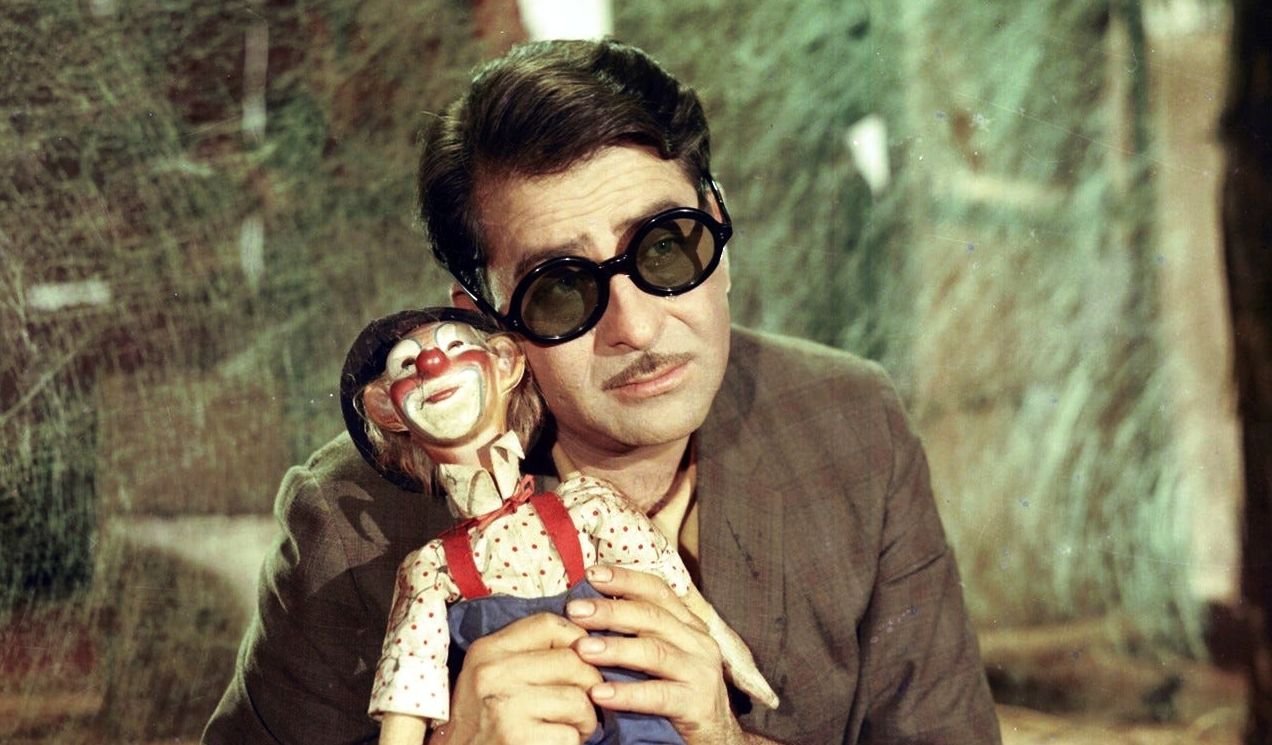
Mera Naam Joker (1970)
"Raj Kapoor is the quintessential Bombay industry filmmaker of the Nehru era. His career spans the first four decades following independence, from 1947 to 1988, coinciding with Nehruvian socialism. In 1991 socialism was abandoned in favor of ‘‘liberalization,’’ opening India’s economy to the West. In the 1950s Kapoor translated his own admiration and his generation’s enthusiasm for Prime Minister Nehru’s vision into extremely popular Hindi films, which he infused with his unique mix of populist politics and sentimentality… Deftly combining ‘‘art and commerce’’—his functional definition of popular cinema—Kapoor was a phenomenal success in the 1950s and 1960s. In the 1970s and 1980s his output dwindled dramatically. Barring the hit teen romance Bobby (1973), in which he did not appear, his often ambitious and thinly autobiographical films from these decades lost touch with the popular mood and failed at the box office." - Corey K. Creekmur & Jyotika Virdi (Schirmer Encyclopedia of Film, 2006)
"As a director, producer and star, Raj Kapoor became one of India’s leading filmmakers during the so-called “golden age” of Indian cinema in the first two decades following the nation’s independence in 1947. Kapoor is in some ways a lynchpin, a Janus figure, with one face looking back to the aspirations of the era of independence and the other toward the present state of star-driven Hindi cinema with its mass appeal and global audience." - David Pendleton (Harvard Film Archive, 2012)
"Son of the well-known stage and film actor Prithviraj Kapoor, Raj Kapoor was a man of many talents. He was not simply a popular actor, but was also an editor, producer and very successful director who had a keen ear for music. Famous for living life to the full, he was known as the showman of Hindi cinema." - Naman Ramachandran (The Rough Guide to Film, 2007)
"By and large, my experiences have been with cinema, not drawing-room cinema. I make cinema for people. Millions of people are going to see a film I make. So I make so-called commercial films, successful films which people pay to see time and time again. I am not an intellectual, not even a pseudo-intellectual. I don't profess to be one. But I want to do films, using the little knowledge I've got, that can appeal to many more people rather than just a few. That's why I have never been put into the ranks of intellectual or new-wave cinema." - Raj Kapoor, 1976
Selected Filmography
Loading filmography...
Raj Kapoor / Fan Club
Rachel Dwyer, Nasreen Munni Kabir, Kevin B. Lee, Nikhat Kazmi.
Rachel Dwyer, Nasreen Munni Kabir, Kevin B. Lee, Nikhat Kazmi.
"Fan Club"
These film critics/filmmakers have, on multiple occasions, selected this director’s work within film ballots/lists that they have submitted.
These film critics/filmmakers have, on multiple occasions, selected this director’s work within film ballots/lists that they have submitted.