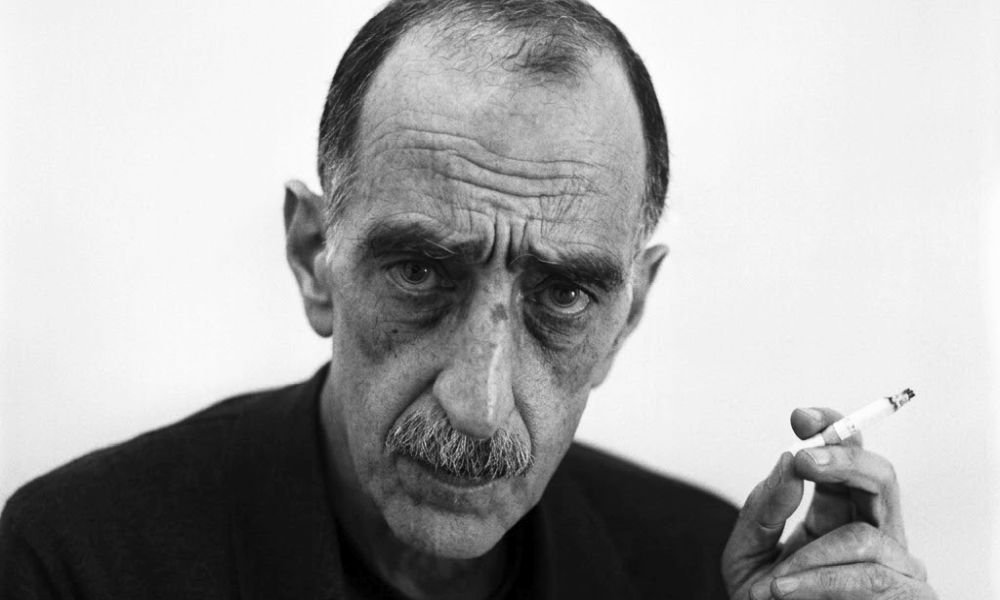
"He is known as a master of Portuguese cinema with a knack for anarchic yet lyrical visual comedies with a self-indulgent and esoteric twist… Monteiro's films often shock audiences, yet he remains loved by art theatergoers for his almost plotless, philosophical musings that never fail to provoke." - Carol King (501 Movie Directors, 2007)
João César Monteiro
Director / Screenwriter / Actor / Editor
(1939-2003) Born February 2, Figueira da Foz, Portugal
(1939-2003) Born February 2, Figueira da Foz, Portugal
Key Production Countries: Portugal, France
Key Genres: Drama, Comedy, History, Fantasy, Satire, Romance
Key Collaborators: Manuela de Freitas (Leading Actress), Paulo Branco (Producer), Acácio de Almeida (Cinematographer), Mário Barroso (Cinematographer), Luís Miguel Cintra (Leading Character Actor), Joaquim Pinto (Producer), Rita Durão (Leading Character Actress), Maria Velho da Costa (Screenwriter), Dominique Chapuis (Cinematographer), Manuela Viegas (Editor), Margarida Gil (Leading Character Actress), José Airosa (Leading Character Actor)
Key Genres: Drama, Comedy, History, Fantasy, Satire, Romance
Key Collaborators: Manuela de Freitas (Leading Actress), Paulo Branco (Producer), Acácio de Almeida (Cinematographer), Mário Barroso (Cinematographer), Luís Miguel Cintra (Leading Character Actor), Joaquim Pinto (Producer), Rita Durão (Leading Character Actress), Maria Velho da Costa (Screenwriter), Dominique Chapuis (Cinematographer), Manuela Viegas (Editor), Margarida Gil (Leading Character Actress), José Airosa (Leading Character Actor)
"With a grant from the Gulbenkian Foundation, Monteiro studied at the London International Film School, graduating in 1963… The combination of the sacred and the transgressive became a distinguishing aspect of Monteiro's films, marked on the one hand by an obsession with literary quotation, painting and the cinema ('high culture'), and on the other by the abject, the sordid and the scatological ('low culture')." - Augusto M. Seabra (Encyclopedia of European Cinema, 1995)
"João César Monteiro remains among the most indelible and unusual figures in the history of Portuguese cinema, a visionary and profoundly eccentric filmmaker whose unique contribution to postwar European film is only gradually being recognized today. A cosmopolite imagination tethered by a provincial attachment to Lisbon, a libertine with an obscurely puritanical streak, an unrelenting aesthete guided by an archaic spirit—Monteiro was a deliberately contradictory and difficult artist who obdurately resisted affiliation with any declared “school” of filmmaking. Monteiro dedicated himself instead to a mode of sublimely, and often perversely, high modernism fascinated by a rich undercurrent between the cinema and the other arts—especially poetry, painting, theater, literature and music." - Haden Guest (Harvard Film Archive, 2026)
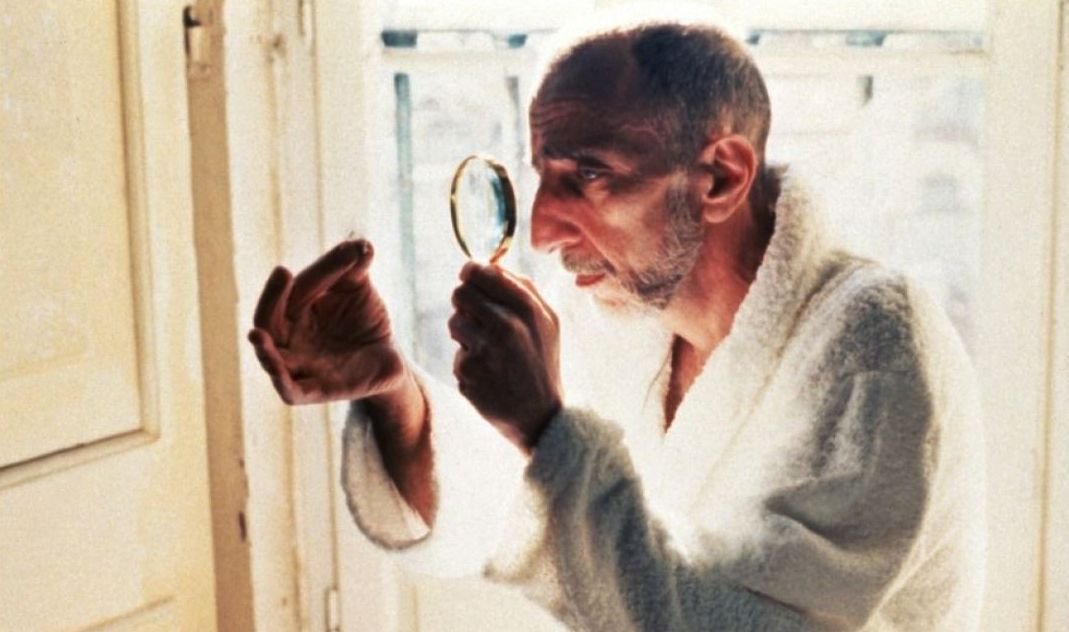
God's Comedy (1995)
"João César Monteiro is often mentioned alongside Manoel de Oliveira as one of the most influential Portuguese directors of the 20th century. Yet while Oliveira’s fascination with religious and theatrical representations of life made him an obsessive formalist, Monteiro was inspired by the Marquis de Sade and symbolist and surrealist literary movements to bring an anarchistic, anticlerical spirit to his films. A true libertine, Monteiro subverted trends and definitions in a body of work that, in the vein of Erich von Stroheim, focuses on the perverted mysteries of pleasure, decay, and the poetic translation of the sublime into art—whether film, music, or literature—while striking out at a corrupt sociopolitical status quo he identified with fascism in its many guises." - The Museum of Modern Art, 2025
"João César Monteiro’s world is a strange one. Over 21 films made from 1969 to his death in 2003, the Portuguese auteur built worlds out of flat screens, a still camera, and soundtracks consisting of people talking softly—all of which would sound terribly boring, save for the men running around in pig masks and the gods with the giant dildos. It’s an extremely dark, extremely funny world without a center." - Aaron Cutler (Slant Magazine, 2010)
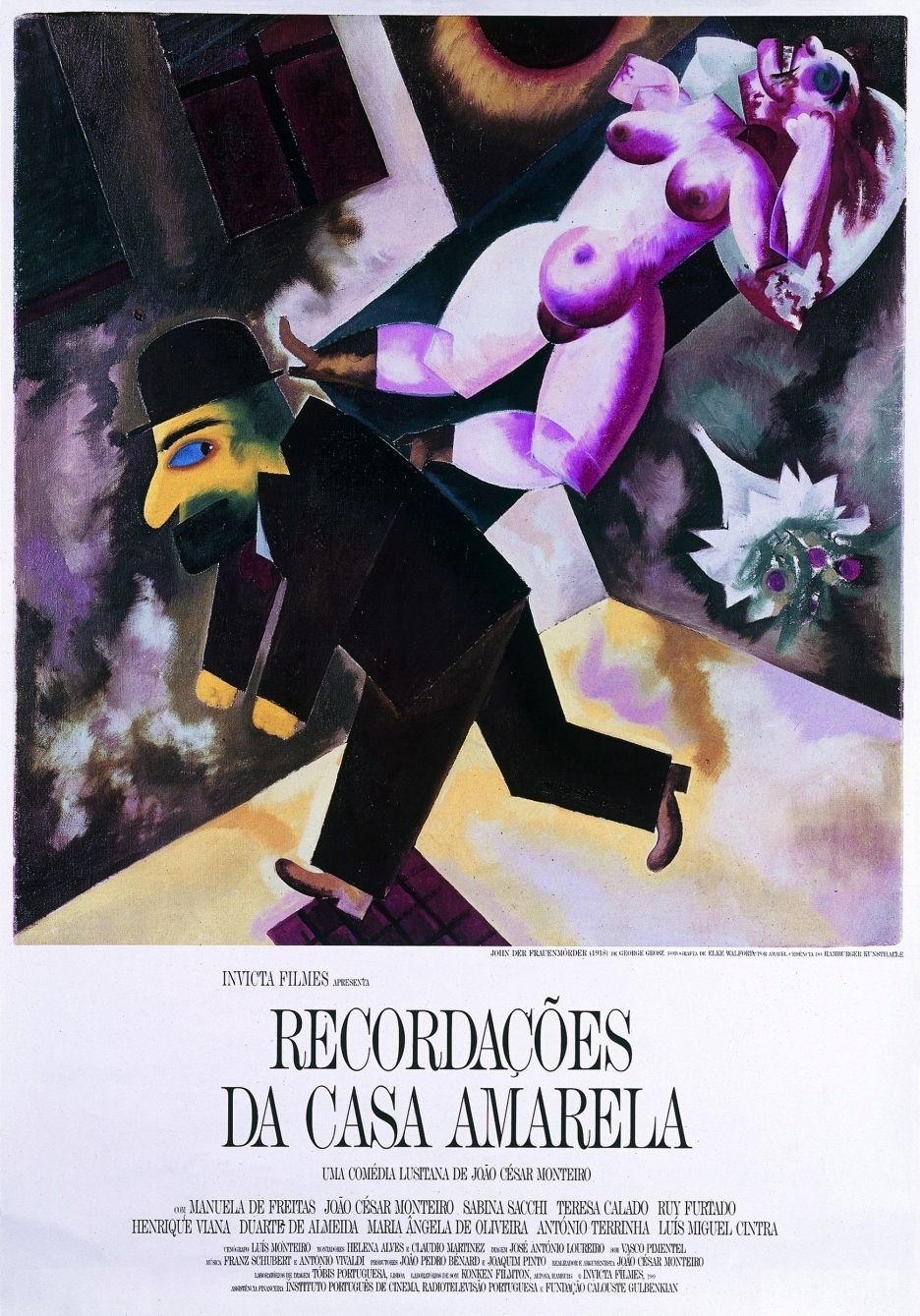
"Monteiro put himself in front of the camera in a triptych of films—Recollections of the Yellow House, God's Comedy and God's Wedding—as his gadfly alter-ego João de Deus. An avant-garde manifestation of the trickster archetype, his (often depraved) antics reveal the hypocrisies and fascistic tendencies of bourgeois society. - American Cinematheque, 2026
"Monteiro’s melancholic oeuvre, populated by lonely, antisocial characters, provides a timely antidote to the action-packed, joke-a-minute scripts of mainstream cinema. Through his alter ego Jean de Dieu, a recurring character in his films, the director engages with themes of sex, solitude and the banal poetry of existence." - Time Out Paris, 2013
Selected Filmography
Loading filmography...
João César Monteiro / Fan Club
Ricardo Bedoya, Miguel Gomes, Filipe Furtado, Cíntia Gil, Federico Veiroj, Pedro Pinho, Francisco Guarnieri, Patrick Holzapfel, Chung Sung-ill, James Quandt.
Ricardo Bedoya, Miguel Gomes, Filipe Furtado, Cíntia Gil, Federico Veiroj, Pedro Pinho, Francisco Guarnieri, Patrick Holzapfel, Chung Sung-ill, James Quandt.
"Fan Club"
These film critics/filmmakers have, on multiple occasions, selected this director’s work within film ballots/lists that they have submitted.
These film critics/filmmakers have, on multiple occasions, selected this director’s work within film ballots/lists that they have submitted.