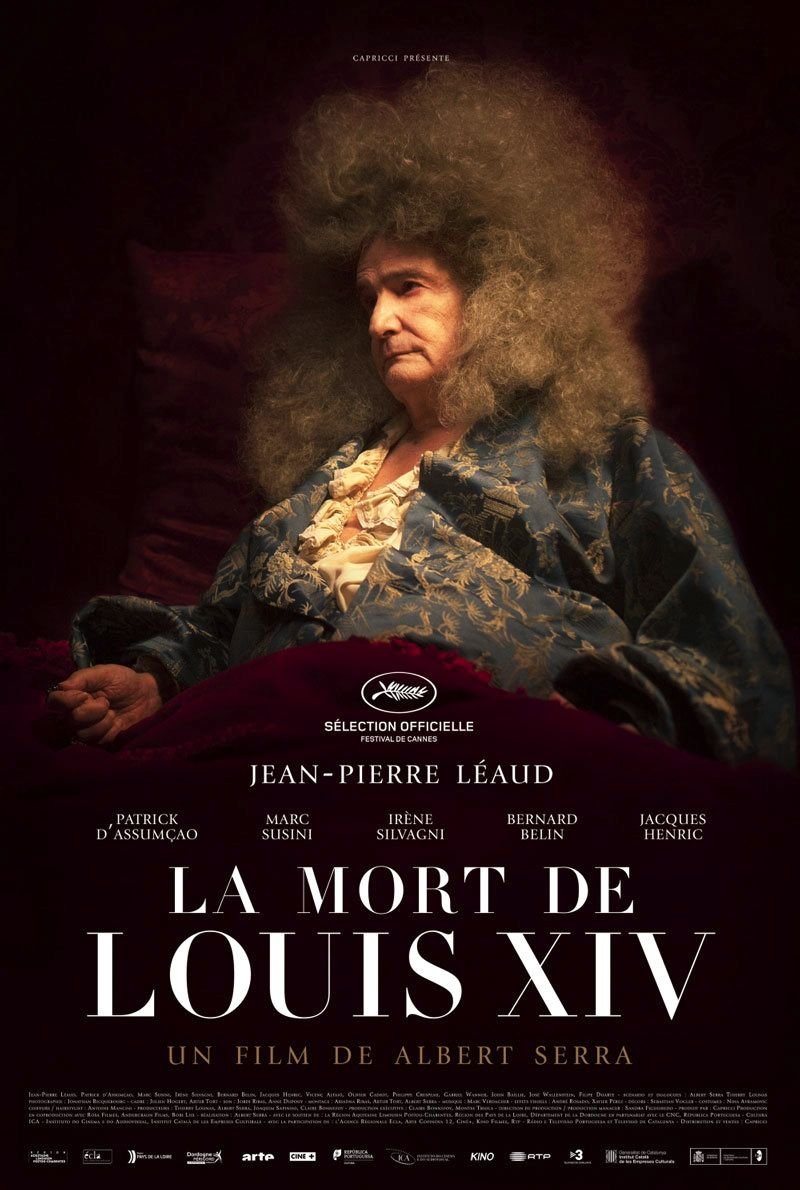
"Over the past almost twenty years, Catalan filmmaker Albert Serra has occupied a singular place in contemporary world cinema through a series of remarkable films that boldly engage canonical texts and traditions long considered “unadaptable.”" - Haden Guest (Harvard Film Archive, 2025)
Albert Serra
Director / Screenwriter / Producer / Editor
(1975- ) Born October 9, Banyoles, Girona, Catalonia, Spain
(1975- ) Born October 9, Banyoles, Girona, Catalonia, Spain
Key Production Countries: Spain, France, Portugal
Key Genres: Drama, History, Biography, Documentary, Thriller
Key Collaborators: Lluís Serrat (Leading Character Actor), Montse Triola (Character Actress/Producer), Lluís Carbo (Leading Actor), Marc Verdaguer (Composer), Marc Susini (Leading Actor), Joaquim Sapinho (Producer), Thierry Lounas (Producer), Jimmy Gimferrer (Cinematographer/Production Designer), Àngel Martín (Editor), Ariadna Ribas (Editor), Artur Tort (Editor), Eliseu Huertas (Leading Actor)
Key Genres: Drama, History, Biography, Documentary, Thriller
Key Collaborators: Lluís Serrat (Leading Character Actor), Montse Triola (Character Actress/Producer), Lluís Carbo (Leading Actor), Marc Verdaguer (Composer), Marc Susini (Leading Actor), Joaquim Sapinho (Producer), Thierry Lounas (Producer), Jimmy Gimferrer (Cinematographer/Production Designer), Àngel Martín (Editor), Ariadna Ribas (Editor), Artur Tort (Editor), Eliseu Huertas (Leading Actor)
"Whenever Albert Serra presents a new film, he has no qualms about declaring to the audience they are about to see something extraordinary. The Catalan director gets away with this swagger because he is a charismatic showman – and because, as one of the boldest visionaries of 21st-century cinema, he never fails to deliver. He founded his own production company, Andergraun Films, in 2001 to support his uncompromising vision, and makes films that combine the playful and absurdist with the deep and spiritual in a constantly surprising manner. His work bears echoes of Dalí and Warhol, Bresson and Pasolini, but it is always utterly, radically distinctive." - Carmen Gray (BFI, 2023)
"His films rarely make for easy viewing: unconcerned with plot or conventional character development, he favours near-static narrative and has taken a wilfully oblique approach to chronicling episodes in the lives of historical and literary figures such as Casanova, Dracula and Louis XIV. Serra’s penchant for letting things unspool before our eyes at considerable length can feel distinctly Warholian. But over the years his critical and commercial stock has risen sharply." - Arjun Sajip (Apollo Magazine, 2024)
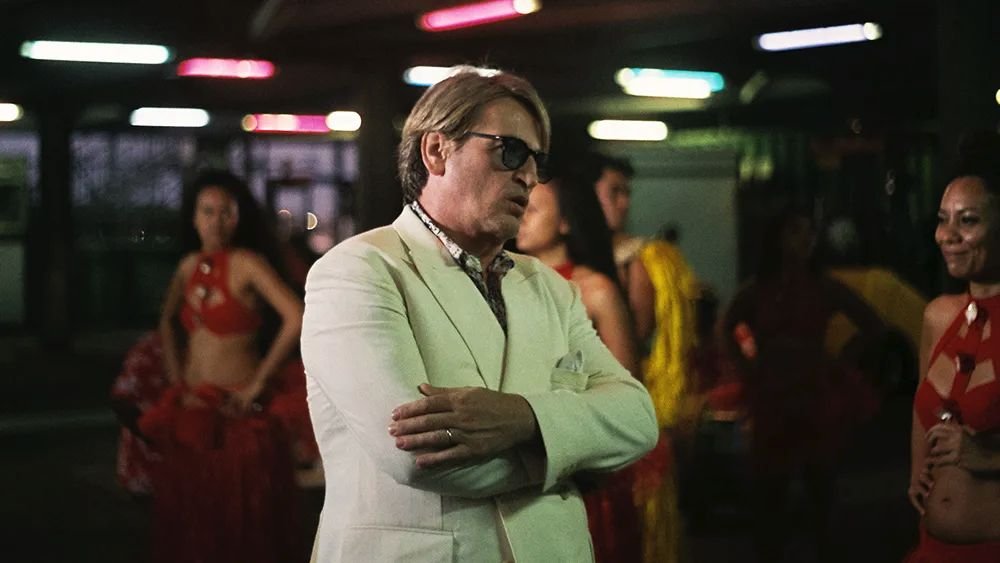
Pacifiction (2022)
"Writer-director Serra splits his time between Barcelona and Paris like he splits his directorial efforts between strict formal classicism and unnerving new wave subversion. Where the misguided filmmaking renegade wrecks tradition to create something so uncinematic it could be an ad, Serra’s punk outlook lends him to a fresh cinematic language imbued with the wisdom of film history and the daring of modern art. He is uncompromising in his several-minute shots, unpopular subjects, interest in sexual perversion and unapologetic approach to new, more challenging, often less likable kinds of films." - Luke Hicks (Paste Magazine, 2023)
"Serra’s minimalistic aesthetic, commonly associated with the ‘slow cinema’ movement (shared with contemporaries such as Béla Tarr, Pedro Costa, Tsai Ming-liang, and Lav Diaz), is the result of a surprisingly complex approach to craft. An outspoken proponent of three-camera setups, Serra regularly accumulates large amounts of footage on set, allowing his films’ hypnotic rhythms to be discovered largely by the editor (a role he has taken upon himself in his last five features)." - American Cinematheque, 2023
"In every new opus Serra builds fantastic, arabesque paths with a blend of natural grace and melancholy. He seems to stroll to some place in the infinite where fanaticism and a very special, esoteric kind of rationalism merge." - Alvaro Arroba (Cinema Scope, 2012)
"Though he loosely bases his films on canonical texts and oft-told tales—Cervantes’s Don Quixote in Honor de cavalleria (Honor of the Knights, 2006); the biblical account of the three wise men’s visit to the baby Jesus in Birdsong; the voluminous memoirs of Casanova in The Story of My Death; and, most recently, Saint-Simon’s meticulous journal entries on Louis XIV’s demise—Serra evacuates them of customary content, concentrates on eccentric details, or contrives uncanny encounters (Casanova encamps near Dracula’s castle, where his young hostesses fall under the spell, and teeth, of the sanguinary count)." - James Quandt (Artforum, 2017)
"I’ve always been interested in the fact that a film camera operates clinically. The camera never gets tired, it doesn’t think, doesn’t listen, doesn’t see beyond the frame. The eyes and the mind of the director are the ones that provide filmmaking with a human touch. This is why I never look through the camera viewfinder or at the monitor while we’re shooting—to keep a human perspective not corrupted by the machinal perspective of the camera. With its merciless, tireless vision, the camera reveals things that the human eye doesn’t see. This is why I love shooting very long scenes. Sometimes we shoot for 30 minutes or even for one hour with no cuts, never stopping. There’re few filmmakers that trust so much in the mechanical nature of the camera." - Albert Serra (Film Comment, 2020)
Selected Filmography
Loading filmography...
Albert Serra / Favourite Films
The Band Wagon (1953) Vincente Minnelli, Early Summer (1951) Yasujiro Ozu, Earth (1930) Alexander Dovzhenko, Johnny Guitar (1954) Nicholas Ray, Madame de... (1953) Max Ophüls, The Quiet Man (1952) John Ford, Rancho Notorious (1952) Fritz Lang, Samson and Delilah (1949) Cecil B. DeMille, Sunrise: A Song of Two Humans (1927) F.W. Murnau, Tristana (1970) Luis Buñuel.
Source: El Pais (2010)
View more of Albert Serra's favourite films at LaCinetek (2024).
The Band Wagon (1953) Vincente Minnelli, Early Summer (1951) Yasujiro Ozu, Earth (1930) Alexander Dovzhenko, Johnny Guitar (1954) Nicholas Ray, Madame de... (1953) Max Ophüls, The Quiet Man (1952) John Ford, Rancho Notorious (1952) Fritz Lang, Samson and Delilah (1949) Cecil B. DeMille, Sunrise: A Song of Two Humans (1927) F.W. Murnau, Tristana (1970) Luis Buñuel.
Source: El Pais (2010)
View more of Albert Serra's favourite films at LaCinetek (2024).
Albert Serra / Fan Club
Jordan Cronk, Robert Koehler, James Quandt, Sergio Wolf, Roger Koza, Jean-Michel Frodon, Carmen Gray, José Sarmiento, João Pedro Rodrigues, Maria Delgado, Cristina Nord, Olivier Père.
Jordan Cronk, Robert Koehler, James Quandt, Sergio Wolf, Roger Koza, Jean-Michel Frodon, Carmen Gray, José Sarmiento, João Pedro Rodrigues, Maria Delgado, Cristina Nord, Olivier Père.
"Fan Club"
These film critics/filmmakers have, on multiple occasions, selected this director’s work within film ballots/lists they have submitted.
These film critics/filmmakers have, on multiple occasions, selected this director’s work within film ballots/lists they have submitted.