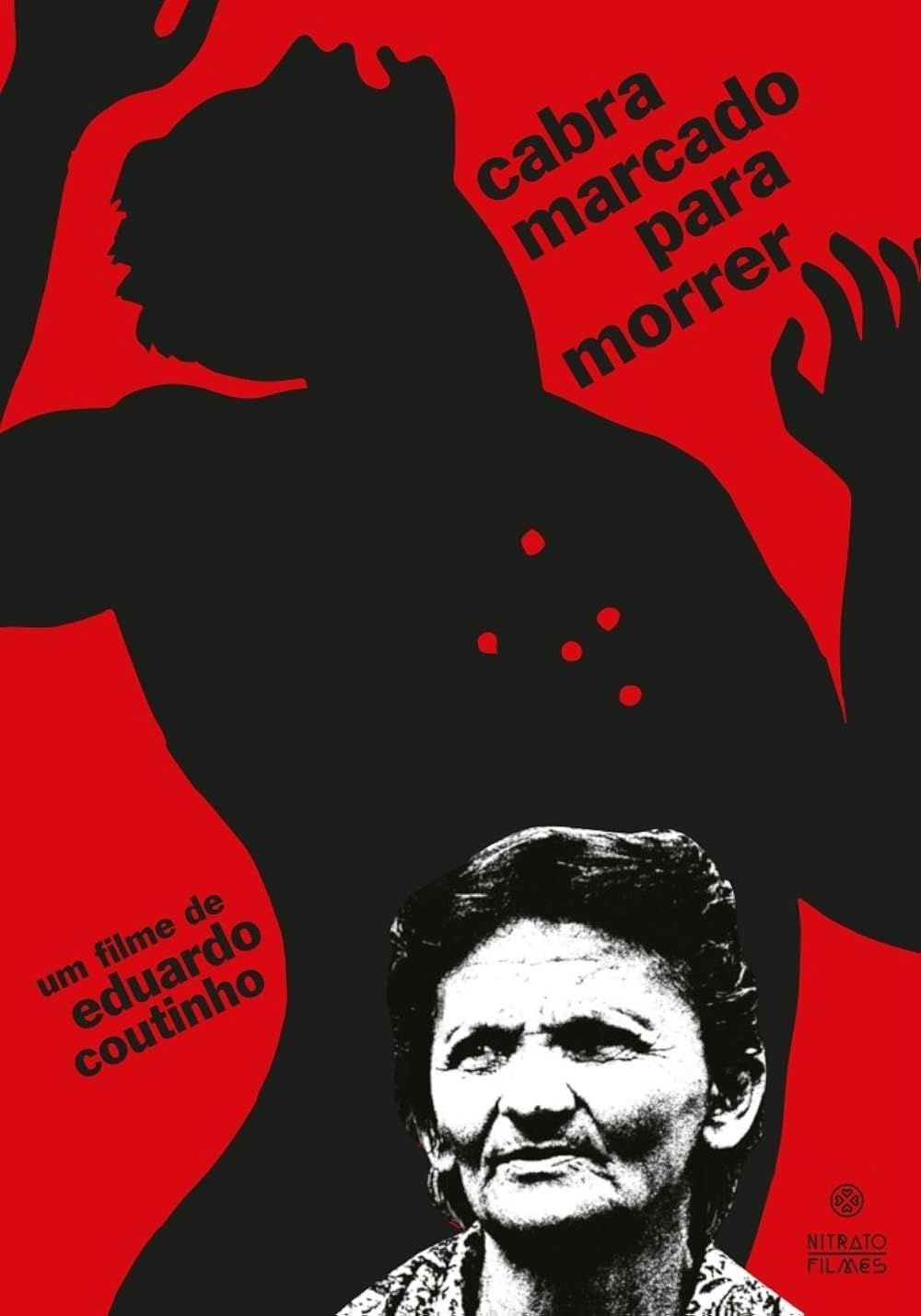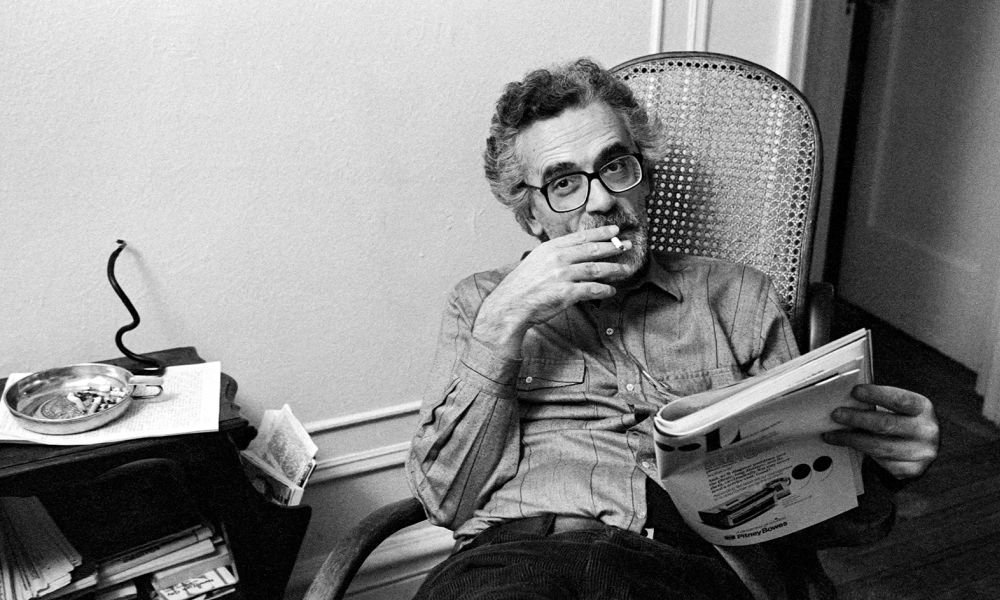
"Brazilian filmmaker Eduardo Coutinho’s lasting commitment, or one could say his politics, was to construct films from stories told to him by everyday people... Throughout the years Coutinho fine-tuned the conversational practice that became his method and style: every one of his films is an experiment in seeing and hearing what emerges from a filmed, unstaged conversation. Above all, his films-as-conversations reveal his generosity as a listener." - Natalia Brizuela (BAMPFA, 2016)
Eduardo Coutinho
Director / Screenwriter / Producer
(1933-2014) Born May 11, São Paulo, São Paulo, Brazil
(1933-2014) Born May 11, São Paulo, São Paulo, Brazil
Key Production Country: Brazil
Key Genres: Documentary, History, Music Documentary, Drama
Key Collaborators: Jordana Berg (Editor), Jacques Cheuiche (Cinematographer), Marília Pêra, Fernanda Torres, Beth Formaggini (Producer)
Key Genres: Documentary, History, Music Documentary, Drama
Key Collaborators: Jordana Berg (Editor), Jacques Cheuiche (Cinematographer), Marília Pêra, Fernanda Torres, Beth Formaggini (Producer)
"It was in the 2000s that Coutinho truly developed his mature voice once Videofilmes, the production company run by Walter and João Moreira Salles, began producing his films and giving him greater resources. He became entirely comfortable in front of the camera and the rapport between Coutinho and his interviewees allowed for unusually authentic and diverse portraits of humanity. I can’t think of another filmmaker who can capture the spirit of a person in so short a time. In just three minutes of screen time, Coutinho can create an indelible portrait of an individual. And as he learned from Twenty Years Later, the process of making the film became his later films’ great subject. The string of films he made in the 2000s is as essential a body of work as any documentarian made during that decade." - Chris Stults (Wexner Center for the Arts, 2014)
"Eduardo Coutinho is an essential name in Latin American documentary film. His work is shaped by political issues but manages to avoid propaganda, as he addresses the everyday lives and the subjectivities of marginal majorities with a sensibility not altered by melodrama. Coutinho has performed his professional activity in several fields, including law, theatre, and both print and television journalism." - Museo Reina Sofia, 2013
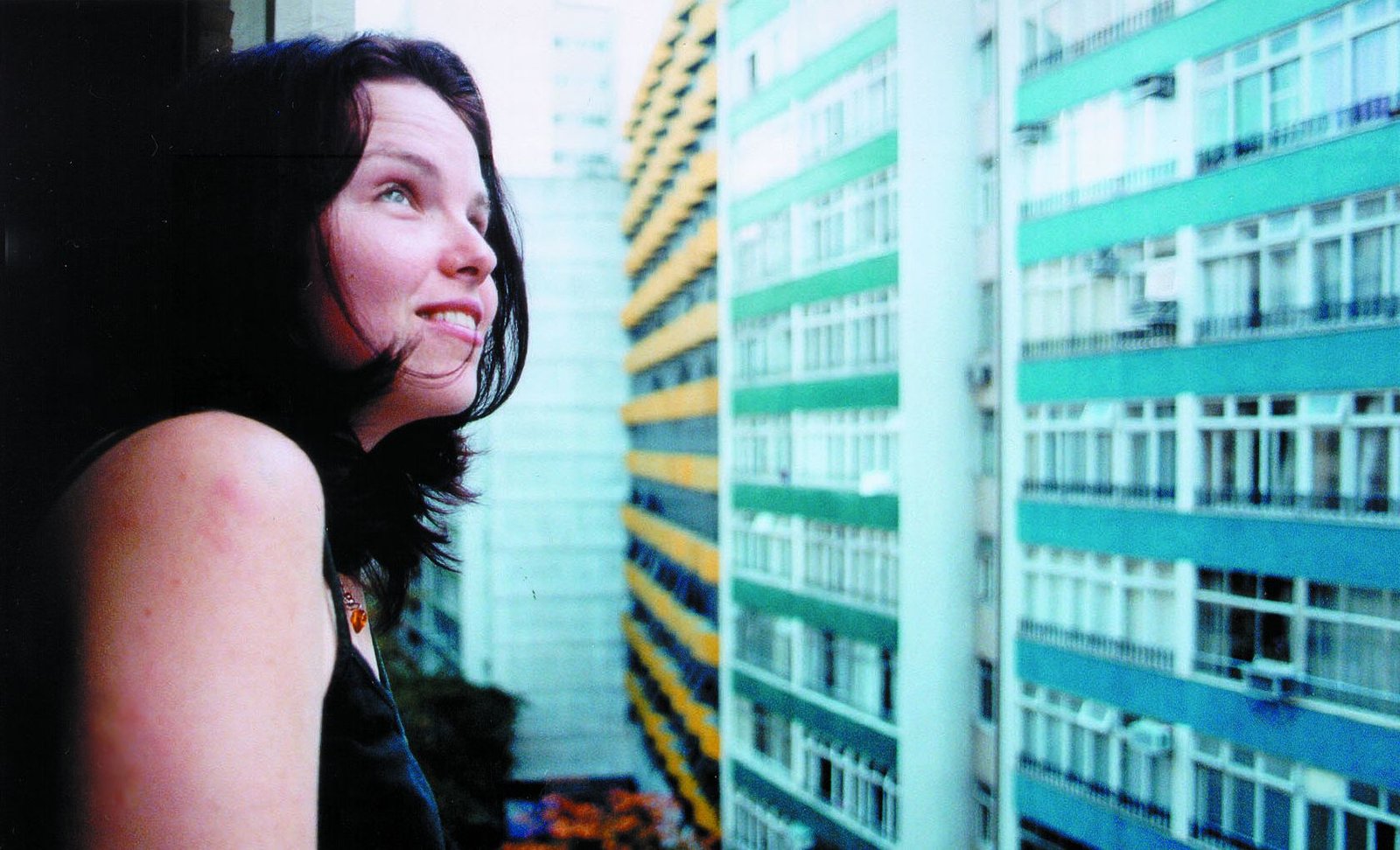
Edifício Master (2002)
"Coutinho was not only a fantastic filmmaker; he was a revolutionary. He changed by himself the face of documentaries in Brazil and, dare I say, throughout the world. There’s not one Brazilian documentary filmmaker under 60 who was not heavily influenced by Coutinho’s work. I certainly was… His trademark, his authorial signature, was his humanity: his kindness. While he he kept a careful distance from his subjects, allowing his crew to do the preliminary interviews and only approaching the subjects when it was time to actually shoot, he was also a director who quickly fell in love with the protagonists of the stories he helped to tell—and if he didn’t fall in love with all of them, at least he respected them." - Pablo Villaça (Roger Ebert.com, 2014)
"One of his favorite themes was exploring the border between fact and fiction which was the subject of some of his films including Playing / Jogo da cena (2006) in which he intertwines interviews of women narrating their own life, with actresses performing those same stories; and Moscow / Moscou (2009) in which he shoots scenes during rehearsals by the Galpão Theater Company for Chekov’s The Three Sisters, and he tries to capture the very moment in which reality becomes fiction and vice-versa." - Cinema Tropical, 2014
"Eduardo Coutinho was beyond doubt the major Brazilian documentarist of his generation. Practically all of the Brazilian filmmakers of the '60s and '70s began in documentary, later graduating into feature films: only Coutinho remained in the field, progressively sharpening his technique as he used his cinema to burrow through the surface appearances of Brazilian reality to reveal the more complex, unfiltered truths about the country." - Richard Peña (Film at Lincoln Center, 2014)
"I am not interested in the short take. I want the temporal dimension of things. Sometimes a person speaks… and it’s exactly that. It has a density, it has progression, the person hesitates, goes back.… People have a time, have a memory, have a past, but for that to become relevant there is a temporality, that needs to be in the shots, in the editing. That dimension of time is in the content and in the form, in memory and in the take." - Eduardo Coutinho
"What differentiates me from many directors is that I don’t make films about others, but with others." - Eduardo Coutinho
Selected Filmography
Loading filmography...
Eduardo Coutinho / Favourite Films
Close-Up (1990) Abbas Kiarostami, Leave Her to Heaven (1945) John M. Stahl, Love is a Many-Splendored Thing (1955) Henry King, Pinocchio (1940) Ben Sharpsteen & Hamilton Luske, La Vida de Carlos Gardel (1939) Alberto de Zavalía.
Source: Mostra (2011)
Close-Up (1990) Abbas Kiarostami, Leave Her to Heaven (1945) John M. Stahl, Love is a Many-Splendored Thing (1955) Henry King, Pinocchio (1940) Ben Sharpsteen & Hamilton Luske, La Vida de Carlos Gardel (1939) Alberto de Zavalía.
Source: Mostra (2011)
Eduardo Coutinho / Fan Club
Kleber Mendonça Filho, Ricardo Bedoya, Pablo Villaça, Filipe Furtado, Amir Labaki, Renato Silveira, Laís Bodanzky, Milton do Prado, Yale Gontijo, Maria do Rosário Caetano, Gabe Klinger, Fábio Andrade.
Kleber Mendonça Filho, Ricardo Bedoya, Pablo Villaça, Filipe Furtado, Amir Labaki, Renato Silveira, Laís Bodanzky, Milton do Prado, Yale Gontijo, Maria do Rosário Caetano, Gabe Klinger, Fábio Andrade.
"Fan Club"
These film critics/filmmakers have, on multiple occasions, selected this director’s work within film ballots/lists that they have submitted.
These film critics/filmmakers have, on multiple occasions, selected this director’s work within film ballots/lists that they have submitted.