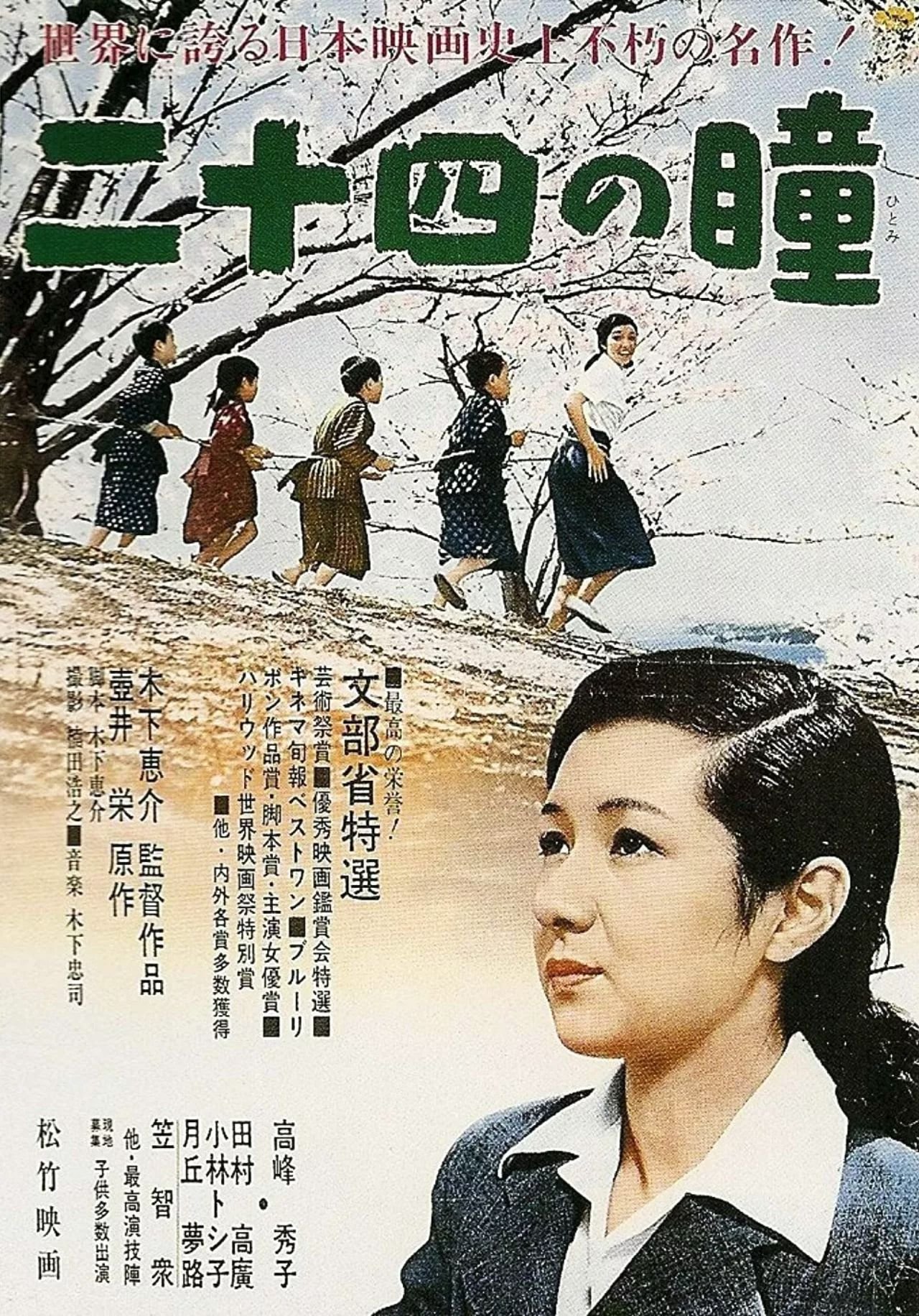
"Coupling experimental visual styles with genres that range from comedic to melodramatic conventions, Kinoshita's diverse body of work not only evidences an inseparable relationship with Japan's history, but also an intimate level of attention paid to the individual, the personal, and the private." - Film at Lincoln Center, 2012
Keisuke Kinoshita
Director / Screenwriter / Producer
(1912-1998) Born December 5, Hamamatsu, Shizuoka, Japan
(1912-1998) Born December 5, Hamamatsu, Shizuoka, Japan
Key Production Country: Japan
Key Genres: Drama, War, Romance, Comedy, History, Satire
Key Collaborators: Chûji Kinoshita (Composer), Hiroshi Kusuda (Cinematographer), Yoshi Sugihara (Editor), Hideko Takamine (Leading Actress), Takahiro Tamura (Leading Actor), Yûko Mochizuki (Leading Character Actress), Kuniko Igawa (Character Actress), Chishū Ryū (Leading Actor), Keiji Sada (Leading Character Actor), Kisaku Itô (Production Designer), Shūji Sano (Leading Character Actor), Yoshiko Kuga (Leading Character Actress)
Key Genres: Drama, War, Romance, Comedy, History, Satire
Key Collaborators: Chûji Kinoshita (Composer), Hiroshi Kusuda (Cinematographer), Yoshi Sugihara (Editor), Hideko Takamine (Leading Actress), Takahiro Tamura (Leading Actor), Yûko Mochizuki (Leading Character Actress), Kuniko Igawa (Character Actress), Chishū Ryū (Leading Actor), Keiji Sada (Leading Character Actor), Kisaku Itô (Production Designer), Shūji Sano (Leading Character Actor), Yoshiko Kuga (Leading Character Actress)
"A film maker who established his reputation with lyrical comedy-satires (The Blossoming Port, The Girl I Loved, Carmen Comes Home) somewhat in the René Clair manner, he is one of the best Japanese directors to emerge from the war. He began his career as assistant (36-43) to Yasujiro Shimazu at Toho and is totally dedicated to his work and the continual development of his style. He has worked equally with the neorealist approach of Twenty-Four Eyes and the kabuki drama of Ballad of the Narayama." - Georges Sadoul (Dictionary of Film Makers, 1972)
"Keisuke Kinoshita's films are characteristic of the Shochiku Studio's work: healthy home drama and melodrama as conventionalized by the studio's two masters, Shimazu and Ozu, who specialized in depicting everyday family life. Kinoshita gravitated toward sentimentalism and a belief in the eventual triumph of good will and sincere efforts. It was against this "planned unity" that the new generation of Shochiku directors (for example, Oshima and his group) reacted." - Kyoko Hirano (Film Reference)
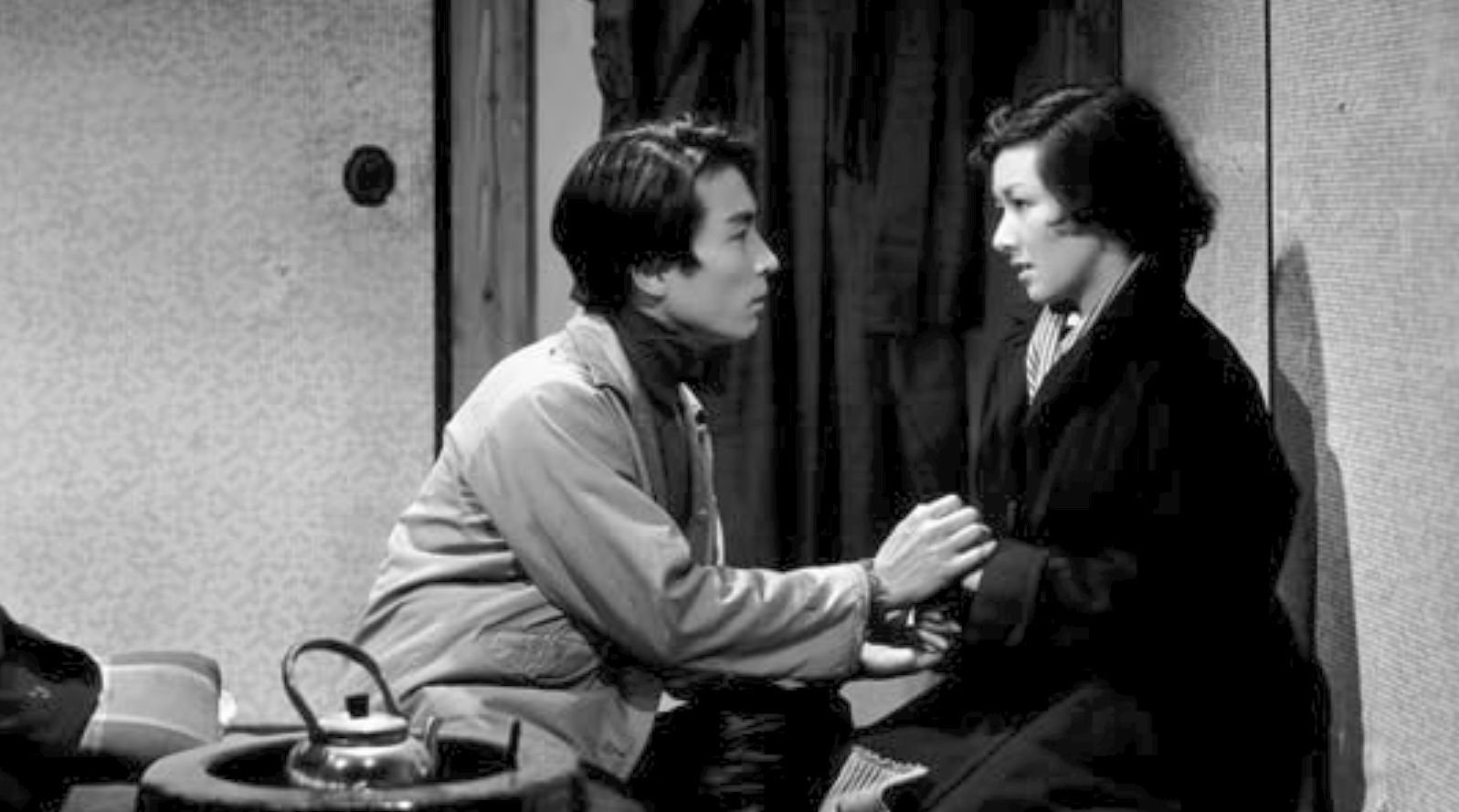
The Garden of Women (1954)
"Kinoshita's films were often most memorable when most personal in focus… Though an intelligent visual stylist, Kinoshita had a weakness for somewhat schematic visual effects: the pastiche of expressionist camera angles in Carmen's Pure Love; the Van Gogh-like colors and elements of Kabuki in The Ballad of Narayama; the addition of color washes to the monochrome images of The River Fueuki. These were often more distracting than meaningful" - Alexander Jacoby (A Critical Handbook of Japanese Film Directors, 2008)
"Kinoshita has considerable flair for unusual locations and fine ensemble playing, but he does not seem to have a strongly personal signature and his occasionally excessive sentimentality gives some of his work (like Twenty Four Eyes, 1954) a disconcertingly soft centre." - John Gillett (The International Encyclopedia of Film, 1972)
"Although Akira Kurosawa is the better-known film director in the West, in Japan Keisuke Kinoshita is revered as the greater genius, and the 50 or so films he made display a much wider variety of styles and themes, all expertly handled, than do Kurosawa's. Kinoshita's work was a perpetual reflection of his whole philosophy of living, an idealism rare in the modern world whose ugliness and cruelty he despised and mocked in satirical comedies and heart-breaking tragedies. His aim as a director and scenario writer - he wrote nearly all his own scripts - was to preserve the purity and sense of beauty he had been taught to admire in boyhood." - James Kirkup (Independent, 1999)
"Accomplished in a wide range of genres, Kinoshita made satiric comedies, stirring social dramas and the visually compelling, Kabuki version of The Ballad of Narayama (1958). He is probably best known, however, for his numerous sentimental romances of the 1950s and 60s, such as She Was Like a Wild Chrysanthemum (1955). Carmen Comes Home (1951), about a big-city stripper who shakes up her home town during a short visit, was Japan's first film to be released in color and one of the director's best." - The Virgin International Encyclopedia of Film, 1992
Selected Filmography
Loading filmography...
Keisuke Kinoshita / Fan Club
Nagisa Oshima, Lukas Foerster, Gertrud Koch, Yoji Yamada, Kaneto Shindo.
Nagisa Oshima, Lukas Foerster, Gertrud Koch, Yoji Yamada, Kaneto Shindo.
"Fan Club"
These film critics/filmmakers have, on multiple occasions, selected this director’s work within film ballots/lists that they have submitted.
These film critics/filmmakers have, on multiple occasions, selected this director’s work within film ballots/lists that they have submitted.