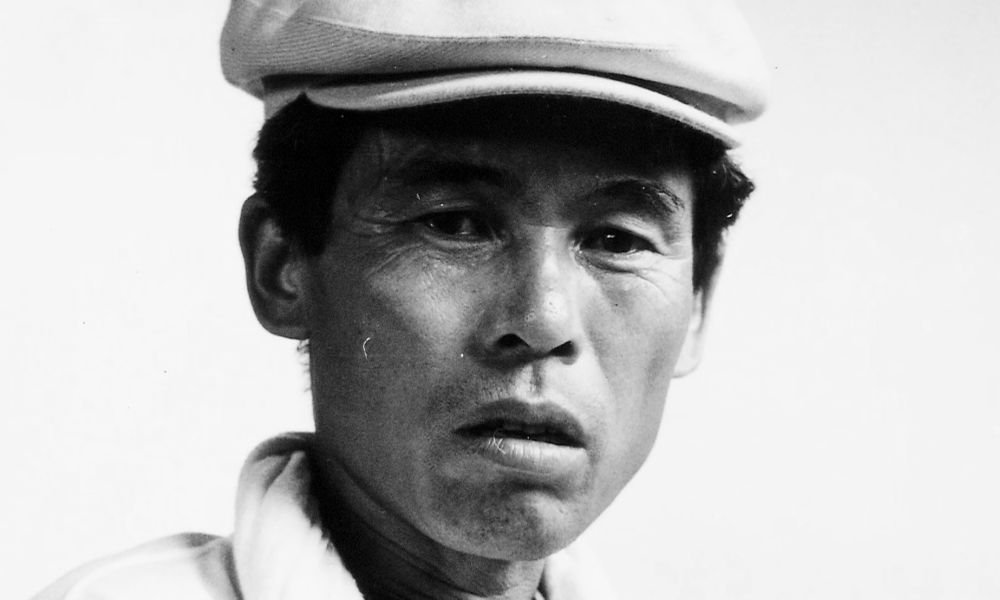
"His work is distinguished mainly by the literary virtues of construction and characterization and by excellent acting, especially from his wife, the versatile Nobuko Otowa, who appeared in almost all of Shindo's films until her death. His scripts for other directors were also consistently outstanding, and he ultimately may merit admiration more as a writer than as a stylist." - A Critical Handbook of Japanese Film Directors (Alexander Jacoby, 2013)
Kaneto Shindo
Director / Screenwriter / Production Designer / Producer
(1912-2012) Born April 22, Hiroshima, Japan
(1912-2012) Born April 22, Hiroshima, Japan
Key Production Country: Japan
Key Genres: Drama, Supernatural Horror, Folk Horror, Thriller, Horror, Psychological Drama
Key Collaborators: Nobuko Otowa (Leading Actress), Hikaru Hayashi (Composer), Kiyomi Kuroda (Cinematographer), Taiji Tonoyama (Leading Actor), Setsuo Noto (Producer), Kei Satô (Leading Character Actor), Hideo Kanze (Leading Character Actor), Kentarô Kaji (Character Actor), Kiwako Taichi (Leading Actress), Hisao Itoya (Producer), Kazuo Kuwahara (Producer), Yoshiyuki Miyake (Cinematographer)
Key Genres: Drama, Supernatural Horror, Folk Horror, Thriller, Horror, Psychological Drama
Key Collaborators: Nobuko Otowa (Leading Actress), Hikaru Hayashi (Composer), Kiyomi Kuroda (Cinematographer), Taiji Tonoyama (Leading Actor), Setsuo Noto (Producer), Kei Satô (Leading Character Actor), Hideo Kanze (Leading Character Actor), Kentarô Kaji (Character Actor), Kiwako Taichi (Leading Actress), Hisao Itoya (Producer), Kazuo Kuwahara (Producer), Yoshiyuki Miyake (Cinematographer)
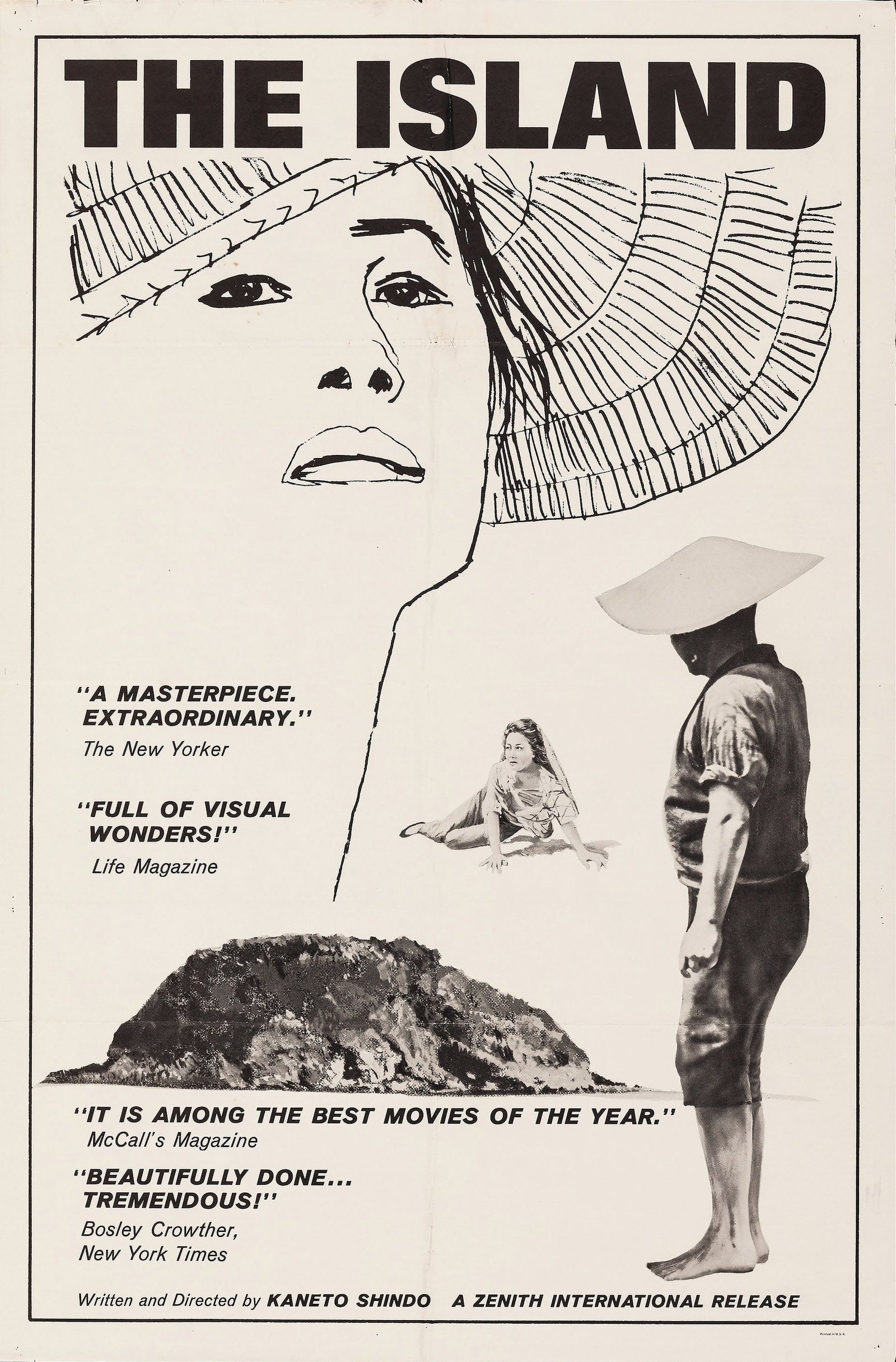
"In his best films, Shindo deals with the human condition stripped to its essentials, as in Hadaka no shima (1960) (The Island), a stark, dialogue-free, minimalist portrayal of survival in the harshest circumstances… Shindo observes, understands, and sympathizes with his characters, while delineating the forces that enthrall them." - Dejan Ognjanovic (501 Movie Directors, 2007)
"The impact of Kaneto Shindo on Japanese cinema should not be underestimated. His name is most associated in the west with his two slightly anomalous forays into supernatural horror, Onibaba (1964) and Kuroneko (1968). But we should also remember him for his unremitting attempts to memorialise and exorcise the trauma that hit the city of his birth, Hiroshima, in less familiar (to western eyes) titles including Children of Hiroshima (1952), Mother (1963), Sakura-tai Chiru (1988) and Teacher and Three Children (2008)… Also crucial to Shindo’s legacy is his pioneering role in forging a space for independent films in the studio-dominated landscape of the 1950s Japanese film industry." - Jasper Sharp (BFI, 2019)
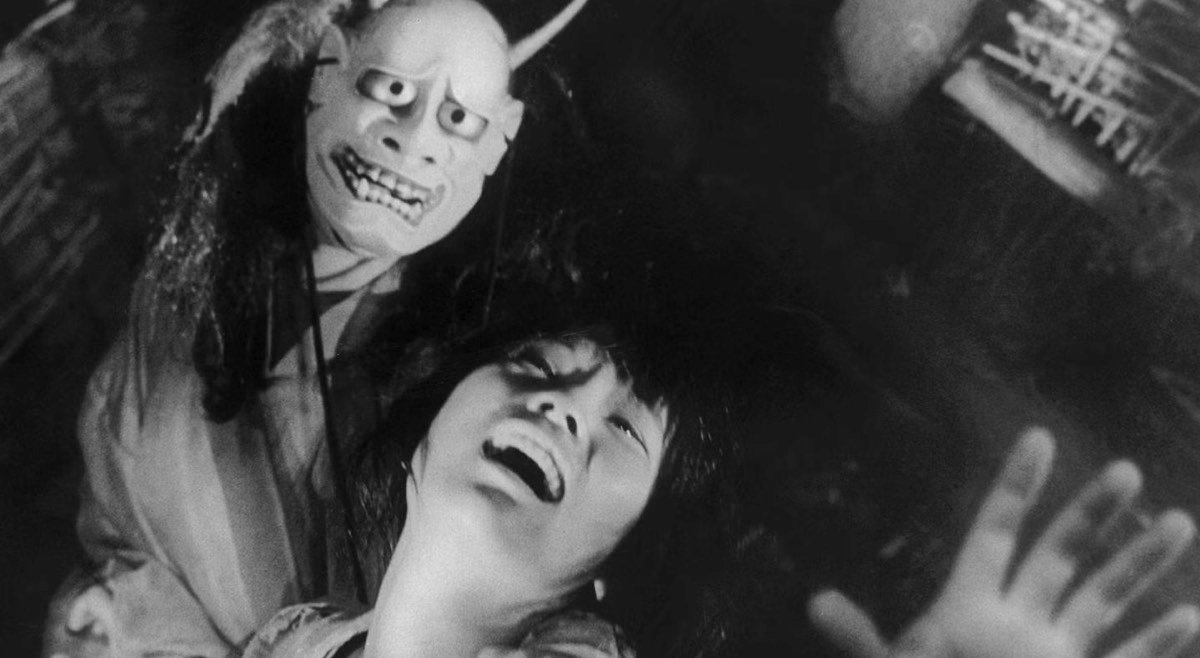
Onibaba (1964)
"Entered films in mid-1930s as an assistant designer and later became a scriptwriter, working regularly with the director Yoshimura and others. He formed an independent company with Yoshimura and has made a wide variety of films, ranging from social comedies to period 'horror' films… His period dramas Onibaba (1964) and Kuroneko (1968) combined extreme violence and sex with an expert, virtuoso camera style, though they lacked the poetic intensity Shindo always seems to be striving for." - John Gillett (The International Encyclopedia of Film, 1972)
"Like his contemporary Shohei Imamura, Shindo turned to the lower depths of Japanese culture and history to question the traditional perception – in Japan and abroad – of “Japanese-ness” and to discover within it a dark vein of raw, anarchic energy." - Haden Guest (Harvard Film Archive, 2011)
"Like Mizoguchi, Shindo creates many strong female figures who, by virtue of their love and the power of their will, try to ‘‘save’’ their male counterparts. While Mizoguchi's women seem to rely more on their generous compassion to sustain their men, Shindo’s women tend to inspire and motivate their men by their own energy and power. In much the same way, Shindo’s own energy and perseverance have supported his artistic vision through four decades of independent filmmaking." - Kyoko Hirano (International Dictionary of Films and Filmmakers, 2000)
"Shindo's work has been eclipsed by his contemporaries, namely the "emperor" Akira Kurosawa, and the following generation, with its New Wave rebels Nagisa Oshima and Shohei Imamura. This is not unjust: Shindo's work can be formally messy and his tales overly simplistic. But viewing the films today offers an insight into an oeuvre made entirely in the shadow of Hiroshima, and how this provoked feelings of guilt, paranoia and instability in survivors, but not necessarily rebellion, or a cold look at the events that led up to it." - Emilie Bickerton (The Guardian, 2012)
"If you have to look at society through the eyes of those placed on its bottom level, you cannot escape the fact that you must experience and perceive everything with a sense of the political struggle between classes. This sets the general political background of the film." - Kaneto Shindo, 1972
Selected Filmography
Loading filmography...
Kaneto Shindo / Favourite Films
All About Eve (1950) Joseph L. Mankiewicz, The Barefoot Contessa (1954) Joseph L. Mankiewicz, The 47 Ronin (1941) Kenji Mizoguchi, Man of Aran (1934) Robert J. Flaherty, Mori no Ishimatsu (1937) Sadao Yamanaka, Nanook of the North (1922) Robert J. Flaherty, Priest of Darkness (1936) Sadao Yamanaka.
Source: Documentary is a Fighting Spirit [Book] (1996)
All About Eve (1950) Joseph L. Mankiewicz, The Barefoot Contessa (1954) Joseph L. Mankiewicz, The 47 Ronin (1941) Kenji Mizoguchi, Man of Aran (1934) Robert J. Flaherty, Mori no Ishimatsu (1937) Sadao Yamanaka, Nanook of the North (1922) Robert J. Flaherty, Priest of Darkness (1936) Sadao Yamanaka.
Source: Documentary is a Fighting Spirit [Book] (1996)
Kaneto Shindo / Fan Club
Kazuo Hara, Agnieszka Holland, Mo Abdi, William Friedkin, John Landis, David Jenkins.
Kazuo Hara, Agnieszka Holland, Mo Abdi, William Friedkin, John Landis, David Jenkins.
"Fan Club"
These film critics/filmmakers have, on multiple occasions, selected this director’s work within film ballots/lists that they have submitted.
These film critics/filmmakers have, on multiple occasions, selected this director’s work within film ballots/lists that they have submitted.