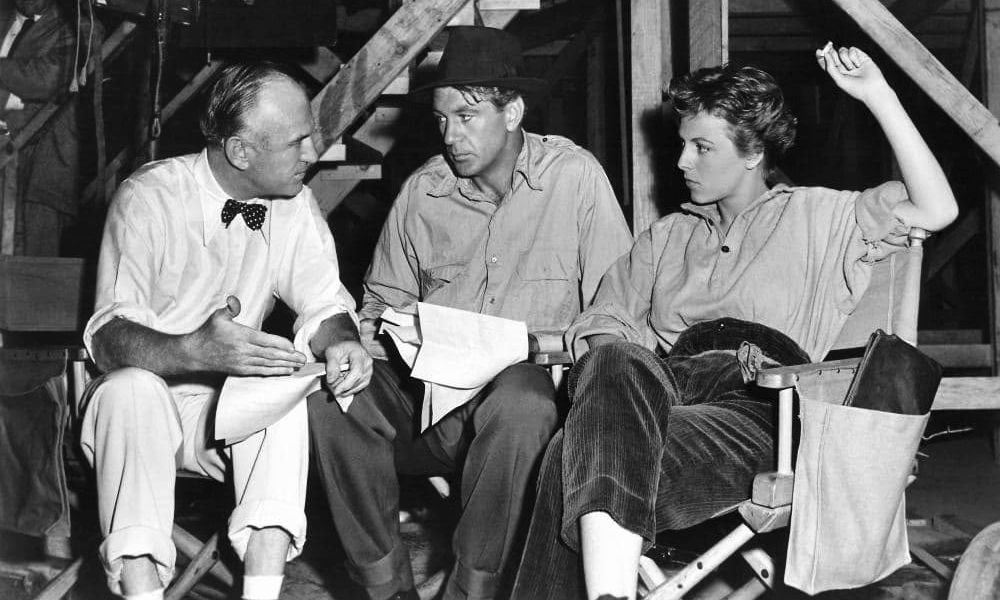
"Sam Wood qualifies as a neglected director. It may be that his many craftsmanlike, entertaining films for MGM and other studios do not call for detailed critical comment, or it may be that his extreme right-wing politics alienated those who might choose to write about him. Yet he warrants closer attention if only for such movies as A Night at the Opera (1935), one of the Marx Brothers' best, Goodbye, Mr. Chips (1939), a gentle exercise in Anglophile sentiment, which won Robert Donat a well-deserved Oscar, Our Town (1940), and Kings Row (1942)." - Ted Sennett (Great Movie Directors, 1986)
Sam Wood
Director / Producer
(1883-1949) Born July 10, Philadelphia, Pennsylvania, USA
(1883-1949) Born July 10, Philadelphia, Pennsylvania, USA
Key Production Country: USA
Key Genres: Romance, Drama, Comedy, Family, Farce, Sport, Music, Satire, Screwball Comedy, Period Drama
Key Collaborators: William Cameron Menzies (Production Designer), Gary Cooper (Leading Actor), Ralph Dawson (Editor), Sherman Todd (Editor), Groucho Marx (Leading Actor), Chico Marx (Leading Actor), Ingrid Bergman (Leading Actress), Robert Cummings (Leading Actor), Harpo Marx (Leading Actor), Casey Robinson (Screenwriter), Charles Coburn (Leading Character Actor), Allan Jones (Leading Character Actor)
Key Genres: Romance, Drama, Comedy, Family, Farce, Sport, Music, Satire, Screwball Comedy, Period Drama
Key Collaborators: William Cameron Menzies (Production Designer), Gary Cooper (Leading Actor), Ralph Dawson (Editor), Sherman Todd (Editor), Groucho Marx (Leading Actor), Chico Marx (Leading Actor), Ingrid Bergman (Leading Actress), Robert Cummings (Leading Actor), Harpo Marx (Leading Actor), Casey Robinson (Screenwriter), Charles Coburn (Leading Character Actor), Allan Jones (Leading Character Actor)
"There are a number of neglected gems in Wood's filmography. Paid (1930) and Hold Your Man (1933) are sleazy delights from MGM's pre-Code days, with Joan Crawford running her customary emotional gamut in the former, and Clark Gable and Jean Harlow sparking nicely in the latter. Jean Arthur was never better than in The Devil and Miss Jones (1941); the same can be said of Joan Fontaine in Ivy (1947), a fine slab of barnstorming melodrama; ditto Don Ameche in Guest Wife (1945), a screwball comedy with Claudette Colbert giving the kind of relaxed, funny performance she usually reserved for Frank Capra or Preston Sturges." - Matthew Coniam (501 Movie Directors, 2007)
"Veteran American director whose polished, well-made films defy any thematic analysis, beyond a flair for survival (he directed two Marx Brothers films) and a gift for schmaltz (the best of the Madame X's in 1937 and Goodbye, Mr. Chips in 1939). A buccaneering career in gold-mining and real-estate led him to Los Angeles where he became assistant to Cecil B. DeMille in 1915 and started directing films in 1920. He flourished under the studio system of the 1930s and 1940s, being particularly adept at framing the talents of the major stars." - Margaret Hinxman (The International Encyclopedia of Film, 1972)

Kings Row (1942)
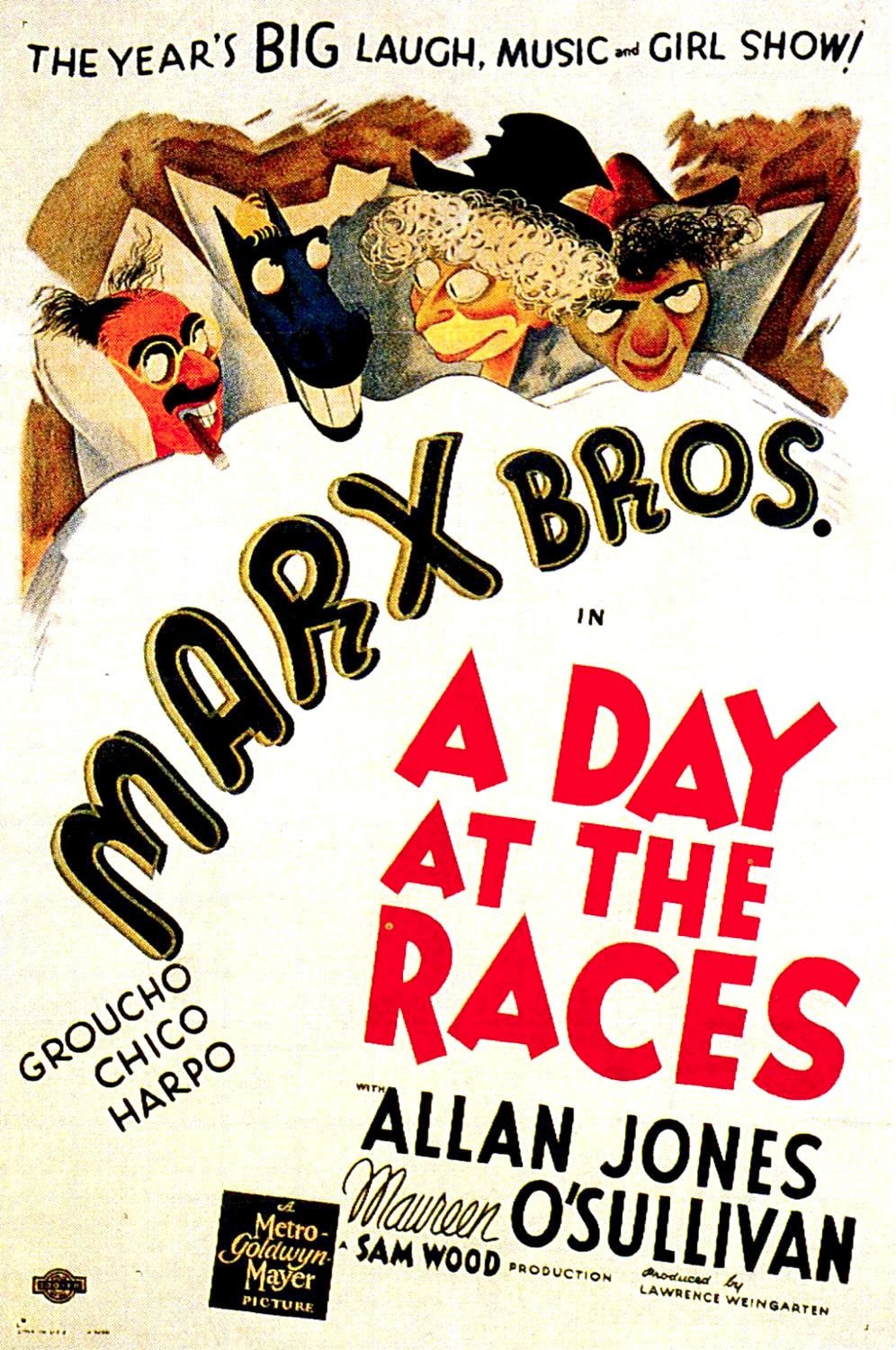
"Wood is the sort of director whose filmography looks considerably more impressive than the extent of his actual talent would suggest. He was put in charge of two of the greatest Marx Brothers films, A Night at the Opera (1935) and A Day at the Races (1937), but, according to Groucho, the films were successes despite, and not because of, Wood. He directed the sublime Robert Donat in Goodbye, Mr. Chips (1939), but the film was always Donat's, never Wood's, and the same can be said of For Whom the Bell Tolls (1943), which relies on the star chemistry of Gary Cooper and Ingrid Bergman to attract attention away from its stolid mechanics. All carping aside, Wood's best films came near the end of his career, with The Devil And Miss Jones (1941) and Ivy (1947)." - Mario Reading (The Movie Companion, 2006)
"Director of some of Hollywood's biggest studio-produced hits of the 30's and 40's, Wood made more than 100 pictures during both the silent and sound eras. They ranged from sophisticated comedies to tear-jerkers, drama and Mark Brothers romps." - The Movie Makers, 1974
"One of the big surprises of the 40s was the sudden emergence of Sam Wood as a director of some consequence. Well past middle-age and with twenty years behind him as a conscientious, hard working, dull director, he was nominated for an Oscar for directing Goodbye, Mr. Chips (MGM, 1939), which was also nominated for Best Picture, while star Robert Donat won the Best Actor award. Wood was clearly at his peak during these years. Chips was but the first of five pictures nominated for Best Picture, and he was himself nominated again for directing Kitty Foyle (RKO, 1940) which won Ginger Rogers her only Oscar, and Kings Row (Warner Bros., 1942)." - Joel W. Finler (The Movie Directors Story, 1985)
"There is as much need for relief from comedy as from the starkest tragedy. Audiences may think that they'd like to laugh every minute, but they wouldn't. The emotional demands are just too great." - Sam Wood
Selected Filmography
Loading filmography...
Sam Wood / Fan Club
Frederick Wiseman, Daniel Sánchez Arévalo, Leonard Maltin, Carlos Pumares, Bijan Ashtary, Archer Winsten, Leslie Halliwell, José Luis Guarner.
Frederick Wiseman, Daniel Sánchez Arévalo, Leonard Maltin, Carlos Pumares, Bijan Ashtary, Archer Winsten, Leslie Halliwell, José Luis Guarner.
"Fan Club"
These film critics/filmmakers have, on multiple occasions, selected this director’s work within film ballots/lists that they have submitted.
These film critics/filmmakers have, on multiple occasions, selected this director’s work within film ballots/lists that they have submitted.